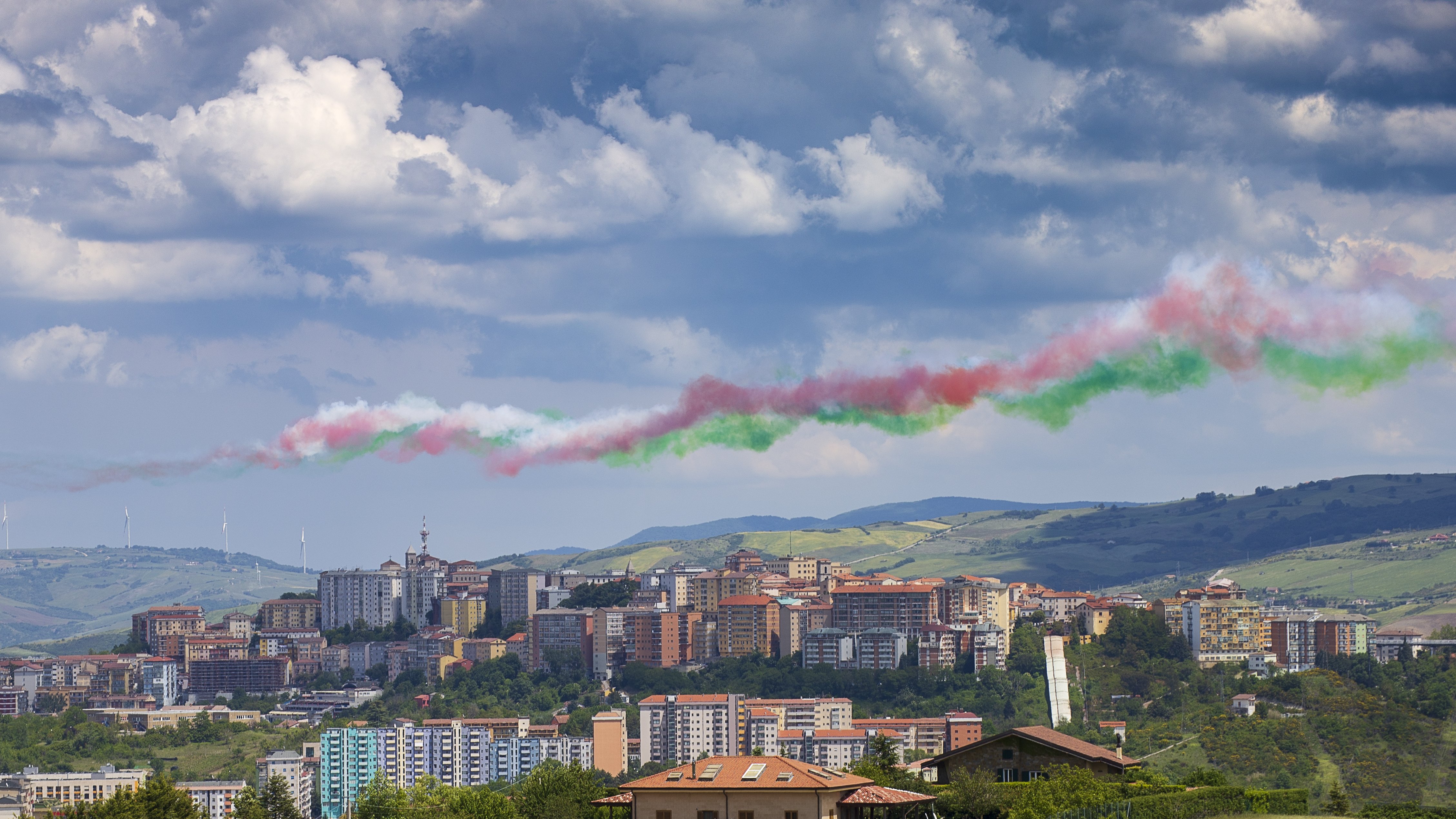
Basilicata capital on a high ridge, rebuilt repeatedly after earthquakes and known for cold winters.
Potenza is probably not on your dreamlist — and the city itself will not argue the point. The capital of Basilicata sits on a long ridge at over 800 metres, making it the highest regional capital in Italy, a distinction that brings cold winters and an occasionally bleak atmosphere. The city has been destroyed multiple times by earthquakes over the centuries, most recently in 1857 and 1980, and what you find now is mostly postwar concrete and 1970s architecture with very little of historical note surviving.
That said, Potenza is a useful hub. The old centre, strung along Via Pretoria, has a decent atmosphere in the evenings when the passeggiata fills the street, and there are a few churches worth glancing at, including the Cathedral and the church of San Francesco. The archaeological museum is the best in the region. But the real draw is what surrounds the city: the extraordinary cave city of Matera to the east, the Greek temples at Metaponto to the south, and a scattering of genuinely attractive hilltop villages in the Agri valley and the Lucan Apennines.
Potenza has a train station that connects to Naples, Taranto, and Reggio Calabria, making it a practical if unremarkable overnight stop for anyone exploring the deep south of Italy.
Guide
Eating Out
Potenza's food is Basilicata's food — assertive, peasant, pork-and-pasta-driven. Look for pasta con peperoni cruschi (crispy dried sweet peppers), lagane e ceci (wide noodles with chickpeas), podolico beef from the high pastures, and the smoked canestrato sheep's cheese. The local salume lucanica is the namesake of all modern sausage.
Restaurants are clustered along and just off Via Pretoria. A few that consistently get it right:
- Antica Osteria Marconi — modern Basilicatese cooking by chef Pietro Sinisi, refined but rooted. Tasting menu around 60 euros. Closed Sunday.
- Taverna Oraziana — traditional, cheaper, hearty. Excellent house-made orecchiette.
- Bar Renoir — for an aperitivo with serious cicchetti before dinner.
Guide
Getting There
Potenza is on the slow rail line between Foggia and Salerno, with through trains from Naples (around 4 hours) and Taranto (around 3 hours). It is not on the high-speed network — train travel from Rome involves a change in Salerno or Naples and takes 5–6 hours in total.
By road, the SS407 Basentana motorway connects Potenza to the A2 (Salerno–Reggio Calabria) and to the Ionian coast. Driving from Naples takes about 2 hours.
The nearest commercial airport is Naples (about 200 km).