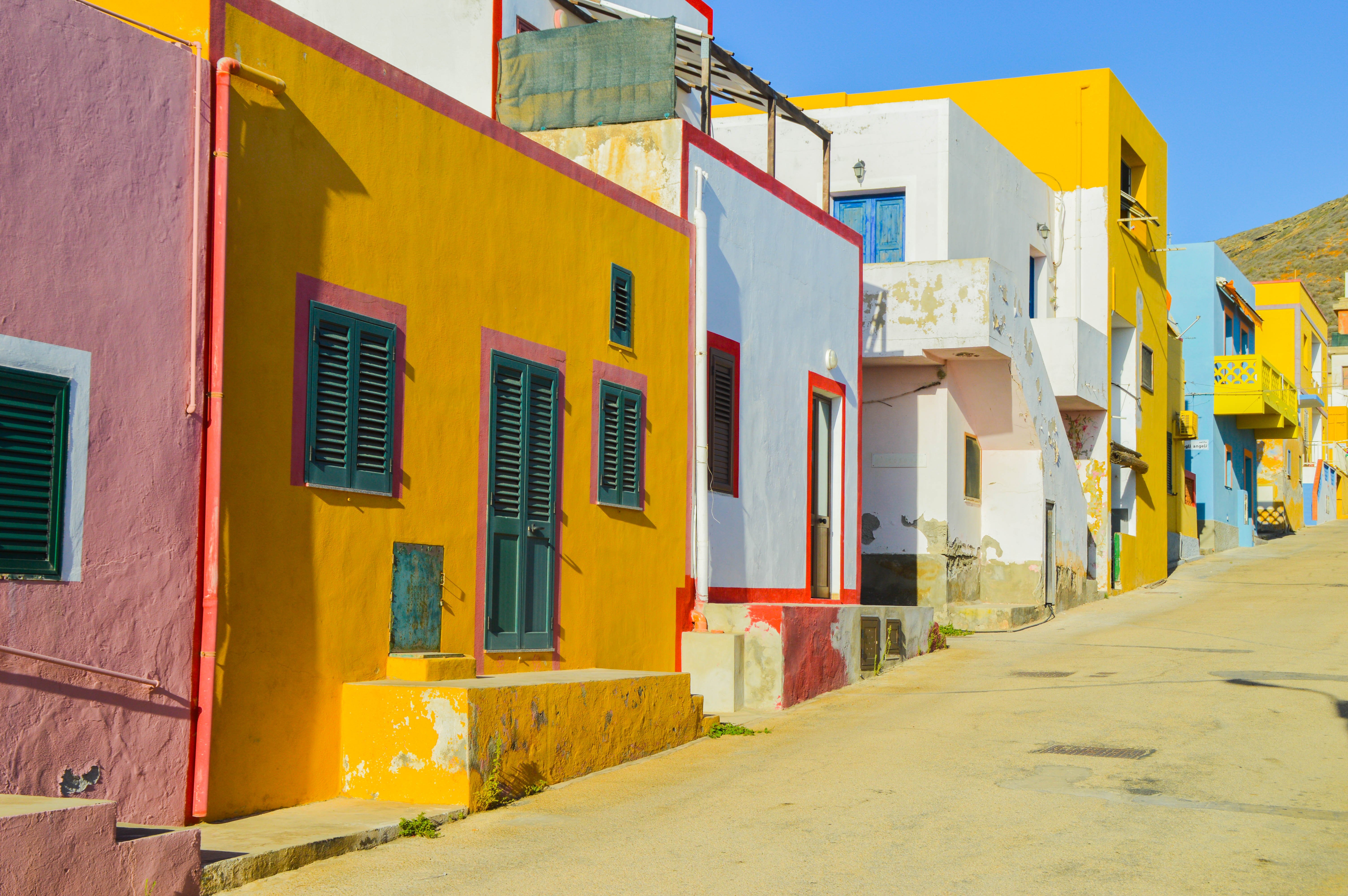
Linosa
©
Linosa

Linosa

Tiny volcanic Pelagian island with black lava shores, cube-shaped houses, and nesting sea turtles.

Linosa is a tiny volcanic island in the Strait of Sicily, part of the Pelagian archipelago along with Lampedusa and the uninhabited rock of Lampione. With its black lava coastline, colourful cube-shaped houses, and crystal-clear water, it feels closer to Africa than to mainland Italy — because geographically, it is.

The island rises to 195 metres at Monte Vulcano and is home to a single small settlement of the same name, where fishing and farming still define daily life. Linosa is one of the few places in the Mediterranean where Caretta caretta sea turtles still nest on the beaches. If you are looking for somewhere genuinely off the beaten path with exceptional snorkelling, this is it.

Guide

Getting There

Linosa is reached by ferry from Lampedusa, the larger and better-known neighbouring island. The crossing takes around an hour and a half. There is also a longer direct connection from Porto Empedocle in southern Sicily, a journey of roughly 12 hours overnight. Both are operated by Siremar/Liberty Lines.

The ferry from Porto Empedocle serves Lampedusa first and then continues to Linosa, so the journey from Sicily to Linosa takes longer than the Lampedusa crossing alone. Most visitors use Lampedusa as a staging post — Lampedusa is connected to Palermo and mainland Italy by regular flights.

There are no cars for hire on Linosa and the island is small enough that none are needed. The port is a short walk from the village and from most of the accessible coves.

Guide

Things to Do

Linosa rewards those who come simply to be in an extraordinary place. The island has no nightlife, no organised tourism, and no beachside infrastructure to speak of. What it does have is volcanic coastline unlike anywhere else in Italy, water so clear you can see the bottom at 20 metres, and Caretta caretta sea turtles nesting on its beaches in summer — one of the last remaining nesting grounds in the central Mediterranean.

The main activity is swimming and snorkelling in the coves that indent the black lava coastline. Cala Pozzolana di Ponente, on the southwestern shore, is the most sheltered and has the best access. Cala Pozzolana di Levante and Cala Croce are rockier but less visited. All of them have exceptional underwater visibility.

Walking the volcanic interior takes half a day at most. The path up Monte Vulcano — the main crater — is steep but short, and from the rim you can look into a deep bowl of scrub vegetation and out across a wide arc of Mediterranean.

Guide

When to Go

May to October is the practical window for visiting Linosa. July and August are warmest — sea temperatures reach 26°C — but also the period when the handful of guesthouses fill quickly and the small ferry is most crowded. June and September are better: still warm, less congested, and prices are lower.

June to August is the nesting season for Caretta caretta sea turtles. Females come ashore at night to lay eggs on the beaches, particularly Cala Pozzolana di Ponente. If you are staying overnight, you have a genuine chance of witnessing this. Locals know the patterns and will sometimes alert visitors; approach quietly and avoid torchlight.

Outside the main season, ferry connections become infrequent and some of the small guesthouses close. The island is habitable year-round for the 400 or so residents, but winter visits require planning.

pelagianislands