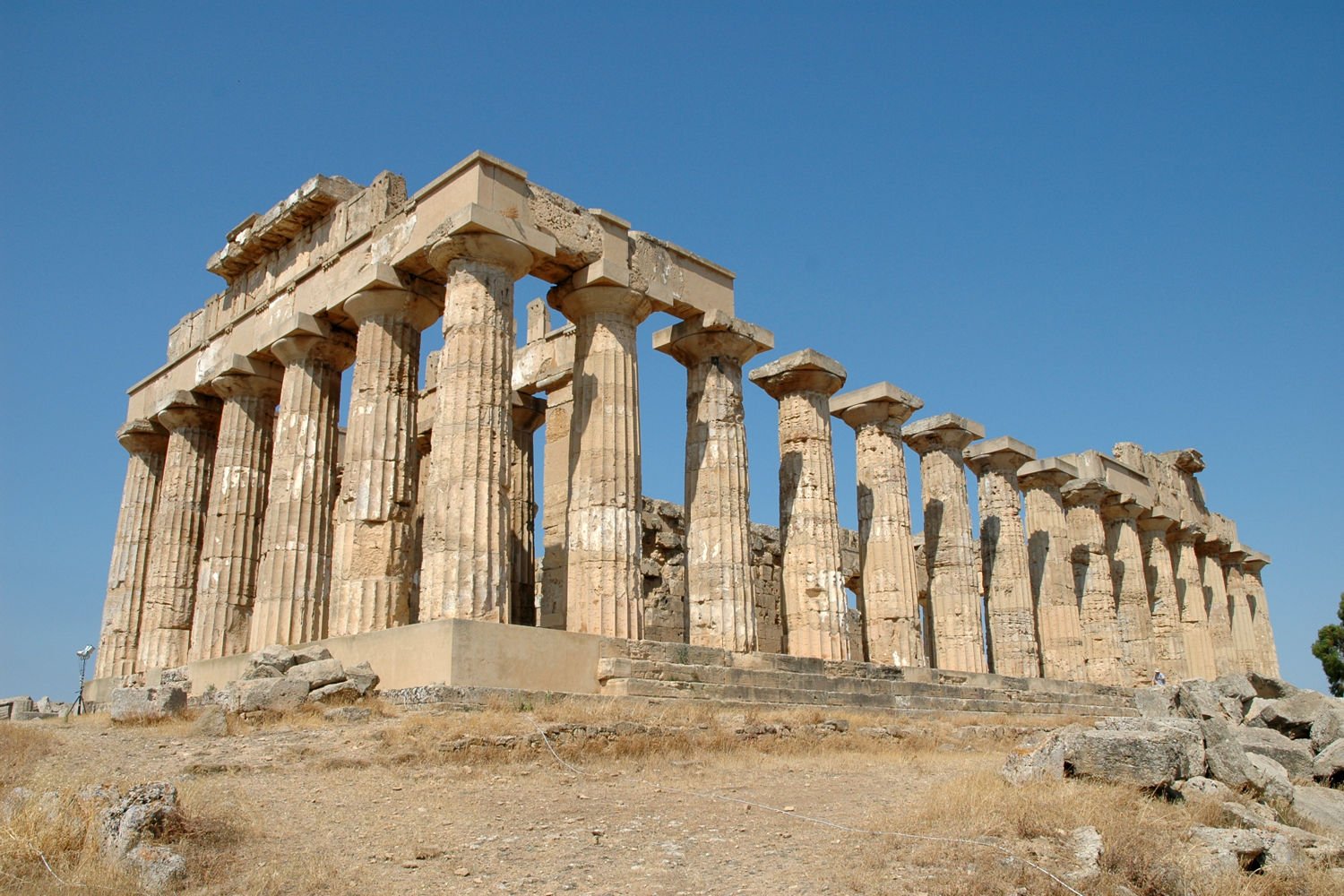
Selinunte was one of the most powerful Greek cities in Sicily, founded by colonists from Megara Hyblaea around 650 BC on the southwestern coast of the island. At its peak it had a population of perhaps 100,000 and covered an area larger than ancient Athens. It was destroyed in a catastrophic Carthaginian attack in 409 BC, rebuilt partially, destroyed again in 250 BC, and then abandoned for ever. Today it is one of the largest and most impressive archaeological parks in Europe, its ruined temples scattered across two hilltops above the Mediterranean, largely untouched and very little visited compared to similar sites elsewhere.
The modern village of Marinella di Selinunte, a small beach resort, sits immediately adjacent to the archaeological park — you can eat at a seafront restaurant and then walk directly into the ruins. The combination of Greek antiquity, Sicilian sun, and the sound of the sea makes Selinunte one of the most atmospheric ancient sites in Italy.
The park covers about 270 hectares and is divided into two main zones connected by a long walk: the Acropolis on the western hill, and the Eastern Hill with the better-preserved temples. Temple E, dedicated probably to Hera, was partially re-erected in the 1950s and is the most complete of the Selinunte temples; standing before its Doric columns is a genuine experience of ancient grandeur. A good 3–4 hours is needed to see both zones properly.