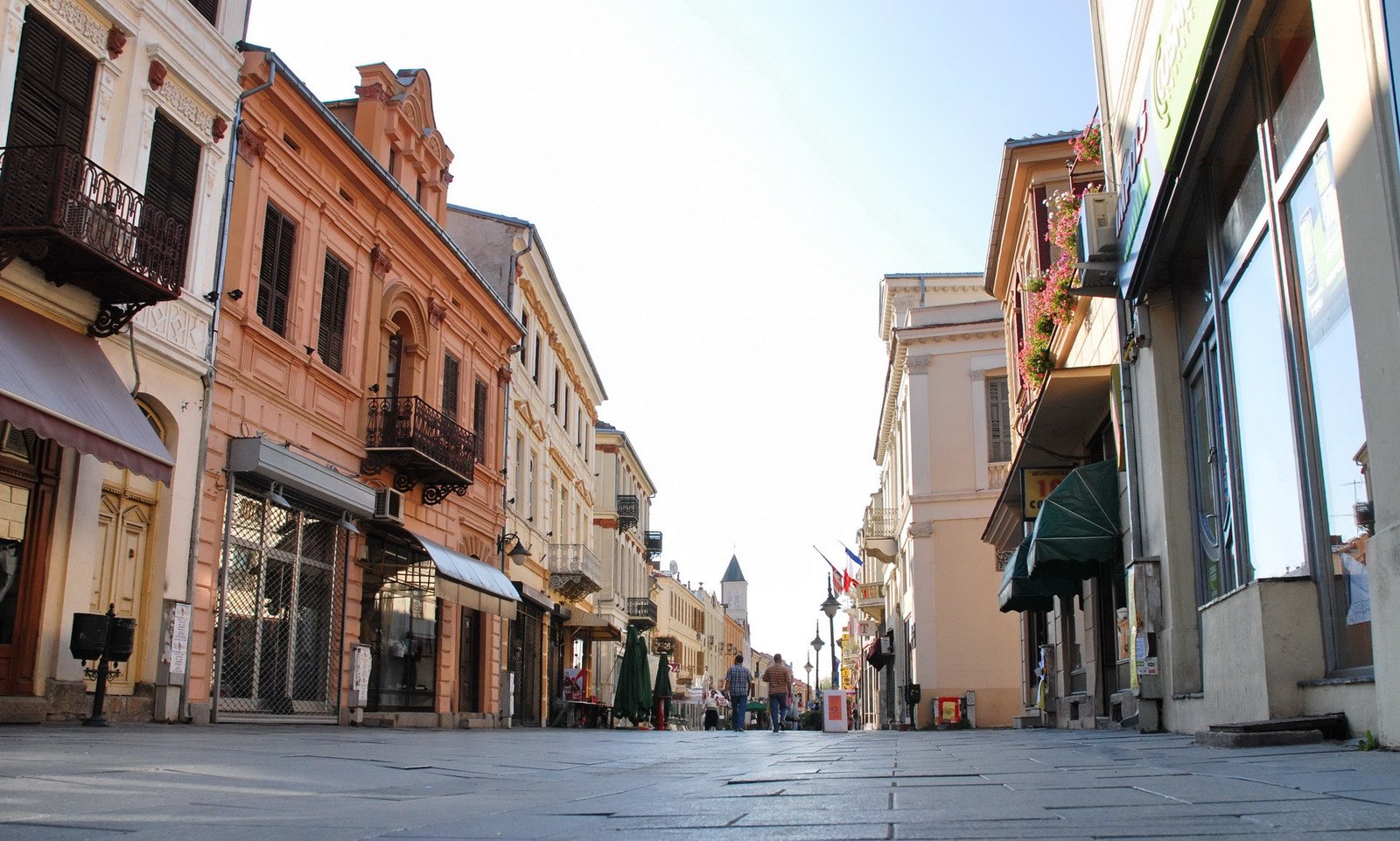
Bitola is North Macedonia's second city, set in the wide Pelagonia valley close to the Greek border. It has a relaxed, unhurried feel that distinguishes it from Skopje, and its Ottoman-era central boulevard, Širok Sokak, lined with 19th-century buildings and cafe terraces, gives it more elegance than most Macedonian towns.
On the edge of the city lie the ruins of Heraclea Lyncestis, a Greek city founded by Philip II of Macedon in the 4th century BC. The mosaics here — remarkably well-preserved — are among the finest in the Balkans and largely overlooked by tourists.
Bitola has a notable connection to modern Turkish history: Mustafa Kemal, later known as Atatürk, attended military school here in the early 1900s and reportedly spent some of his formative years in the city. A memorial to him stands on Širok Sokak. The Clock Tower and New Mosque on Magnolia Square are the other landmarks of the Ottoman town.
The Manastir Jewish community, once significant, maintained a synagogue and cemetery here until World War II; almost the entire community was deported and killed in 1943. The Jewish cemetery survives as a memorial to over four centuries of Sephardic presence in the city.