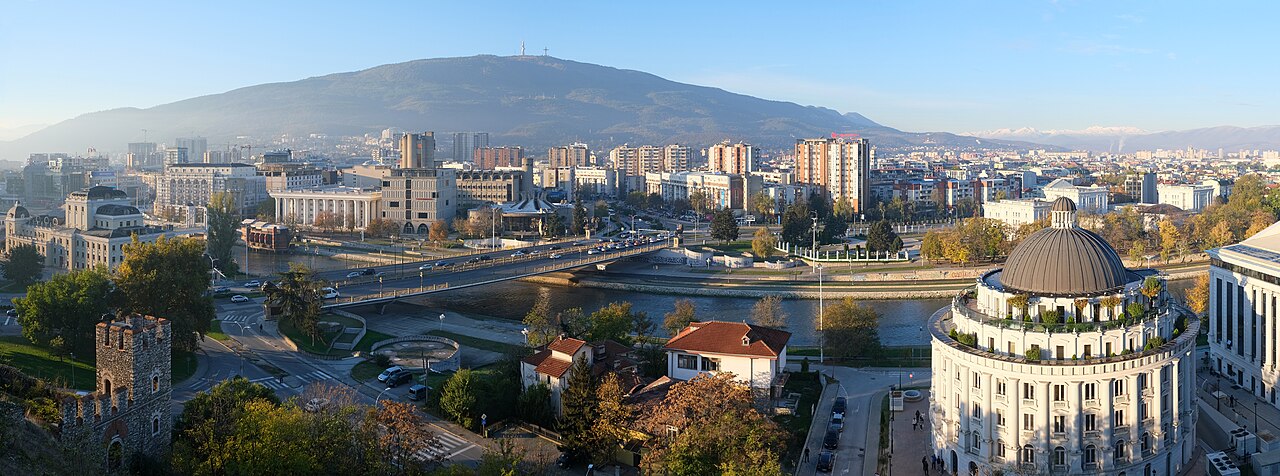
Skopje is the capital and by far the largest city in North Macedonia. At first glance it can be disorienting — a city centre packed with neo-baroque monuments, statues of warriors, and triumphal arches erected as part of the "Skopje 2014" urban redesign project. The effect is surreal and controversial. Look past it, and you'll find one of the most interesting Ottoman bazaars in the Balkans.
The Čaršija (Old Bazaar) survived the catastrophic 1963 earthquake that levelled much of the modern city. It remains a working, lived-in quarter: stone-paved lanes lined with craft workshops, tea houses, mosques, caravanserais, and the smell of grilled meat. The Mustafa Pasha Mosque (1492), the Daut Pasha Baths (now an art gallery), and the Kursumli An caravanserai are highlights. The Church of the Holy Saviour, just inside the bazaar, contains a breathtaking early 19th-century wooden iconostasis — one of the finest examples of Macedonian woodcarving.
Above the bazaar, the Skopje Fortress (Kale) offers good views over the city and the Vardar River that bisects it. The fortress dates back at least to Byzantine times, though most of what's visible is Ottoman. The Stone Bridge crossing the Vardar below it was built by Sultan Mehmed the Conqueror in the 15th century and is still in daily use.
The Memorial House of Mother Teresa marks the birthplace of Agnes Gonxha Bojaxhiu in the city centre. The Holocaust Memorial Center on the Vardar bank documents the deportation and murder of Macedonia's Jewish community in 1943. The Skopje Aqueduct, 5 kilometres north of the centre, is an unexpectedly grand ancient ruin that most visitors miss.
Skopje's food and nightlife scene is young, cheap, and lively. The city has a large student population and cafe culture is serious here.