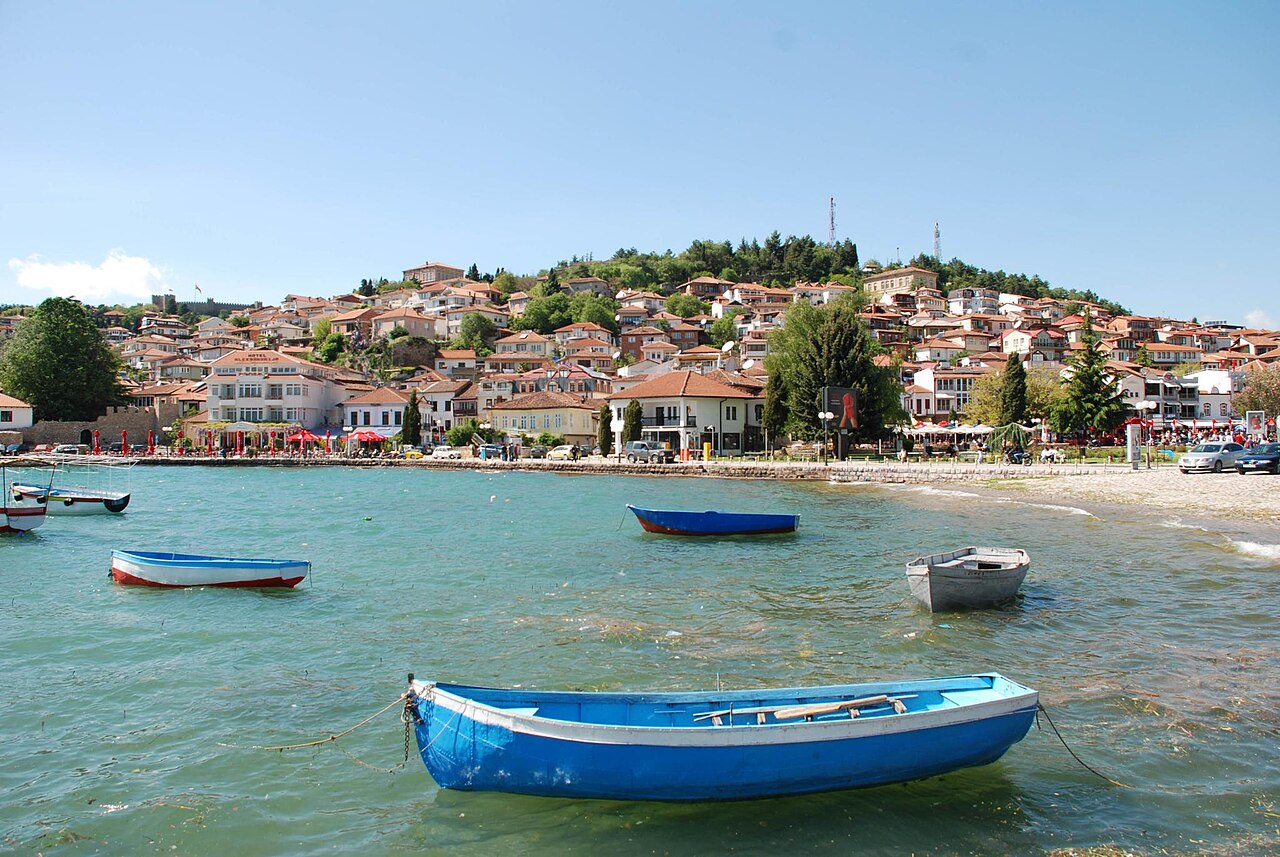
Ohrid is North Macedonia's most visited destination, and for good reason. The town sits on the northeastern shore of Lake Ohrid — one of Europe's oldest and deepest lakes, shared with Albania — and the whole area is a UNESCO World Heritage Site for both its cultural and natural value.
The old town climbs a hillside above the lake, studded with medieval churches. The most photographed is the Church of St John at Kaneo, perched on a cliff above the water. The Plaošnik complex, beside Samuel's Fortress, contains the Church of Saints Clement and Panteleimon — the oldest Slav monastery, founded in the 9th century by Saints Cyril and Methodius's disciple Clement of Ohrid, who established one of the first Slavic literary schools here.
Ohrid was once known as the "Jerusalem of the Balkans" for its extraordinary concentration of churches — said to have numbered 365 at its peak. Today around 50 survive, including the 11th-century Church of Saint Sophia. The collection of Byzantine icons held in the National Museum is considered one of the finest outside Istanbul.
Lake Ohrid itself is remarkable: an estimated 1–3 million years old, home to endemic species found nowhere else, including the Ohrid trout. Swimming is popular in summer; the water is clear and warmer than you'd expect. The boat to Sveti Naum at the southern end of the lake is the standard day trip.
In July and August Ohrid is busy with Macedonian and Albanian tourists. Come in May or September for quieter streets and better light.