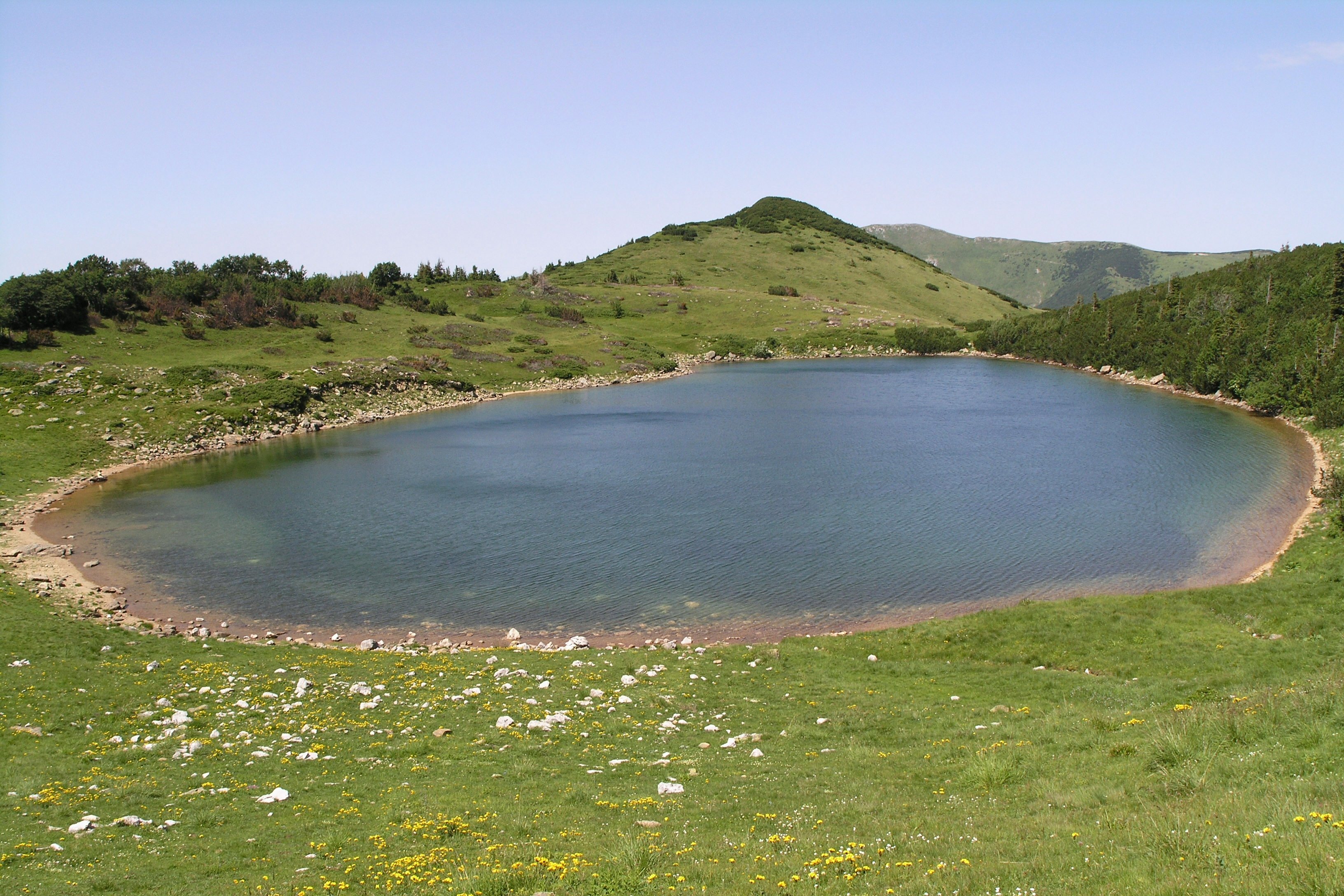
Bjelasica is a rolling, rounded mountain massif in northern Montenegro — green and forested in summer, snow-covered for six months of the year — that forms the heart of one of the country's two main winter playgrounds, and one of the last refuges of European primeval forest. It is the gentler cousin of Durmitor across the Tara canyon: lower peaks, less drama, more accessible.
The geology is volcanic, which is unusual in this part of the Balkans and accounts for the soft contours, the rich pastures, and the dozens of glacial lakes scattered across the heights. Six peaks climb above 2,000 metres, Crna Glava ("Black Head") highest at 2,139 metres. The whole massif covers about 630 square kilometres across five municipalities — Kolašin, Mojkovac, Bijelo Polje, Andrijevica and Berane — and is protected as a nature park.
The headline attraction is the Biogradska Gora National Park on the western slopes, which contains one of the three remaining stretches of virgin forest in Europe. Around the small Lake Biogradsko the beeches, firs and maples have been growing untouched for half a millennium and more; the tallest trees reach 50 metres. A flat, signposted loop trail circles the lake; longer trails strike up into the high pastures.
In winter the action moves to Kolašin, a small mountain town on the Belgrade-Bar railway line, and the Kolašin Valleys ski resort just above it at 1,450 and 1,600 metres. The skiing is small by Alpine standards but the lifts are modern, the snow reliable from December to April, and the prices about half of what you'd pay in Italy or Austria. Kolašin itself has a few good hotels, a wooden-cabin charm, and a cluster of restaurants serving smoked trout and Montenegrin mountain cooking.
The other approaches are from Mojkovac to the north (the closest train stop to Biogradska Gora), Bijelo Polje to the northeast, and Berane and Andrijevica to the east. The latter two are still off the tourist circuit and worth a stop if you are circling the massif by car.