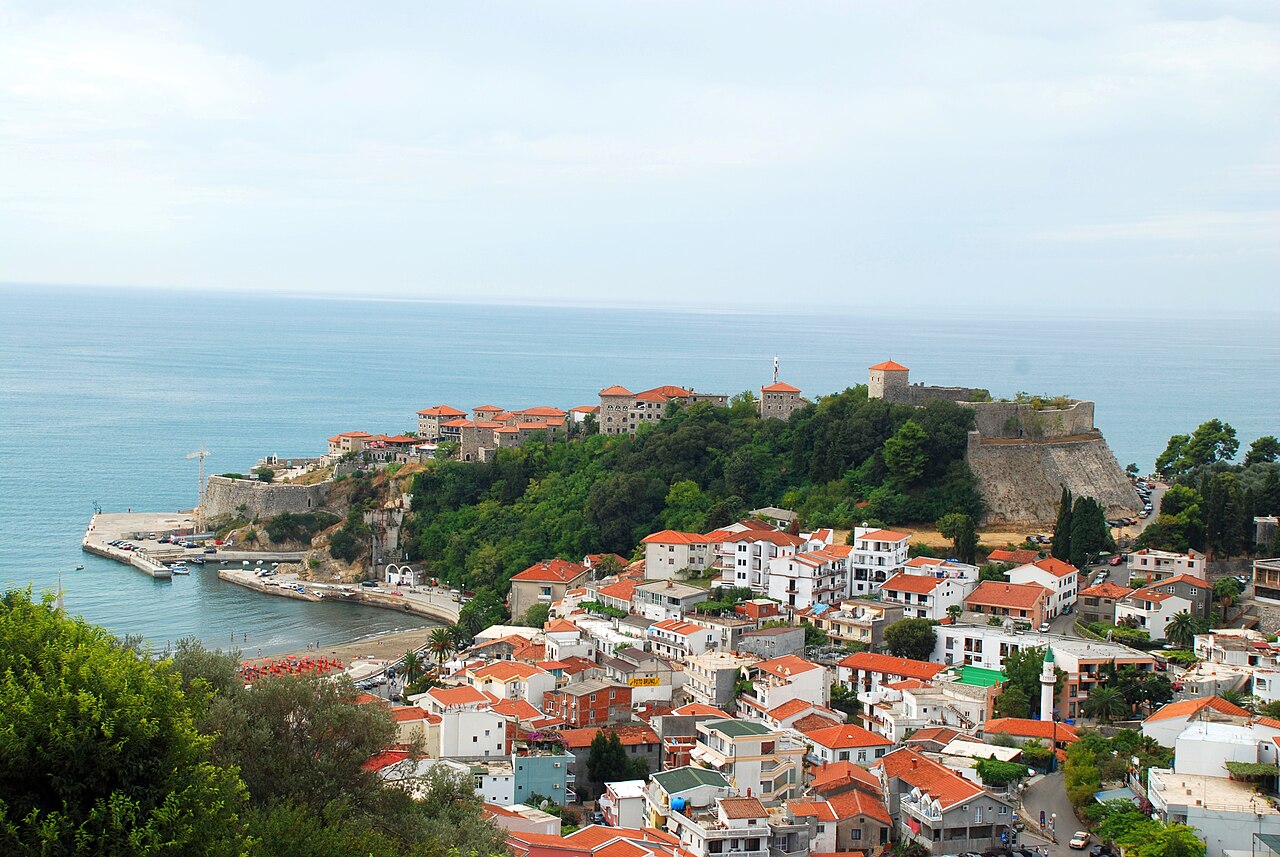
Ulcinj is the southernmost town on the Montenegrin coast, just a few kilometres from the Albanian border. It's the most ethnically distinct town in Montenegro — the majority of the population is Albanian, and the town has a different character from the rest of the coast: minarets alongside churches, Albanian heard in the streets alongside Serbian, and a slightly rougher, less polished tourist infrastructure.
The old town (Stari Grad) is a walled citadel on a headland above the sea, with a history stretching back through Ottoman and Venetian occupation to ancient times. It's scruffier than Kotor but more authentic — a living neighbourhood rather than a restored museum piece. Ulcinj was a pirate base in the medieval period, and the Church-Mosque of Ulcinj — a building that has functioned as both over its long history — stands as one of the most unusual religious monuments on the Adriatic coast.
Velika Plaža (Long Beach) — 13km of unbroken sandy beach south of town — is genuinely one of the longest beaches on the Adriatic. It's flat, wide, and backed by low dunes. The southern end merges into the border zone with Albania. This is the main reason people come to Ulcinj: serious beach time, away from the rocky coves and small pebble beaches further north. The Mala Plaža (City Beach) sits right below the citadel walls for a more atmospheric, if smaller, swim.
The town is about 25km from Bar and about 90km from Budva. There's regular bus service along the coast. Ulcinj tends to be slightly cheaper than the main resort towns further north.