Cetinje is the old royal capital of Montenegro, sitting in a high plateau in the mountains above Budva. It was the seat of the Petrović-Njegoš dynasty and the capital of the Principality (then Kingdom) of Montenegro from 1482 until 1918, when it was incorporated into Yugoslavia. Now it has a population of around 13,000 and a slightly melancholy grandeur.
The town has an unusual collection of foreign embassies — many European powers built missions here in the 19th century when Cetinje was a genuine capital. Many of these buildings survive, now used as schools, offices, or museums. The Royal Palace houses a history museum. The Cetinje Monastery, originally founded in 1484 and rebuilt several times, contains relics including what is claimed to be the right hand of John the Baptist.
The National Museum of Montenegro is actually several museums in one — the King Nikola Palace, the History Museum, the Art Museum, and the Ethnographic Museum — spread across the town centre and sold on a combined ticket.
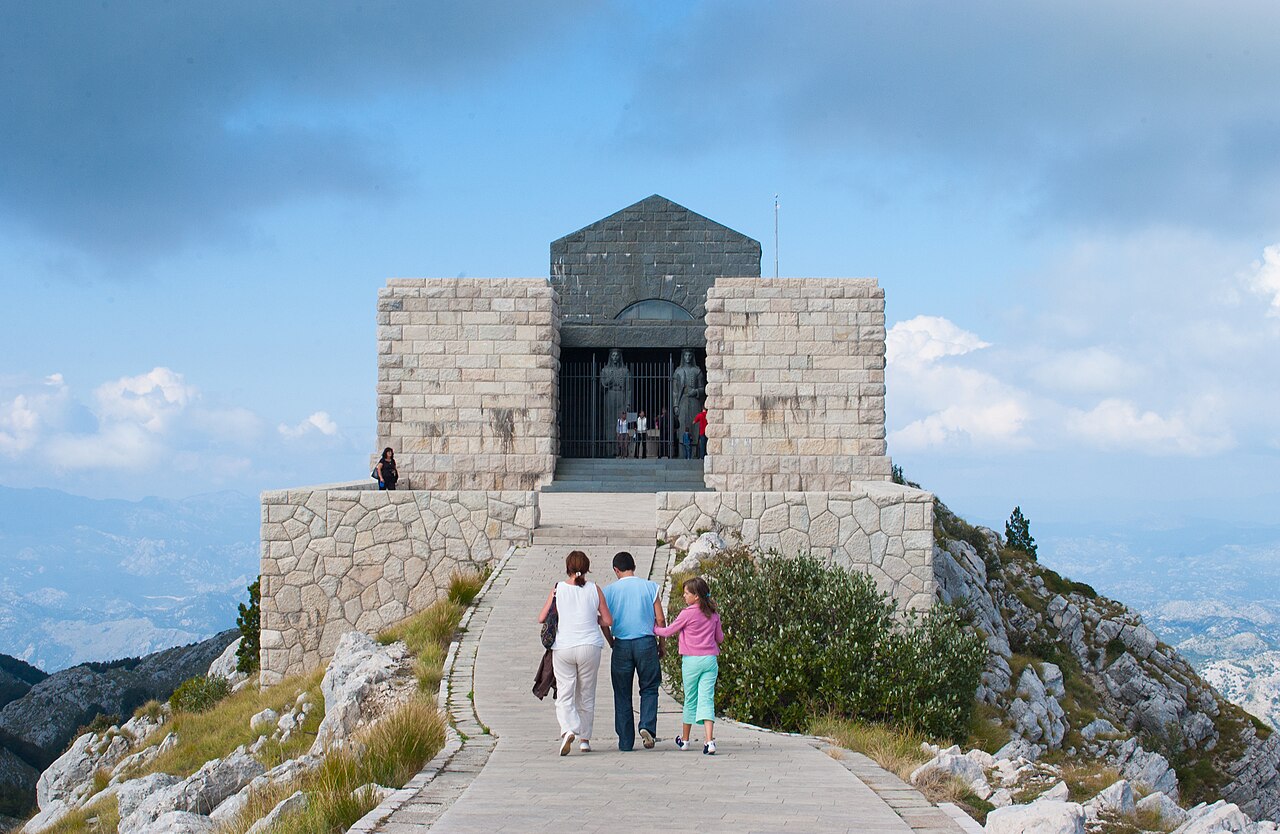
Cetinje is about 35km from Budva and about 40km from Podgorica. The road from Budva winds up through the Lovćen National Park with extraordinary views. Mount Lovćen above town holds the mausoleum of Petar II Petrović-Njegoš, the 19th-century prince-bishop and national poet — a steep climb (or drive to the lower car park) that rewards with panoramic views over both coast and interior.