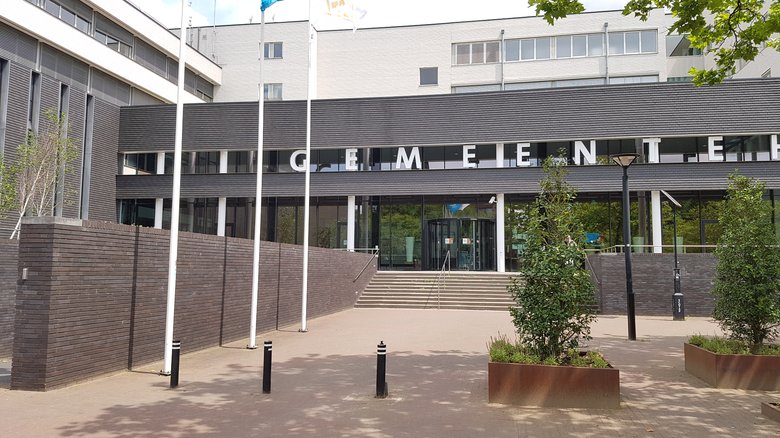
Oss is a mid-sized town of around 95,000 in Noord-Brabant, sitting on the Maas river in the southern Netherlands. It is not a place that features prominently in most itineraries, and that is part of the point: it is a working Dutch town with its own distinct identity, a strong carnival tradition, and an industrial past that turned out to be surprisingly consequential.
The town's story pivots around meat and medicine. The Zwanenberg slaughterhouse made Oss prosperous in the late nineteenth and early twentieth centuries, and the Jan Cunen Museum covers this history well — including how the factory's leftover glands led directly to the founding of Organon, a pharmaceutical company that went on to develop some of the most widely used drugs of the twentieth century. The Grote Markt at the heart of the town is a pleasant square lined with cafes, busy on market days and genuinely festive during Carnival.
Oss also has one of the more peculiar civic monuments in the Netherlands: a sculpture commemorating Jan de Doot, a 17th-century blacksmith who removed his own bladder stone with a razor and lived to tell the tale. It is the kind of oddity that makes a town memorable.