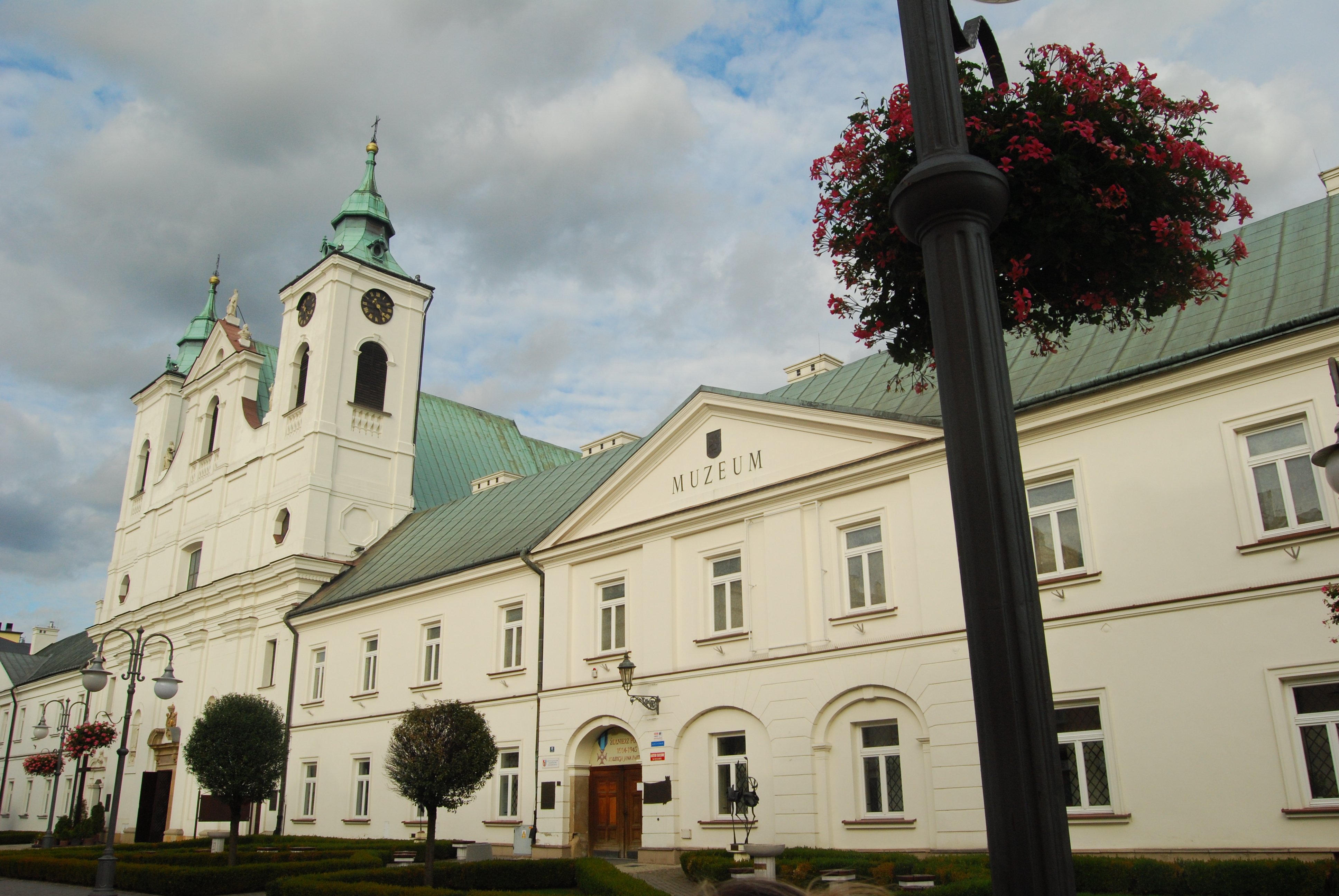
Rzeszów is the largest city in southeastern Poland and the capital of the Subcarpathian Voivodeship — a regional centre of about 200,000 people that most travellers blow through on their way to Krakow, the Bieszczady mountains, or the Ukrainian border. That is a small mistake. The city has a pleasant Old Town, a properly grand Lubomirski castle, and a level of energy that comes from being a fast-growing university town with a serious aerospace industry on its outskirts.
The heart of the city is the Market Square (Rynek), with its town hall painted Habsburg yellow and a thicket of cafés around the perimeter. Underneath the square runs the Underground Tourist Route, a network of medieval merchants' cellars carved into the rock — at 25 metres below ground, the deepest such system in Poland. The town hall, the castle, the Bernardine monastery, and the old Synagogue (now a museum and archive) all sit within fifteen minutes' walk of each other.
Rzeszów's Jewish history is heavy and largely erased. Before the war about a third of the population was Jewish; almost none survived. Two surviving synagogue buildings — the Old Town and New Town synagogues — have been restored and now house archives and exhibitions rather than congregations. The city also has a strong communist-era streak: the white concrete pedestrian bridge and the Roundabout of the Heroes of the Home Army give the centre its distinctive late-modernist silhouette.
Rzeszów makes a sensible base for trips out into the Subcarpathian region — Lancut and its remarkable aristocratic castle is fifteen minutes east, and the Bieszczady mountains are two hours south. The city itself deserves a day; two if you have time for the castle interior and the Ethnographic Museum.