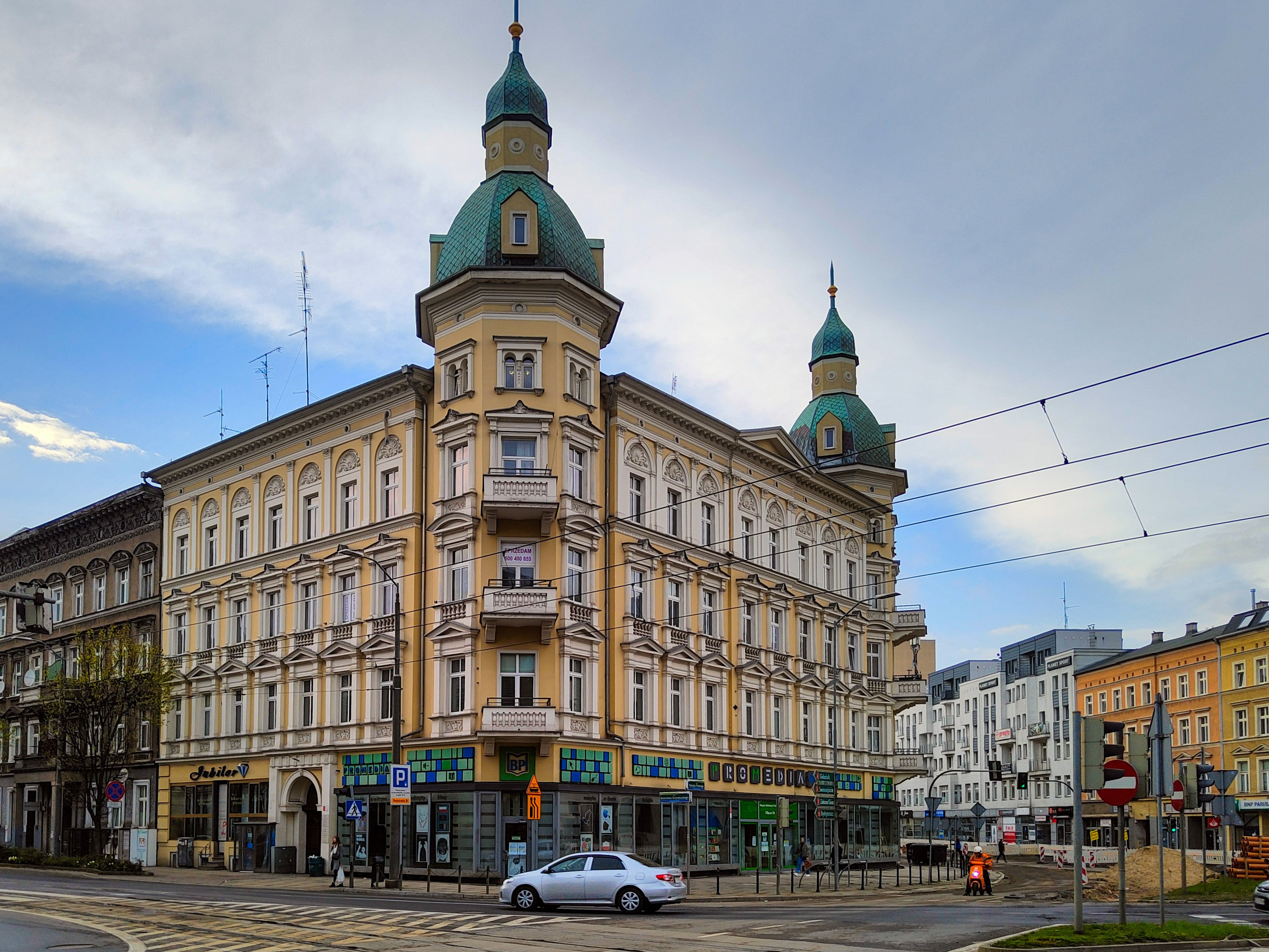
Szczecin (known in German as Stettin) is a major port city in northwestern Poland, close to the German border on the Oder river. It has a complicated past: for most of its history it was a German city, the capital of Pomerania, and the birthplace of Catherine the Great. After 1945, it was transferred to Poland along with the surrounding region, the German population expelled, and the city repopulated with Poles — an exchange that left it with fine Prussian buildings and a history that is difficult to integrate.
The historic centre is worth exploring. The Castle of the Pomeranian Dukes dominates the old city hill and houses several museums. The Gothic St. James' Cathedral, the largest church in northwestern Poland, has a remarkable story of its own: its towers were completed only in the 1990s, partly funded by Germans expelled from the city in 1945. The Wały Chrobrego embankment along the Oder is a grand early-20th-century promenade with views over the wide river. And the Szczecin Philharmonic — a striking glass and steel concert hall opened in 2014 — won the European Union's most prestigious architecture prize the following year, putting the city's cultural ambitions on the European map.
The city is not on the tourist trail in the way that Kraków or Warsaw are, which means you can walk around without being followed by other tourists. Berlin is 2.5 hours away by train. Ferries run from Świnoujście, an hour away, to Sweden.