Ponta Delgada is the administrative capital of the Azores and the main gateway to the archipelago. It has direct flights from Lisbon, London, Frankfurt, and Boston — for most visitors it's the first Portuguese soil they touch. Most people spend a day or two here before fanning out across São Miguel and beyond, and the city rewards the pause.
The seafront Avenida Infante Dom Henrique anchors the town. The 16th-century Forte de São Brás at one end looks out across a harbour busy with inter-island ferries; the tourist office is along the same avenue, as are the bus stops for routes around the island. Behind the waterfront the city climbs a gentle slope through a grid of narrow streets lined with whitewashed buildings trimmed in black volcanic basalt — the distinctive Azorean style you'll see everywhere on São Miguel.
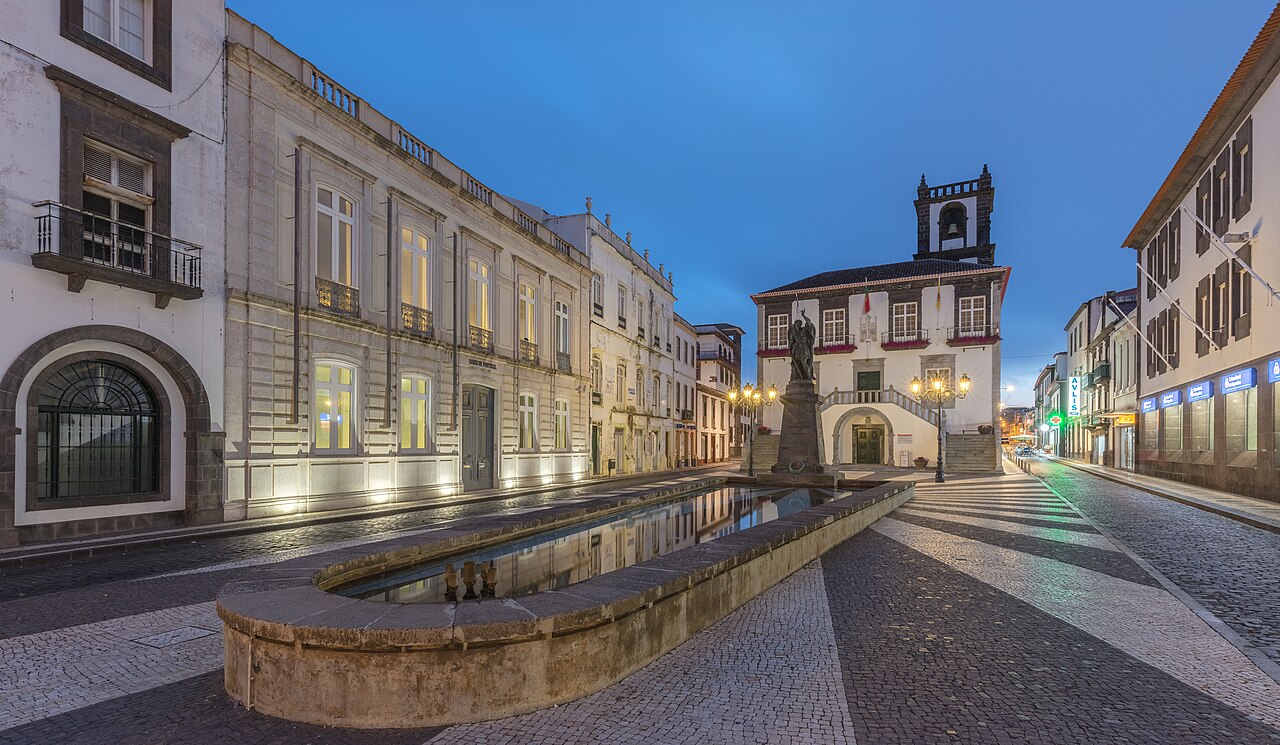
The centre is compact and walkable. The main square, Praça do Município, is flanked by the baroque town hall, the bishop's palace, and the Igreja Matriz de São Sebastião, a late-15th-century church with a florid Manueline doorway carved from local stone. A short walk west, the Portas da Cidade — three ceremonial baroque archways — stand as the symbolic entrance to the old town. Small shops, bakeries selling the local queijadas pastries, and good seafood restaurants fill the surrounding streets.
The city is the practical base for São Miguel's big-draw excursions: the twin-lake volcanic crater at Sete Cidades, the hot-spring pools and geothermally-cooked cozido at Furnas, whale watching off the southern coast, and tea plantations at Gorreana. One afternoon covers the main sights on foot; an evening adds a chance to eat well and explore the bars around the marina. The tourist office on the waterfront is well-stocked and the staff speak English — worth a stop before you head out.