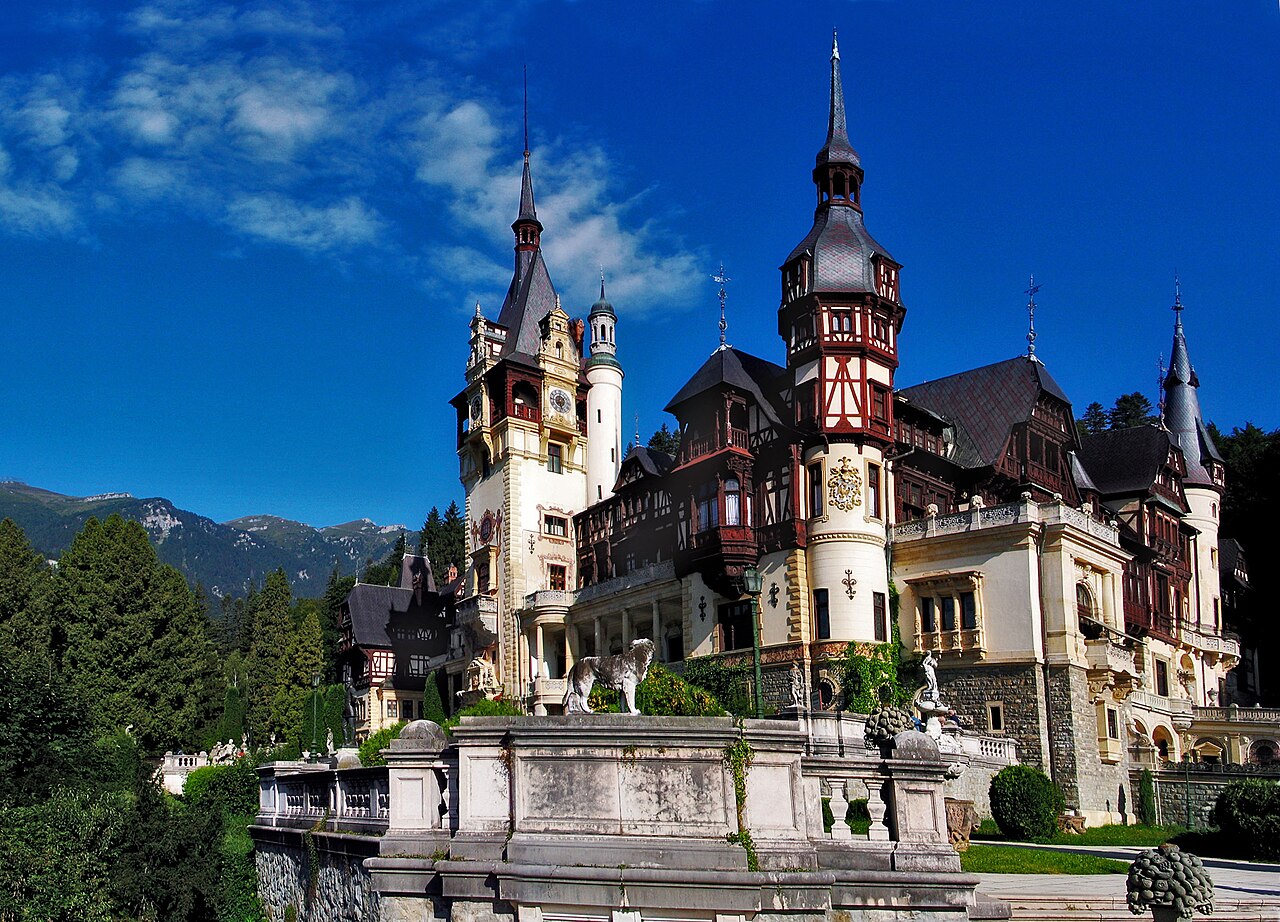
Sinaia is Romania's most celebrated mountain resort, tucked into a valley of the Bucegi Mountains about 120 kilometres north of Bucharest. It became the summer retreat of the Romanian royal family in the 19th century, and the palace they built here — Peleș Castle — is one of the most extraordinary royal residences in Europe: a Neo-Renaissance confection of turrets, carved galleries, and themed interior rooms rising from the Carpathian forest.
The town climbs steeply from the railway station to the 17th-century Sinaia Monastery, which gave the resort its name after a founder who had made a pilgrimage to Mount Sinai. Above the monastery, forest roads lead to ski slopes and hiking trails into the Bucegi Mountains. In summer the cable car carries visitors to the plateau at around 2,000 metres, where limestone formations and moorland trails extend in all directions.
The Belle Époque architecture of the resort quarter — grand hotels, the ornate Casino, and elegant villas — survives in unusual quantity, giving Sinaia a faded-grandeur atmosphere quite different from purpose-built ski resorts. The George Enescu Memorial House, where Romania's greatest composer spent his summers, reflects the cultural ambitions of the resort's golden age.
In winter Sinaia draws skiers to the Cota 1400 and Cota 2000 ski areas; the slopes are modest by Alpine standards but perfectly good for a long weekend. In summer it's a hiking base. Spring and autumn are the quietest and often the most beautiful times — the beech forests turn gold in October.