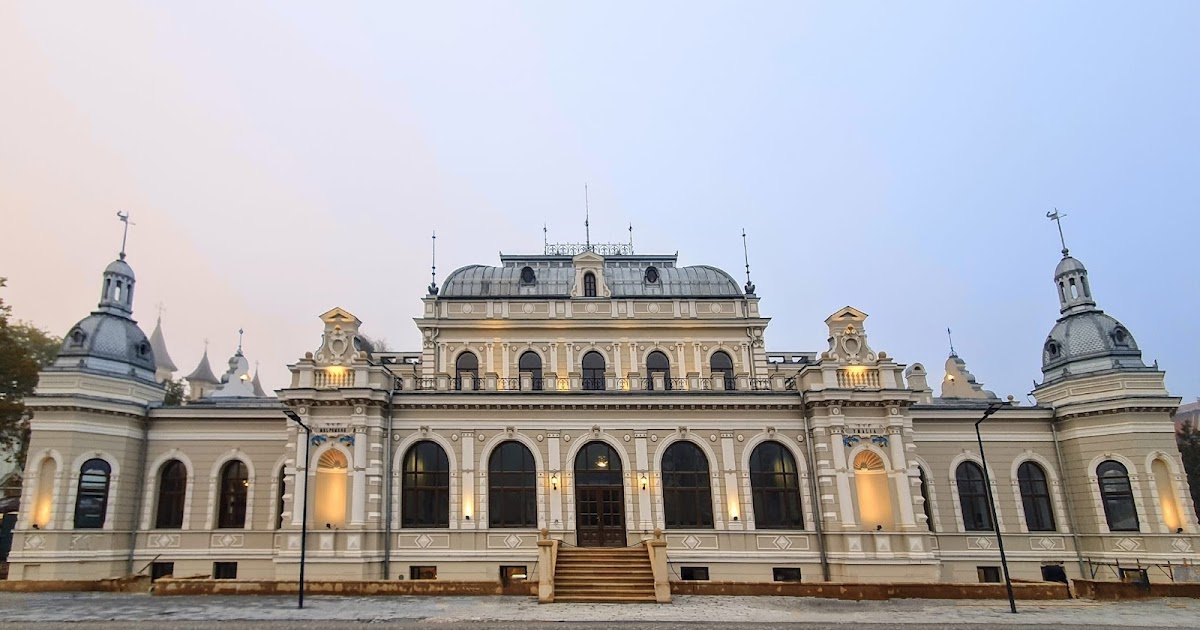
Vatra Dornei
©
Vatra Dornei

Vatra Dornei

Romanian spa and ski town in an Eastern Carpathian valley, centred on mineral springs and a Belle Époque casino.

Vatra Dornei is a well-known spa and ski resort in the north of Romania, set in a valley of the Eastern Carpathians. The town has been a health resort since the Habsburg era, and the mineral springs and mountain air still draw visitors. In winter the surrounding mountains offer modest skiing; in summer the area is good for hiking.

The belle époque casino, built in 1897 when Vatra Dornei was a fashionable Austrian resort, is the architectural centrepiece of the spa park. The building no longer functions as a casino but remains the grandest thing in town.

The real draw is the proximity to the painted monasteries of Bucovina, some of the finest medieval art in Europe — all within an hour or two's drive. Voronet, called the "Sistine Chapel of the East," is remarkable for the famous "Blue of Voronet" in its exterior frescoes. Humor (built 1530), Moldovita (1532), and Sucevita (1582–1584) are all covered with frescoes depicting biblical scenes. Putna, built by Stephen the Great between 1466 and 1469, holds the ruler's tomb and an important museum of medieval art. See the day trips page for details.

Guide

Day Trips

Vatra Dornei is the best base for visiting the painted monasteries of Bucovina, a group of 15th and 16th-century Orthodox churches whose exterior walls are covered entirely in frescoes — one of the great achievements of medieval European art. The monasteries are all within 60–90 minutes' drive of the town.

Voronet (50 km) is the most famous, known as the "Sistine Chapel of the East" for its exterior frescoes painted in a vivid blue pigment — "Voronet blue" — that has not faded in 500 years. The western wall's depiction of the Last Judgment, covering 200 square metres, is the masterpiece. Humor (60 km, built 1530) and Moldovita (70 km, built 1532) are less visited and worth the slight extra distance — Moldovita retains its original defensive walls. Sucevita (90 km, 1582–1584) is the largest of the monasteries and has the most complete surviving frescoes. Putna (100 km), built by Stephen the Great between 1466 and 1469, is less ornate but holds the ruler's tomb and an important museum of medieval art.

All the monasteries are still active convents or monasteries; modest dress is required (shoulders covered, women wear headscarves) and photography rules vary. A car or hired taxi is the most flexible way to visit; guided tours from Vatra Dornei and Suceava are also available.

Guide

Getting There

Vatra Dornei is in the north of Romania, in Suceava county. By train, it lies on the line between Cluj-Napoca and Suceava — journey times are around 3.5 hours from Cluj and 2 hours from Suceava. The scenic mountain railway through the Carpathians makes the train journey worthwhile in its own right.

By car from Suceava, the drive takes about 90 minutes via the Câmpulung Moldovenesc road. From Cluj-Napoca, allow 3–4 hours. The town is served by long-distance buses from Bucharest, Suceava, and Cluj, though rail is generally more comfortable for the mountain sections.

Guide

Things to Do

Vatra Dornei is most useful as a base for the painted monasteries of Bucovina — some of the finest medieval art in Europe — but the town itself has a belle époque spa park, mineral springs, modest ski slopes, and good hiking in the surrounding Carpathians.