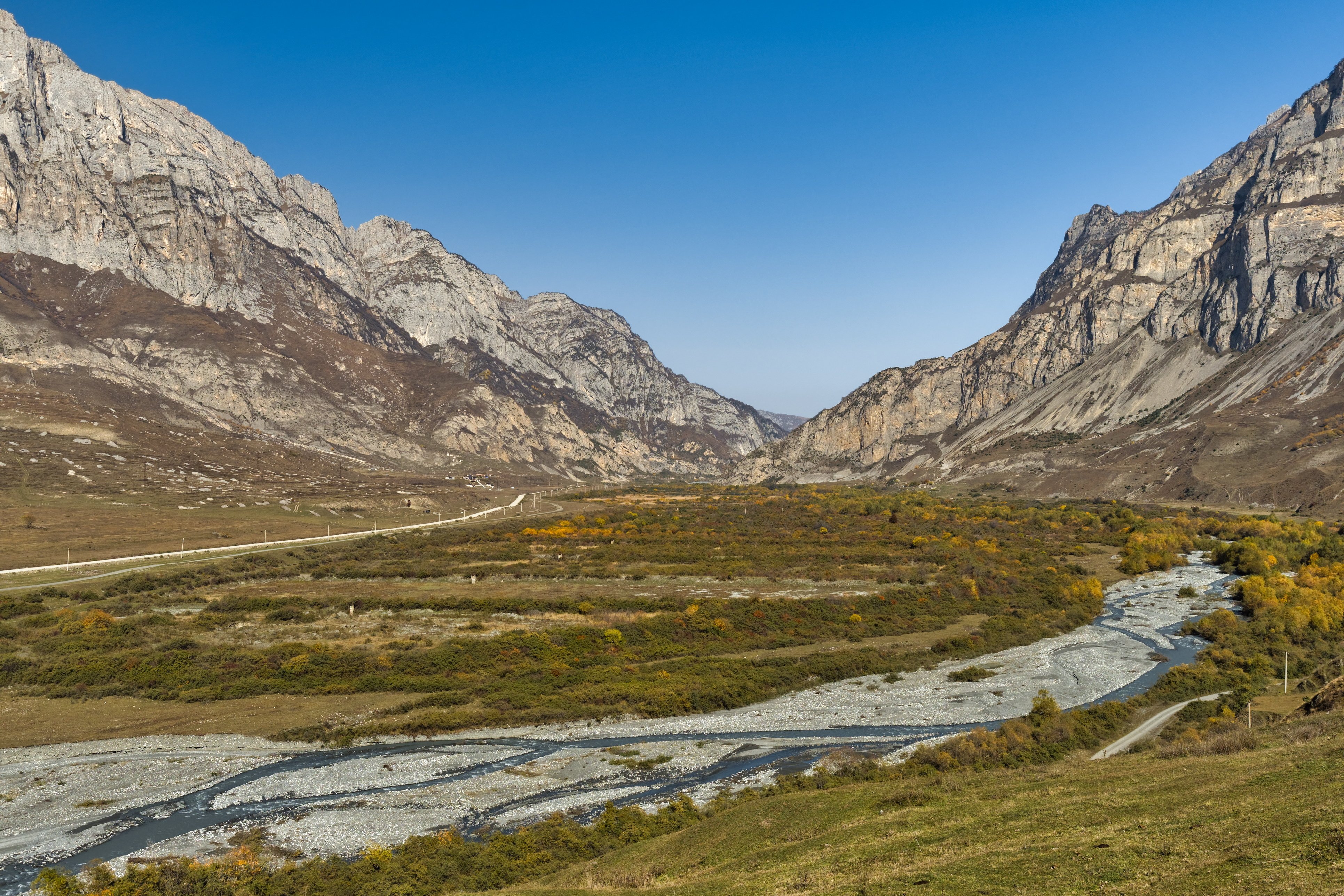
North Ossetia–Alania is a small republic in the Russian Caucasus, wedged between Georgia to the south and the plains of southern Russia to the north. The landscape is dramatic — snow-capped peaks, deep gorges, alpine meadows, and mineral springs that locals have used for centuries.
The Ossetians are descendants of the ancient Alans and take enormous pride in their hospitality. Spending even a short time with a local family is one of the most rewarding experiences the Caucasus can offer — expect long toasts, hearty food, and genuine warmth. The capital, Vladikavkaz, sits at the foot of the mountains and serves as the gateway to some of the most spectacular mountain scenery in Russia. Its finest landmark is the Mukhtarov Mosque, a Persian-influenced building on the Terek River bank.
Beyond the city, the Tsey Valley offers serious hiking and skiing with a Soviet-era cable car reaching the glaciers, while the Dargavs necropolis — a hillside of medieval stone crypts known as the "City of the Dead" — is one of the most haunting historical sites in the region. The Georgian Military Highway passes nearby, connecting Vladikavkaz to Tbilisi through some of the most breathtaking mountain road scenery anywhere.
Travel to the region requires some planning, and the security situation has historically been complicated. Check current conditions before visiting, particularly near the border with South Ossetia and Ingushetia.