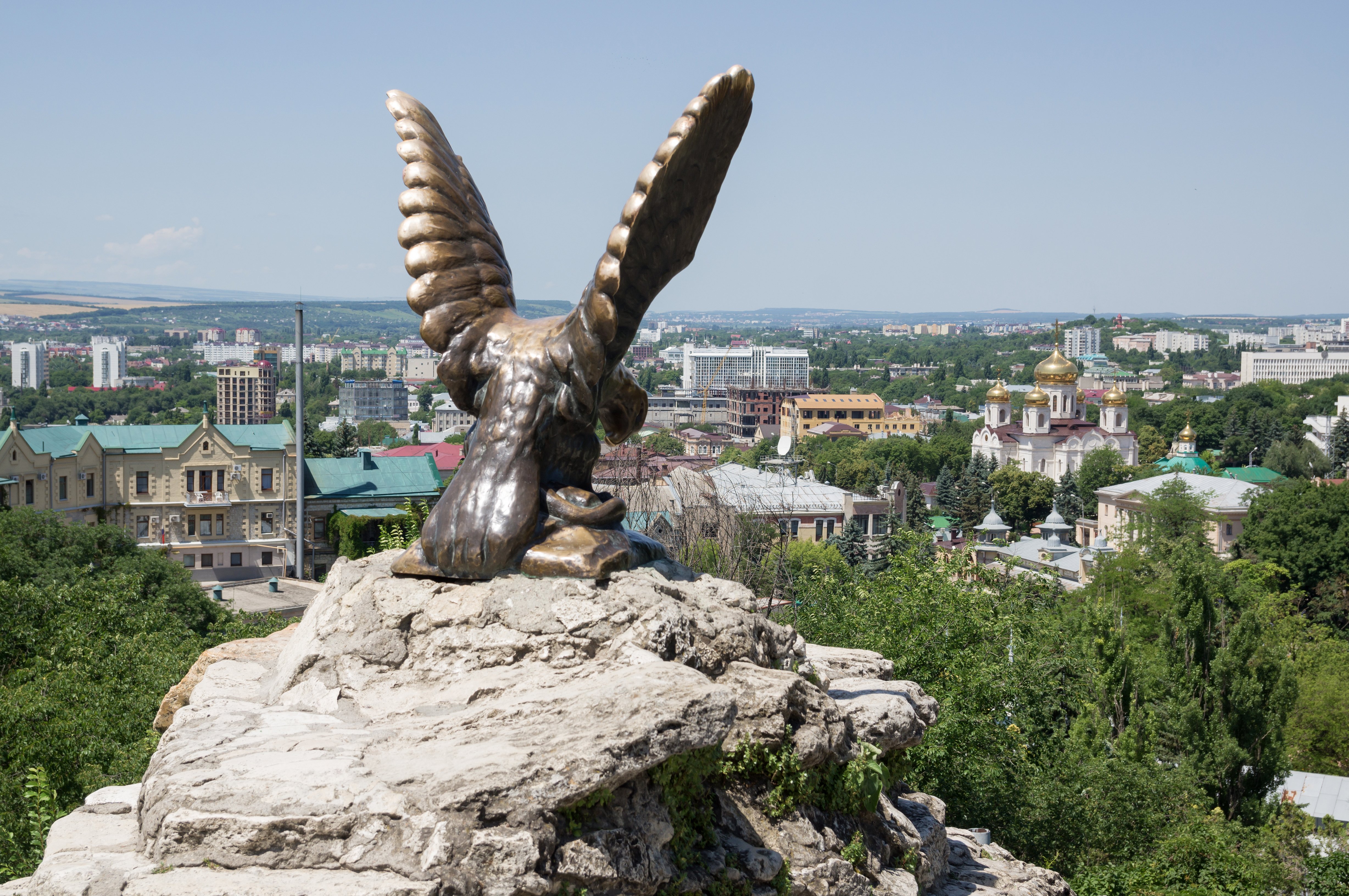
Pyatigorsk is a spa town in the Northern Caucasus, tucked among the volcanic peaks of the Caucasian Mineral Waters group. The name means "Five Mountains Town" — a reference to the cluster of ancient cones that frame the city, including the flat-topped Mount Mashuk that looms directly above it. With around 150,000 people, it is the largest and most important of the four Caucasian Mineral Waters resorts, alongside Kislovodsk, Zheleznovodsk, and Yessentuki.
The town has been a resort since the early 19th century, when the tsars sent their aristocracy here to drink, bathe in, and take the mineral waters. The grand colonnades, galleries, and bath-houses built in that era still stand — a faded but handsome reminder of imperial ambitions in the Caucasus. The mineral springs themselves still flow: you can fill a cup at the public drinking fountains scattered around the city for free.
Pyatigorsk is inseparable from the poet Mikhail Lermontov, who lived here and was killed in a duel on the slopes of Mashuk in 1841 at the age of 26. The Lermontov House-Museum, the Lermontov Duel Site, and the Diana Grotto and Aeolian Harp rotunda in the parkland are all pilgrimage points for Russians who grew up reading A Hero of Our Time, much of which is set in this town. The Lermontov Baths, a Moorish-style spa complex from the 1880s, are the most spectacular piece of imperial architecture in the city.
Today, Pyatigorsk functions as both a resort and a working city — home to a linguistic university and pharmaceutical college as well as the sanatoriums and spa facilities. The summers are hot and humid; Mount Mashuk is accessible by cable car and gives panoramic views of the Caucasus including Elbrus on clear days; and the town has a slightly melancholy, end-of-empire atmosphere that suits its Lermontov associations perfectly. The five-domed volcanic cone of Mount Beshtau, the highest point in the region, looms to the northwest.