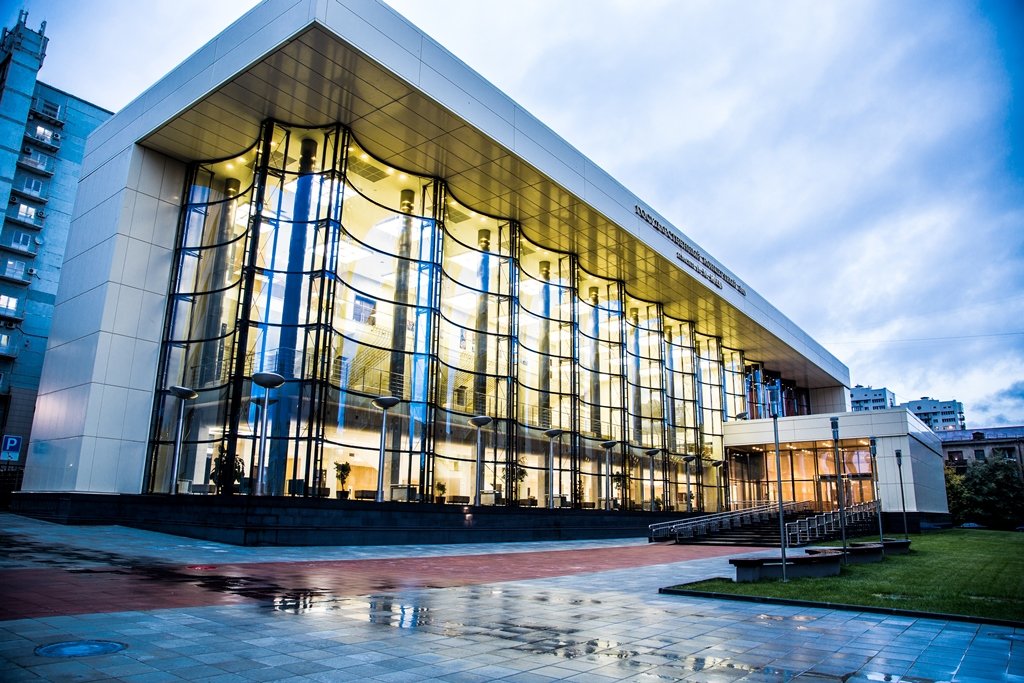
Novosibirsk is the heart of Siberia and its largest city, home to around 1.6 million people. By any standard it is young — founded in 1893 as Novonikolaevsk, a settlement at the point where the Trans-Siberian Railway crossed the River Ob. It grew explosively through the 20th century and is now the business, transport, and cultural hub of the entire region.
The Novosibirsk Opera and Ballet Theatre is the city's architectural centrepiece, one of the largest opera houses in Russia, and its ballet and opera companies are known internationally. The city also has six theatres, a philharmonic orchestra with a strong reputation, and a conservatory. The centre around Lenin Square preserves a fascinating cluster of early Soviet Constructivist buildings by the architect Andrey Kryachkov — one of the better urban-scale records of that brief architectural experiment.
The most unusual attraction is Akademgorodok (Academic City), a purpose-built scientific township about 30 km south of the centre in a birch forest on the shores of the Ob Sea reservoir. Founded in 1957 as the Siberian branch of the Russian Academy of Sciences, it has a distinctive atmosphere — part university campus, part forest village, with a concentration of research institutes and a lively cafe and bar scene fuelled by students and scientists. Near one of the genetics institutes stands a small bronze monument to the laboratory mouse — wearing glasses and knitting a double helix of DNA — that has become one of Siberia's most photographed objects.