Cadiz
©
Cadiz

Cadiz

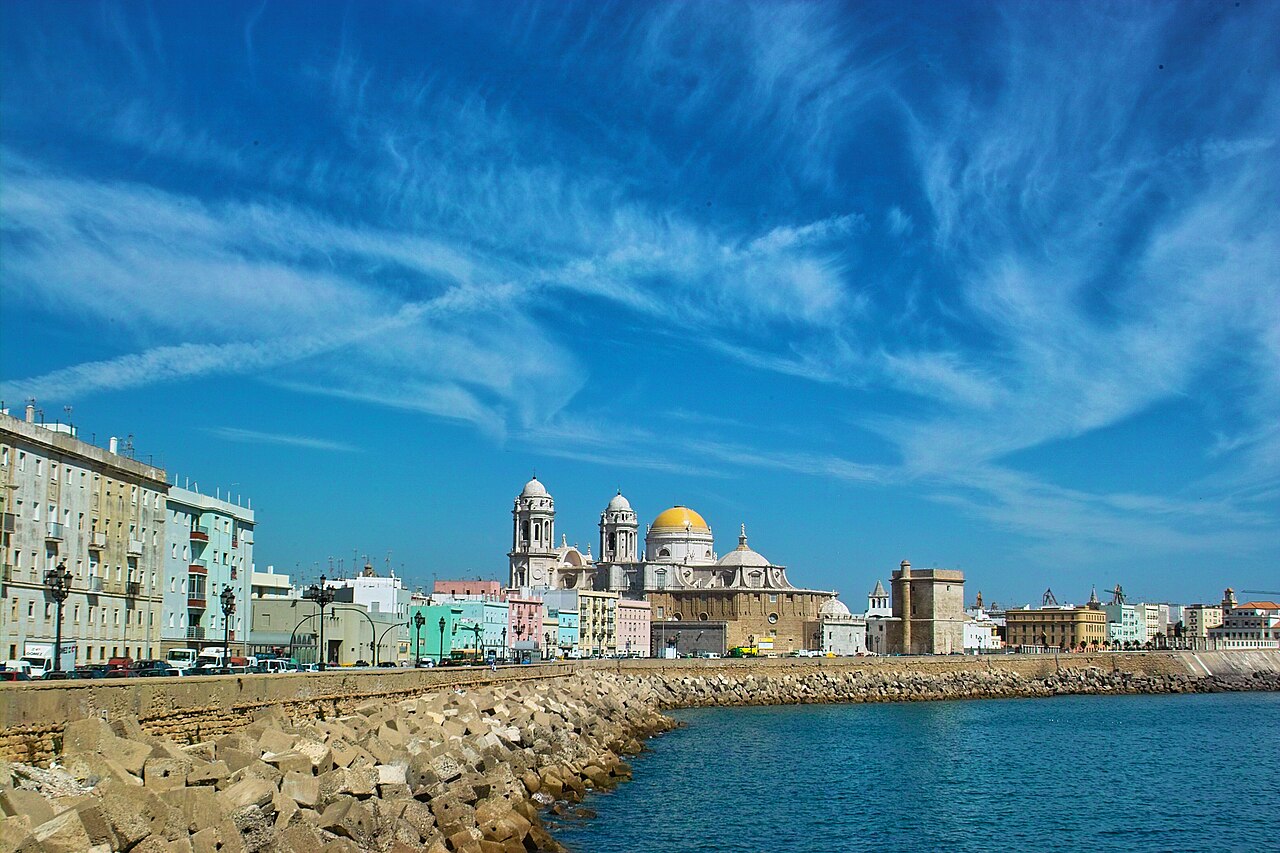
Ancient Andalusian port city on a peninsula, with Atlantic ramparts and 18th-century merchant architecture

On the southern tip of Spain the port city of Cadiz (pronounced CA-deeth) has been active since the days of the Roman Empire when its dancers were famous throughout the Mediterranean region. It is one of the oldest settlements in Spain, founded in around 1100 BC. Its most prosperous era was in the 18th century and inner Cadiz, built on a peninsula, displays the beautiful architecture of this period.

This area has a fascinating atmosphere about it with its narrow alleyways, back streets, open squares and spectacular churches - all close to the immense blue waters of the Cadiz Bay. The town itself is relaxed and not at all intimidating, like some port towns can be. Cadiz also boasts the liveliest Carnival celebration in Spain (with the possible exception of Tenerife in the Canary Islands). Today the city (pop. 154 000) is also a departure point for ferry boats to the Canary Islands.

Guide

Eating Out

Cadiz is a seafood city. The Atlantic is right there, and the fish arrives fresh every morning. Most of it is prepared simply — fried, grilled, or boiled — and the results are excellent. The local speciality is pescaíto frito: small fish and squid dusted in flour and deep-fried until crisp.

Tapas bars are the best way to eat here. Order a few small plates, a glass of Fino sherry or a cold Cruzcampo, and move on to the next place. The streets around the Mercado Central and Plaza de las Flores are dense with good options. Meal times run late: lunch from 2 to 4 pm, dinner from 9 pm onward. For breakfast, try churros con chocolate — thin, crisp churros dipped in thick hot chocolate.

The local drinks are worth seeking out. Fino and Manzanilla sherries come from nearby Jerez and Sanlúcar de Barrameda. Barbadillo white wine is light and goes perfectly with fried fish.

Guide

Getting Around

The old city is small and best explored on foot. The historic centre sits on a peninsula and is easily walkable from end to end in 30 minutes. Buses connect the old city with the newer districts and the bus station. Cadiz is well connected by train to Jerez de la Frontera (30 minutes), Seville (two hours), and Madrid.

Guide

Getting There

Getting to Cadiz can be a bit complicated, and you will most likely have to make at least 1 connection, somewhere. If you happen to be in Spain already, you may be able to get a flight to the nearby Jerez Airport, but most likely you will have to rely on other modes of transportation.

Flights

If you're traveling to Cadiz, most likely you will have to fly into another city and then transfer to land travel. The nearest airports to fly into are Seville, Granada, Malaga and Madrid. The least expensive flights go into Malaga or Madrid, but the travel time after landing is considerably longer. On the other hand, while it's usually more expensive to travel to Granada or Seville, you will have less travel time after landing.

Trains

Once you've landed, 1 option is to take the train. This can be more costly than the bus but travel time is usually halved and comfort levels are extremely high. There are 2 daily trains from Madrid--a morning train at 10 a.m. and another at 4 p.m--with each being a 5 hour trip. From Malaga the trip is nearly 6 hours with 1 transfer, but 4 trains run between 7:45 a.m. and 4:30 p.m. There are only 4 trains from Granada, and a transfer somewhere is required. The trip takes at least 6 hours, depending upon transfer time. The train trip is only 2 hours from Seville, and the trains run regularly all day.

Buses

There are regular buses from all of the major cities to Cadiz, with costs being considerably lower than the train, but travel times are increased by a few hours.

Cars

You can choose to rent a vehicle in any city and make the trip yourself, but be aware that it can be nearly impossible to find a rental car during the busy season of July through August.

Boats

Alternatively, you can choose to fly to Tangier, Morocco and make the approximately 2-hour ferry ride across to Cadiz, with a stop in Tarifa.
Guide

When to Go

February is the most famous time to visit: Cádiz Carnival is the liveliest in mainland Spain and one of the great street festivals of Europe. For ten days the entire city dresses up and sings — not just in costume, but in elaborate satirical musical performances called chirigotas and comparsas, groups that spend months writing and rehearsing original songs mocking politicians, celebrities, and current events. The humour is sharp, local and mostly incomprehensible to non-Spanish speakers, but the atmosphere is joyful and almost entirely good-natured.

April and May are excellent: the weather is warm, the streets are quiet by Andalusian standards, and the beaches are still uncrowded. The festivals of Semana Santa (Holy Week) are observed here with the same intensity as in Seville.

July and August are hot (regularly 35°C) and busy. The beach fills with Spanish families on summer holiday and prices rise accordingly. The old city stays pleasant — sea breezes make it more bearable than inland Andalusia — but book accommodation well in advance.

The sea is warm enough for swimming from June through October. The Atlantic here is consistently cooler than the Mediterranean, but pleasant from mid-June.

costa de la luz