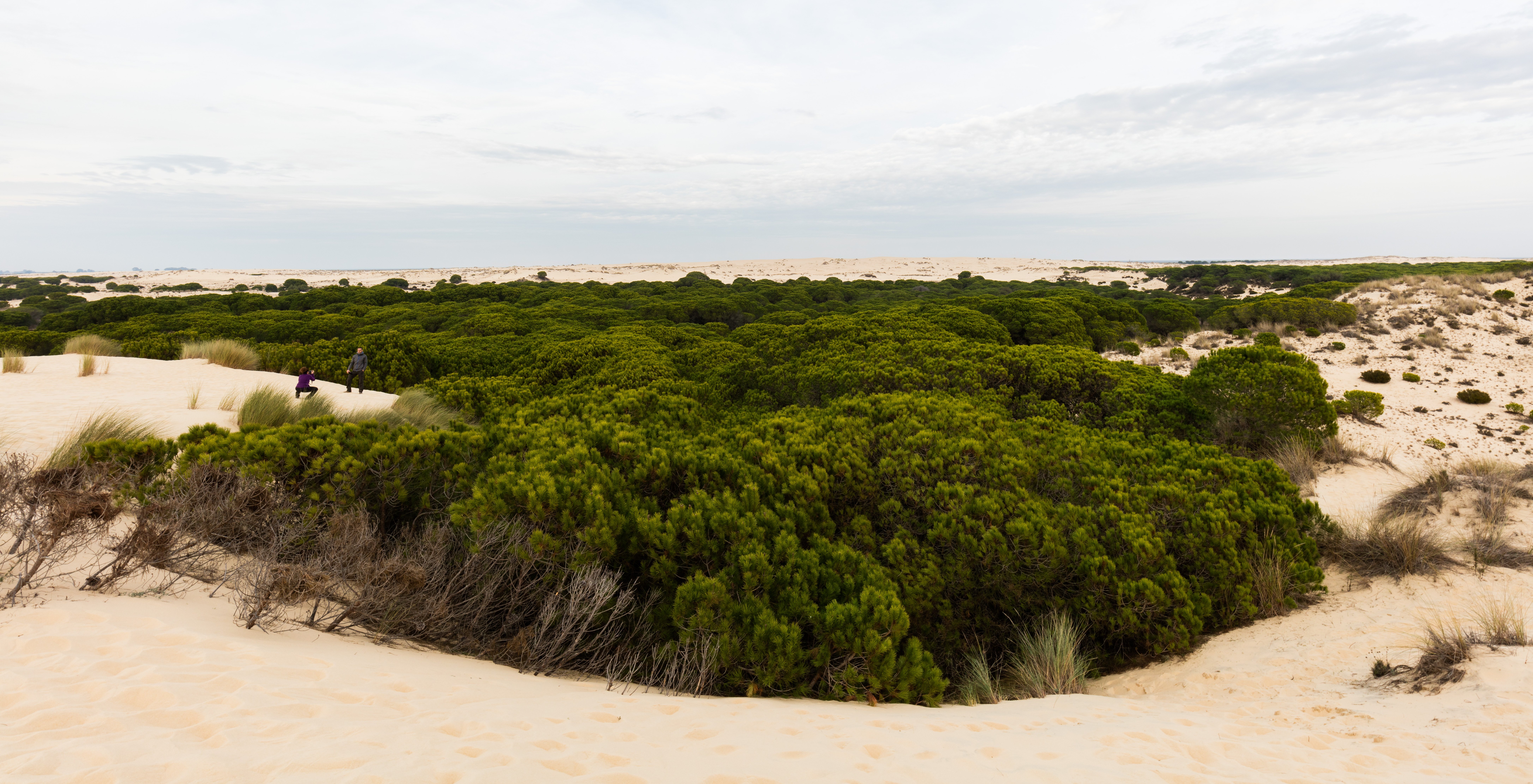
Doñana is one of Europe's most important wetland reserves and a UNESCO World Heritage Site, straddling the border between Huelva and Cádiz provinces in southwestern Andalucía. It protects an extraordinary mosaic of marshes, dunes, scrubland and pine forest at the mouth of the Guadalquivir river — a critical wintering and staging ground for hundreds of thousands of migratory birds.
The park is divided into two zones accessed from opposite ends. The northern section is reached from Matalascanas in Huelva Province; the southern section from Sanlúcar de Barrameda in Cádiz Province. Deep access into the protected core is only possible by official guided tours in 4x4 coaches — and that restriction is precisely what keeps the wildlife undisturbed.
The coastal approach from Matalascanas follows a vast, empty beach with no buildings in sight, just waves of sanderlings and black-backed gulls working the tideline. Behind the shore, sand dunes rise to impressive heights at different stages of colonisation — from marram grass at the seaward edge to full pine forest inland. Wild boar and fallow and red deer are commonly spotted on the tours.
Birds are the real draw. In season, flamingoes wade through the shallows, avocets and black-winged stilts pick through the margins, and dozens of species of ducks, waders and herons crowd the marismas. From the park boundaries you can observe a great deal without a tour — bring binoculars.