La Coruña (A Coruña in Galician) sits on a rocky peninsula in the far northwest of Spain, facing the Atlantic. The city's signature feature is the Torre de Hércules, a Roman lighthouse that has been guiding ships for nearly 2,000 years — the oldest working lighthouse in the world, and a UNESCO World Heritage Site.
The old centre is compact and worth a slow walk: narrow medieval streets, Romanesque churches including the Church of Santiago, and a cluster of striking Modernist buildings from the late 19th century, when the city prospered. Picasso spent his childhood here (his father taught at the art school), and the Casa Museo Picasso on Calle Payo Gómez preserves the connection. The Paseo Marítimo, one of the longest urban promenades in Europe, wraps around the peninsula with views of the harbour and the open sea.
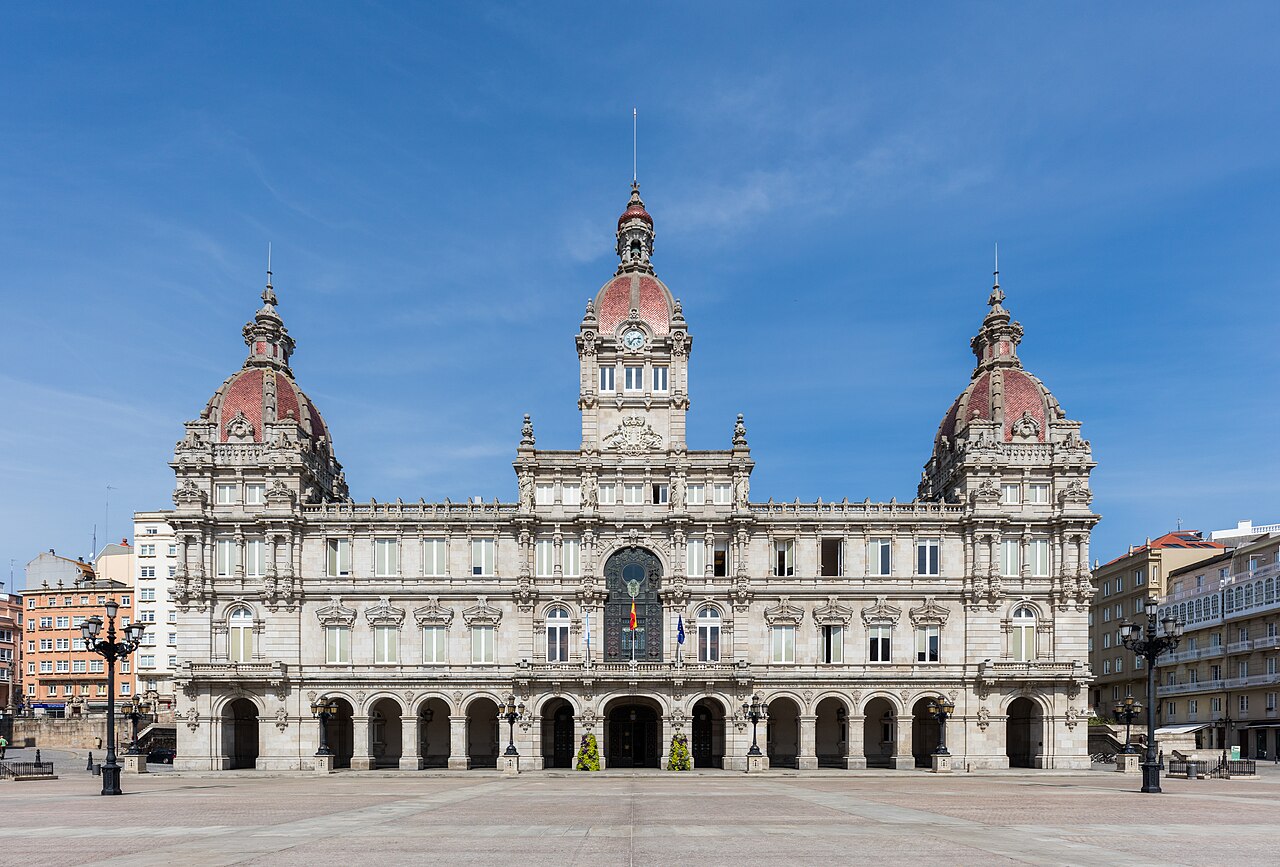
The city's science museums — the Domus, Aquarium Finisterrae, and Casa de las Ciencias — form one of the better museum complexes in the northwest. The Plaza de María Pita at the heart of the old town is the place to sit with a glass of Galician white wine and watch the city go about its evening.
La Coruña makes an excellent base for exploring Galicia. The Rías Altas — deep inlets north of the city — are dramatic and uncrowded. The Costa da Morte (Death Coast) to the west is wild, windswept and beautiful, named for the shipwrecks that littered its rocks over the centuries.