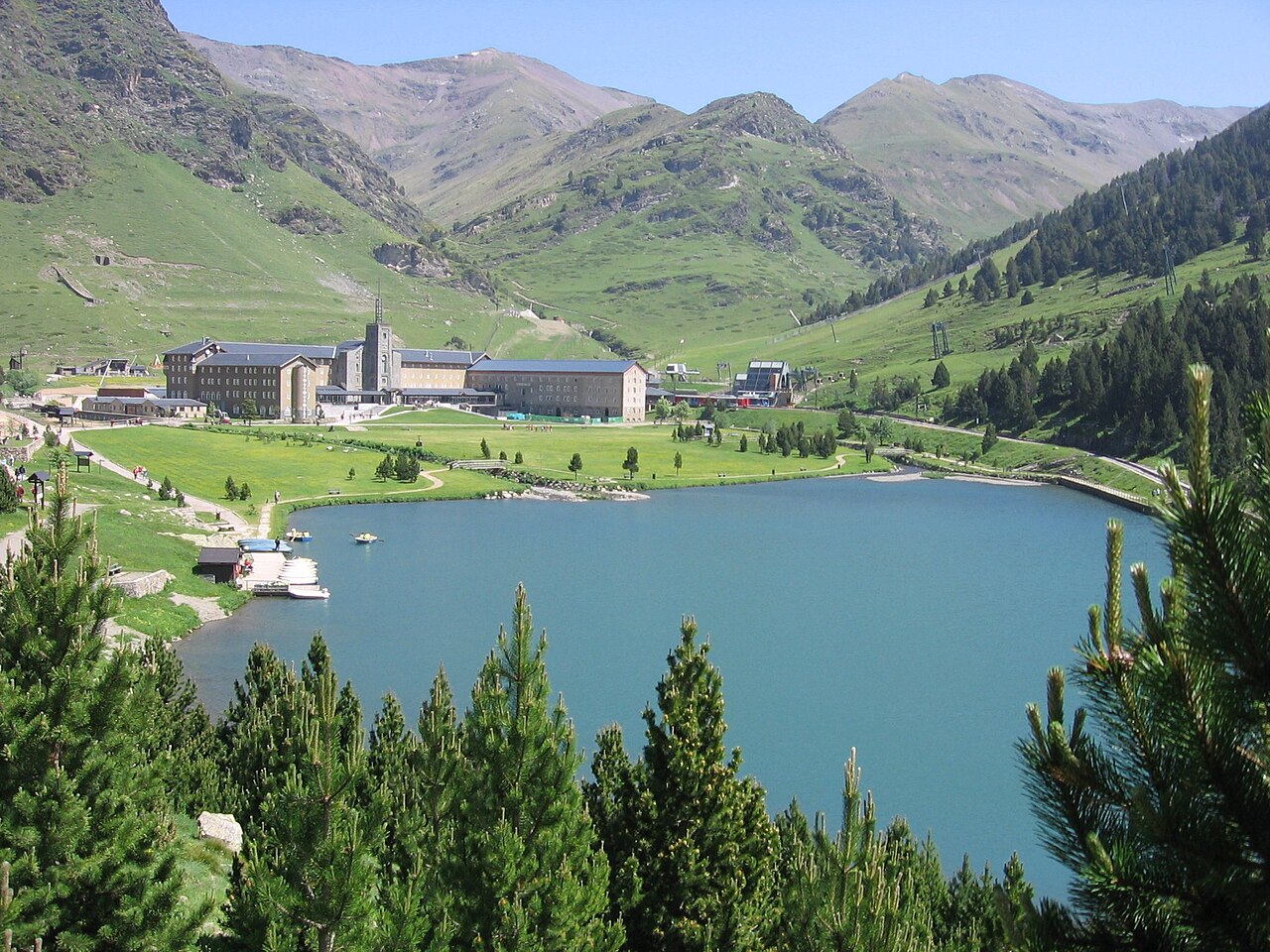
Vall de Núria
©
Vall de Núria

Vall de Núria

High Pyrenean sanctuary valley reached by rack railway, with pilgrimage traditions and mountain walking.

Vall de Núria sits in a high cirque of the eastern Pyrenees at 1,967 metres — a place that feels entirely cut off from the modern world because it genuinely is. There is no road into the valley. The only way in is the Cremallera de Núria, Spain's sole surviving rack railway, which has been hauling pilgrims and hikers up through the Gorges del Freser since 1931.

At the top, the valley floor opens to reveal a single imposing building: the Santuari de la Mare de Déu de Núria, a sanctuary complex that incorporates a Romanesque church, a hotel, a restaurant, and a small lake. The Virgin of Núria is one of the patron saints of Catalonia, and the sanctuary draws pilgrims who have been making this journey for centuries — long before the railway existed, on foot through the gorge. Today Catalans come with young children as much as rosary beads, packing picnic bags for the lake and muddy walks above the treeline.

The rack railway journey from Ribes de Freser is exhilarating in its own right: the train clings to vertiginous cliffs above the river, passes through short tunnels, and emerges into the open valley with the sanctuary directly ahead. In winter the valley becomes a modest ski station — the highest in Catalonia — and in summer chairlifts carry walkers onto the ridges with views into France. The combination of pilgrimage history, mountain scenery, and the train journey makes this one of the most distinctive half-day or full-day outings from Barcelona.

Guide

Getting Around

The valley is tiny and entirely car-free — walking is the only option on the valley floor. From the railway station it is a two-minute walk to the sanctuary entrance, the lake, and the ski lift base. Everything is within easy reach on foot.

The chairlift (telesillaof the Col de Núria) operates in summer from roughly June to September, weather permitting, carrying walkers up to the ridgeline at around 2,350 metres. It is the quickest way to access the high-altitude walks without significant ascent on foot. Combined tickets are available.

In winter, ski equipment rental is available at the sanctuary complex for the small ski station. The slopes are accessed by the same lift infrastructure. Given the limited size of the ski area, most skiers and snowboarders walk between facilities without needing any transport.

Guide

Getting There

There is no road to Vall de Núria. The only access is the Cremallera de Núria rack railway, and the only way to reach the rack railway is by conventional train — or on foot through the gorge, which is a serious undertaking.

From Barcelona: Take a Rodalies (suburban rail) or regional train from Barcelona Sants or Passeig de Gràcia to Ribes de Freser, changing at Ripoll if necessary. The journey takes around two hours. At Ribes de Freser, change to the Cremallera; the station is adjacent to the mainline platform. The rack railway runs via Queralbs, takes about 45 minutes, and terminates at the sanctuary. Trains run several times a day throughout the year, with additional services in peak season — check the FGC (Ferrocarrils de la Generalitat de Catalunya) website for current timetables.

Combined tickets: FGC sells combined tickets that include the Rodalies train from Barcelona, the rack railway up and down, and optionally activities such as the chairlift, archery, or horse riding. These represent reasonable value for a day trip and can be booked in advance online.

By car to Ribes de Freser: If arriving by car, drive to Ribes de Freser or Queralbs (where there is a larger car park) and board the rack railway from there. There is no parking advantage to stopping at Queralbs beyond saving a few minutes on the rack railway — the scenery in the lower gorge is the best part of the journey.

On foot: A historic path, the Camí Vell de Núria, climbs from Queralbs to the sanctuary in about 2.5 hours through the Gorges del Freser. It is a genuine mountain trail, not a paved track, and requires appropriate footwear and fitness. Many walkers take the train up and hike down, or vice versa.

Guide

When to Go

Núria is open year-round, but the character of the valley changes completely with the seasons.

Summer (June–September) is the peak hiking season. Snow clears from the upper trails by June, the lake thaws, and the chairlift operates to the Col de Núria at around 2,350 metres, opening up ridge walks along the border with France. July and August see the valley at its busiest, with Catalan families claiming lakeside spots on sunny weekends. Weekday visits in June or September are quieter and the light is excellent. Temperatures are mild — rarely above 20°C — but afternoon thunderstorms are common in August.

Winter (December–March) transforms Núria into a small ski station with about ten runs ranging from nursery slopes to modest blacks. It is a family ski destination rather than a serious skiing one, and lift queues on holiday weekends can be punishing. The ride up on the rack railway through snow-dusted gorges is particularly atmospheric. Snow conditions are reliable above 2,000 metres but variable lower down.

Spring and autumn are the least visited seasons, partly because the chairlift may not operate and some trails above 2,000 metres can stay snowy into May. But the gorge below, seen from the railway, is spectacular in autumn colour, and the sanctuary is almost empty.

The Festival of the Virgin of Núria takes place on 8 September, the feast day of the Nativity of the Virgin Mary. It is the most important pilgrimage day of the year and draws large crowds from across Catalonia.