El Hierro is the smallest and most remote of the Canary Islands, and for centuries it marked the western edge of the known world — the prime meridian ran through its Faro de Orchilla lighthouse until 1884. That sense of being at the end of things persists. There are no large resorts, no beach strips, and very few tourists. The island runs almost entirely on renewable energy and has been designated a UNESCO Biosphere Reserve.
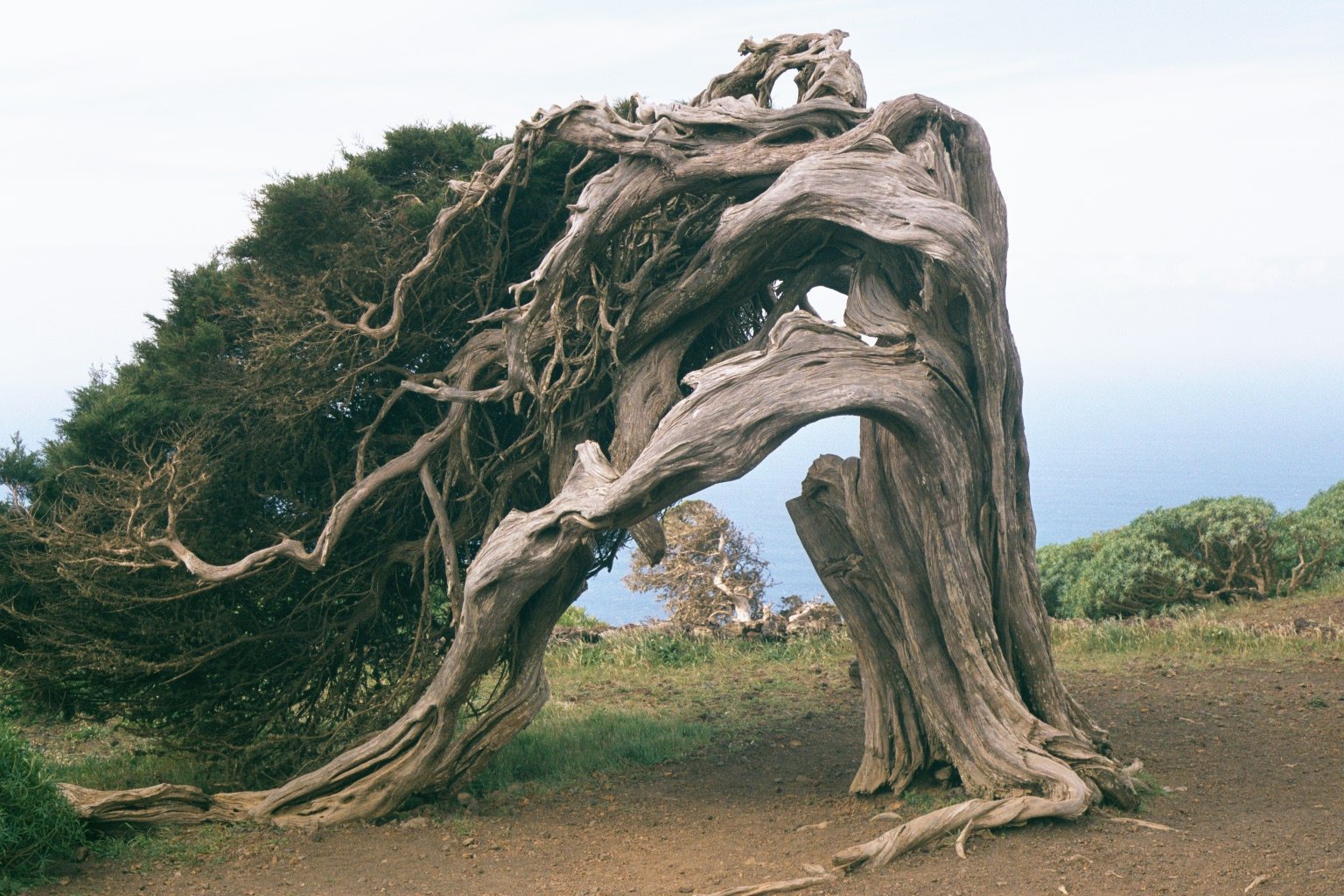
The landscape is dramatic and varied for such a small island. The northern coast drops away into El Golfo, an enormous amphitheatre-shaped valley formed by a prehistoric landslide, where banana plantations and vineyards climb the lower slopes. The south is arid volcanic terrain with twisted lava fields and ancient juniper trees bent permanently sideways by the trade winds — the famous El Sabinar. Pico de Malpaso, at 1,501 metres, is the island's highest point and a straightforward half-day hike.
Swimming is not about sandy beaches here. Instead, the coast offers natural rock pools and small coves with exceptionally clear water. La Caleta, Tamaduste (a natural lava pool that opens to the sea), and Charco Azul are the best spots. The underwater volcanic landscape makes El Hierro one of Europe's finest diving destinations, with visibility regularly exceeding 30 metres. The Gorona del Viento wind-and-hydro facility is worth a look for those interested in renewable energy — it allowed the island to run on 100% clean electricity for 18 consecutive days in 2018.
Accommodation is mostly small rural hotels and casas rurales scattered across the island. The Parador at Las Playas sits on an isolated bay at the base of towering cliffs. In the tiny harbour of La Restinga, the Club Punta Grande once held the Guinness record as the world's smallest hotel.