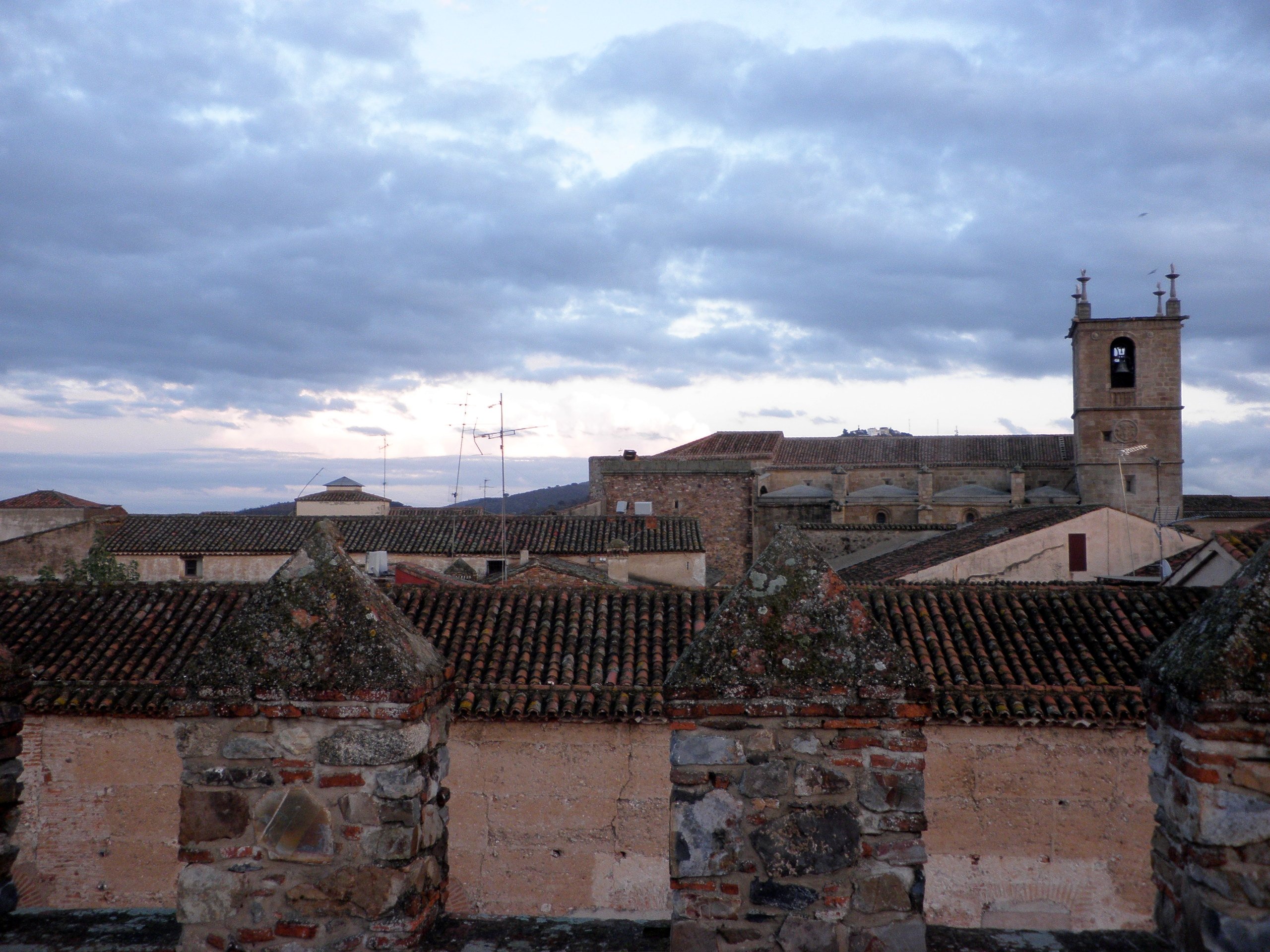
Caceres sits on a hill in Extremadura, its old town a remarkably intact medieval quarter that earned UNESCO World Heritage status in 1986. Walk through the Arco de la Estrella and you step into a city that has barely changed in five centuries — a maze of narrow streets lined with golden stone palaces, fortified towers, and churches, almost entirely free of traffic and modern intrusions.
The layers of history are visible everywhere. About thirty Moorish towers survive from the period before the Christian reconquest in 1229, of which the Torre del Bujaco is the most prominent, overlooking the Plaza Mayor. After the reconquest, noble families competed to build the grandest palace — the result is an extraordinary concentration of Gothic and Renaissance mansions: the Casa de los Golfines de Arriba, the Palacio de Carvajal, the Casa del Mono. The Catholic monarchs ordered many of the defensive towers lopped off to curb the nobility's power, but enough survive to give the skyline its distinctive bristling silhouette.
Churches are woven through the fabric — the Gothic co-cathedral of Santa Maria, the Church of San Mateo built on the site of a mosque, the Church of Santiago with its altarpiece by Berruguete. Storks nest on nearly every tower and belfry, and their clacking is the soundtrack of the old town.
Cáceres is also the capital of Extremadura, a region that produced a disproportionate share of the conquistadors who went to the Americas — Hernán Cortés and Francisco Pizarro were both from here. The wealth that came back from the New World funded some of the grander Renaissance palaces you see today.
The lower city around Plaza Mayor is livelier, with cafes and bars filling the square in the evenings. Cáceres is one of Spain's great hidden pleasures — less visited than Salamanca or Toledo, but every bit as rewarding.