Jávea (Xàbia in Valencian) occupies a sheltered bay on the Costa Blanca between the capes of Sant Antoni to the north and La Nau to the south, and this geography has determined its character. The town is actually three distinct settlements that have grown into each other without quite merging: the old town (el poble) up on the hill a kilometer inland, the port and fishing harbor to the southeast, and the Arenal beach zone on the north bay. Each has its own atmosphere and daily rhythm. The old town is the most architecturally coherent of the three, built in the local Tosca stone — a rough, pale sandstone quarried from the cape — that gives Jávea's older buildings a distinctive look unlike the plastered white of most Costa Blanca towns.
The Gothic church of San Bartolomé dominates the old town square, its fortified exterior reflecting the coastal threat of Moorish raids that shaped settlement patterns across this coastline for centuries. The weekly market fills the old town streets on Thursdays, and this is the best time to see the non-tourist side of Jávea: local farmers selling vegetables, fruit stalls heaped with citrus, and the social energy of a market town going about its week. The international community in Jávea is large — predominantly British and German — and this has resulted in the full range of services and expatriate commerce without significantly changing the town's fundamental Spanish character.
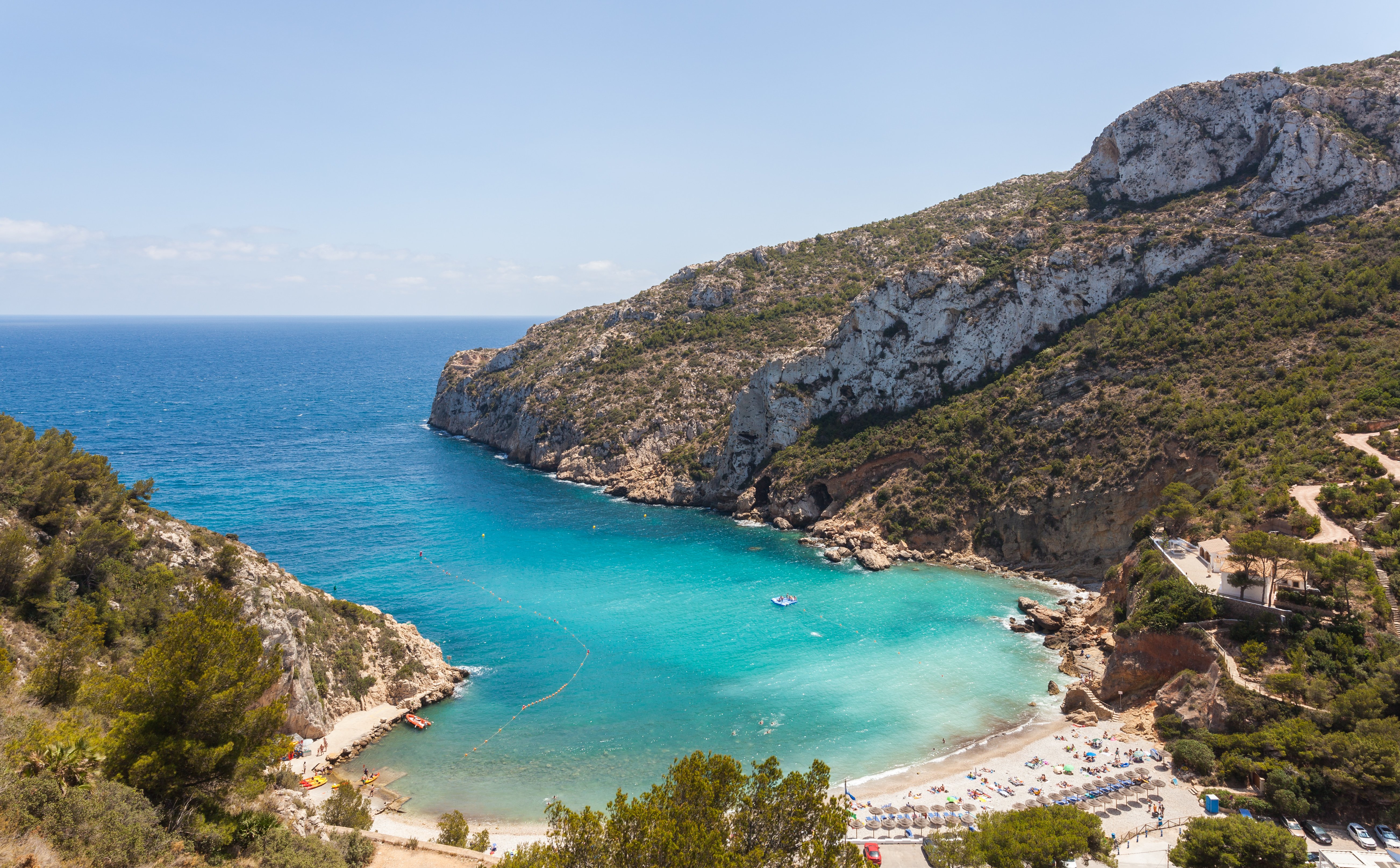
Cap de Sant Antoni, a short drive or cycle north of the Arenal, is a marine reserve and one of the cleanest stretches of Mediterranean coastline in the region. The lighthouse road leads to panoramic views over the bay and back toward the Montgó natural park, the limestone mountain that rises directly behind the town to 753 metres and is itself a natural park. La Granadella, a small cove reached by a winding road south of the port, offers clear turquoise water and little development. Jávea threads the Costa Blanca needle reasonably well — it has the infrastructure of an established resort town while retaining enough of its original identity to make it worth exploring rather than merely lying on.