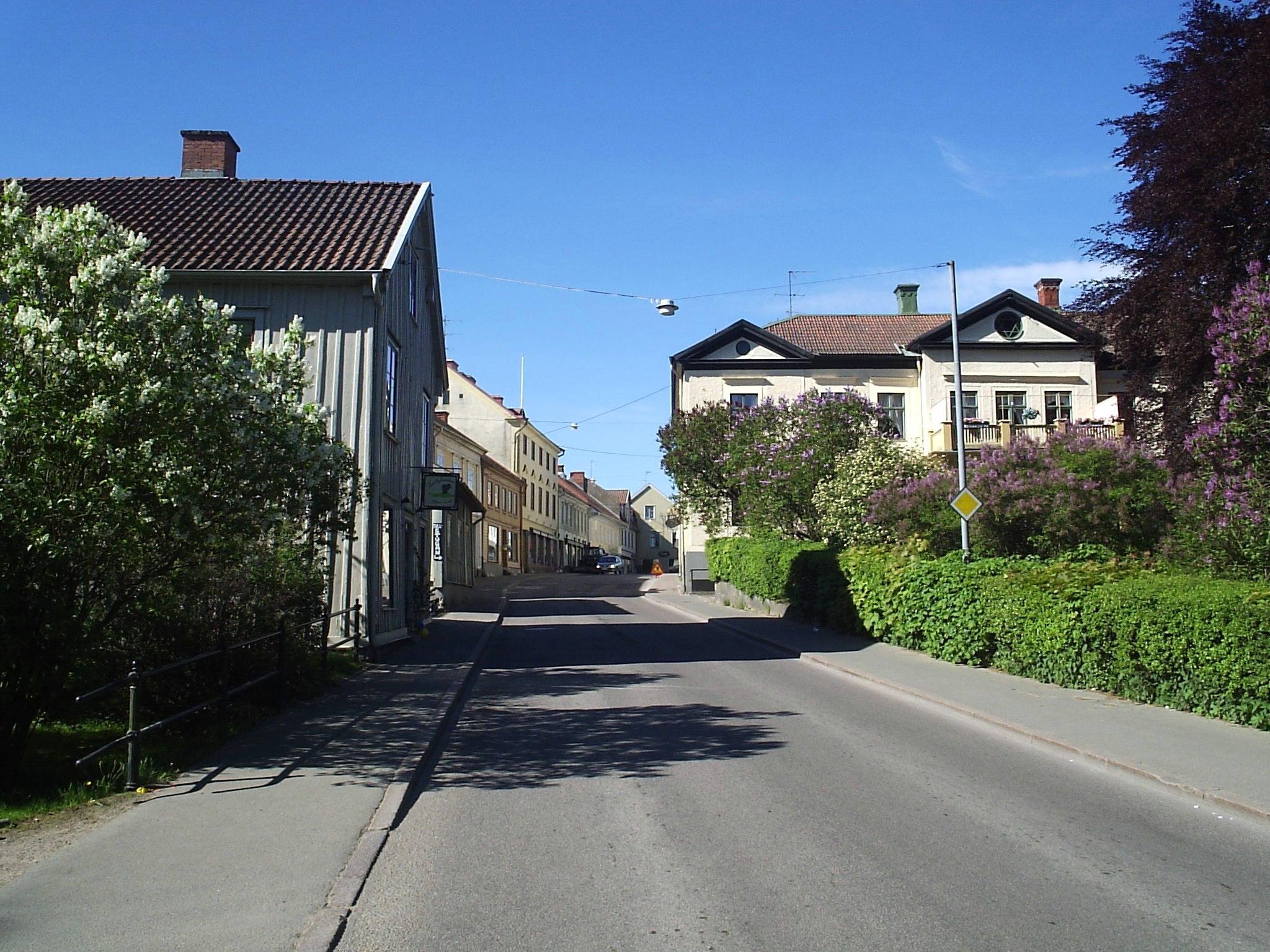
Hjo is one of Sweden's finest surviving wooden towns, a compact lakeside community on the eastern shore of Lake Vättern that has changed remarkably little since the 19th century. Where many Swedish towns were rebuilt in brick after fires or wartime clearances, Hjo escaped major destruction and kept its narrow medieval street pattern and its timber buildings intact. Walking the alleys here feels less like a preserved heritage attraction and more like a town that simply never needed to rebuild.
Founded in the 14th century — appearing variously as Hyo or Hioo in historical records — Hjo's oldest surviving street maps date to 1696 and differ only slightly from today's plan. The medieval church burned in 1794 along with some surrounding buildings, but the rest survived. The town's grid of wooden houses, painted in the deep reds and yellows typical of the region, is now protected as a national cultural heritage site.
The town came into its own in the late 19th century. The arrival of the railway, the development of a spa, and an active harbour on Lake Vättern made Hjo a fashionable summer destination for Swedes from the cities. Much of the character visitors see today dates from this era: the graceful wooden spa pavilion in the town park, the lake promenade, and the steamboat quay where the vintage steamer Trafik — one of the oldest steamboats in the world still in regular service — docks in summer.
Hjo is small enough to cover on foot in a morning, but rewards a full day or an overnight stay. Wander the old town, look in at Hjo Church, and detour south to Almnäs Castle on the shore. The lake is the other draw: swimming, kayaking, and boat trips on Vättern, the second-largest lake in Sweden, are all easy to arrange from the harbour.