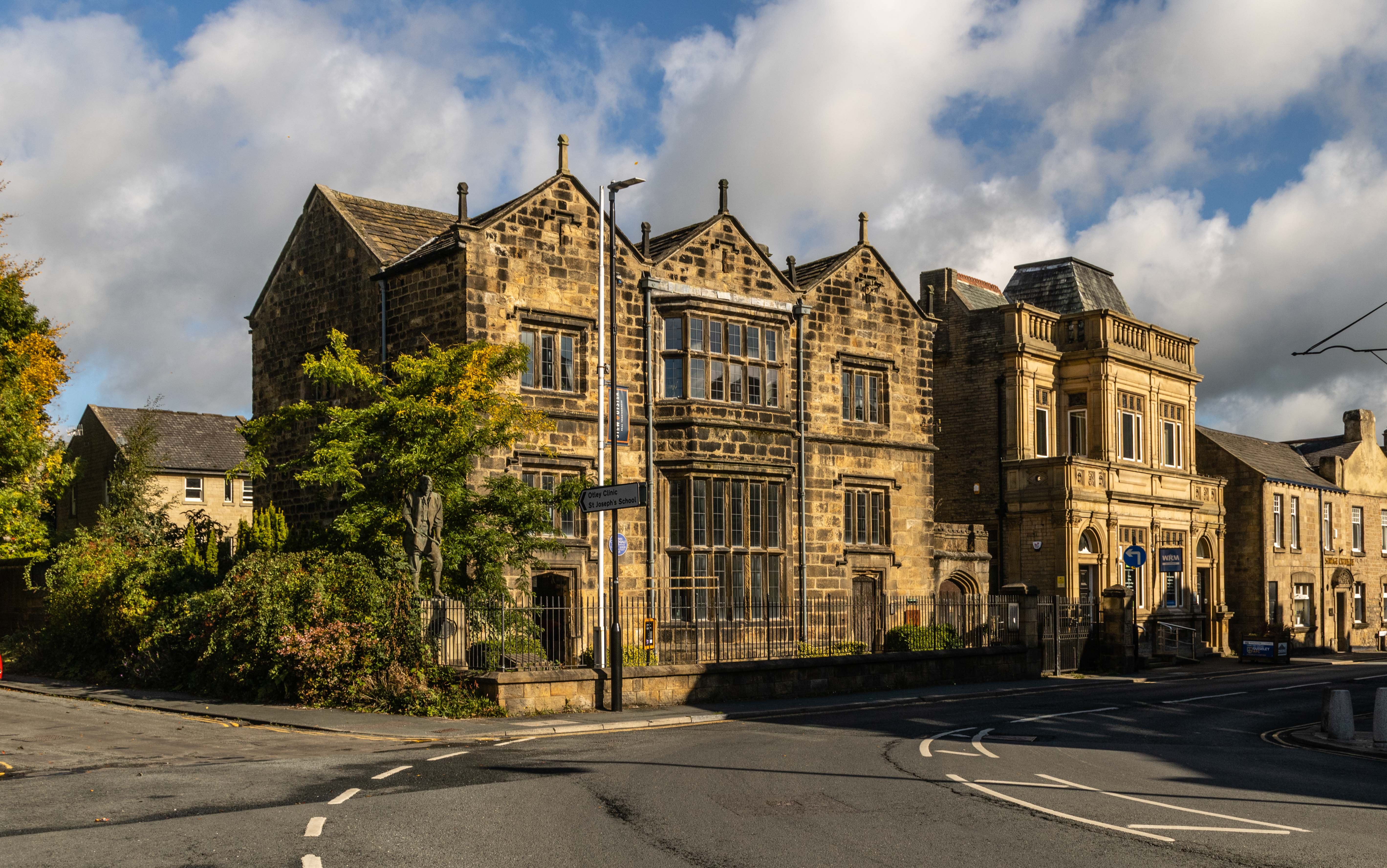
Wharfedale market town beneath the Chevin, with pubs, Turner views, and Chippendale roots.
Otley is a small market town in Wharfedale, the valley of the River Wharfe between Leeds and the Yorkshire Dales. It is a proper Yorkshire town — market on Fridays and Saturdays, an improbable number of pubs, and the Chevin rising steeply behind it to keep out the urban sprawl of Leeds and Bradford.
Thomas Chippendale, the most celebrated furniture maker in English history, was born here in 1718. J.M.W. Turner came to paint the valley, and some of his Wharfedale watercolours are among his finest early works. Otley doesn't trade heavily on either connection, which is characteristic of the place.
The pleasures are outdoor and straightforward: walking through the Chevin's oak woodland to Surprise View above town, strolling Wharfemeadows Park along the river, browsing the independent shops on the high street, and spending time in All Saints' Church with its medieval stones and Viking carvings. This is not somewhere you come to tick off sights — it is somewhere you come to relax.
Guide
Things to Do
Otley's pleasures are mostly outdoor and unhurried. The main draw is The Chevin — the forested ridge that walls the town to the south, offering wide views over Wharfedale and good walking through mixed woodland. Below it, Wharfemeadows Park runs along the River Wharfe and is as pleasant a stretch of town park as you'll find in Yorkshire.
In the town centre, All Saints' Church is worth a visit — a substantial medieval church with some good carving and a peaceful churchyard. The Otley Museum is small but informative about the town's history, particularly its role as a printing and market centre.
The market runs on Fridays and Saturdays in the town square, and Otley has an above-average number of independent shops for a town its size. The Buttercross in the market square is a stone market cross that has marked the heart of the town for centuries.
Otley has a bafflingly high density of pubs for its population — around 20 at last count. This is a genuine tradition rather than a tourist gimmick.