Hermosillo
©
Hermosillo

Hermosillo

Sonoran state capital and desert commercial hub, known for cattle country and northern Mexico's beef culture

Hermosillo is the capital of Sonora, a prosperous northern state that feels as much influenced by the American Southwest as by central Mexico. Set in the low desert at about 215 metres above sea level, it is a practical, fast-moving city of around 900,000 people — the industrial and commercial hub of a region known for cattle ranching, wheat farming, car manufacturing, and some of the best beef in Mexico.

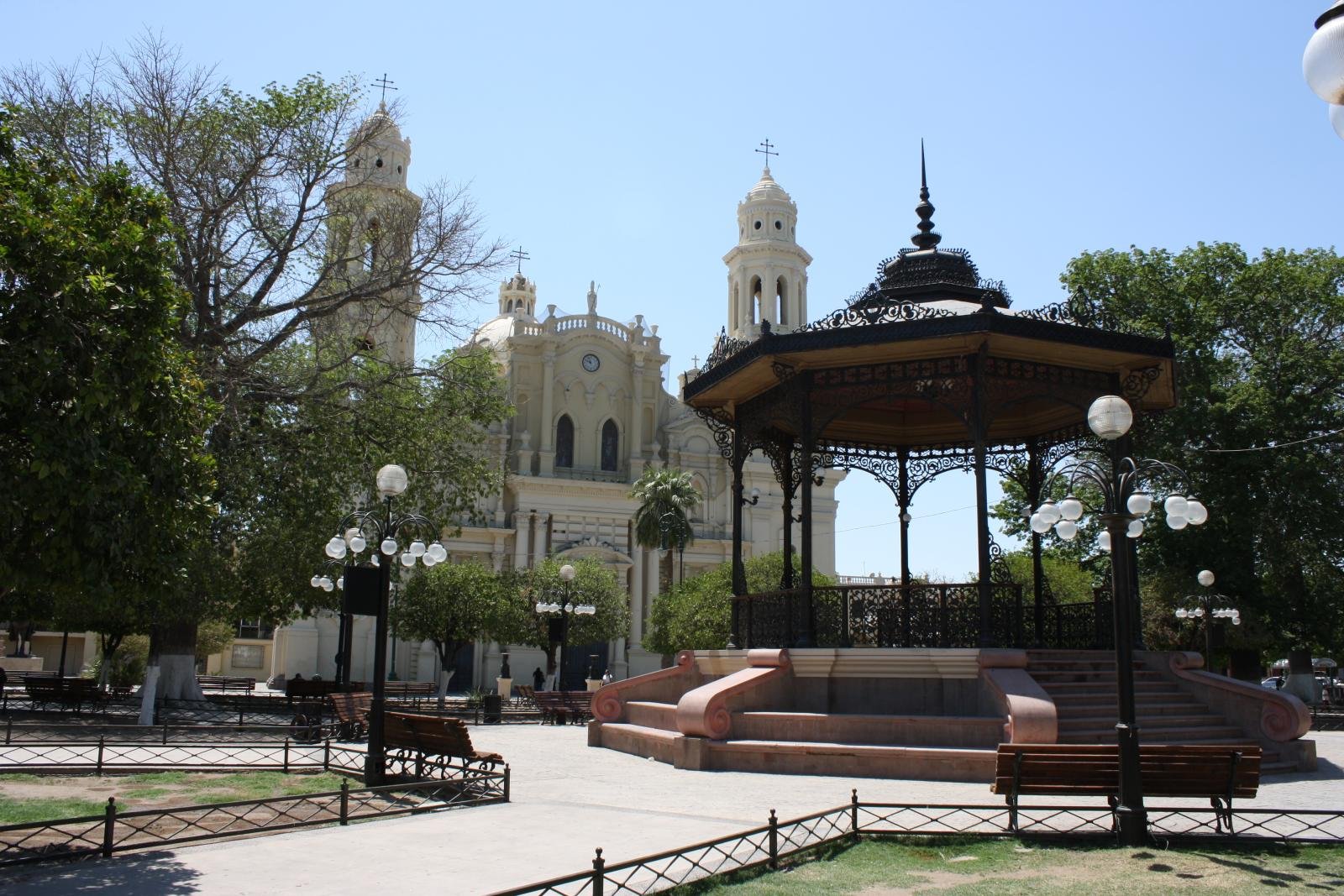
The historic centre holds its own. Plaza Zaragoza anchors downtown, flanked by the neoclassical Government Palace and the Cathedral of the Assumption, with its distinctive twin towers visible from much of the city. The Museo de Sonora — housed in the old state penitentiary — gives context to the long Yaqui and Seri indigenous presence in the region. The Cerro de la Campana rises at the city's northern edge, offering panoramic desert views from a volcanic hill that was sacred to the Seri.

Eating here is a genuine pleasure: Sonoran carne asada — beef grilled over mesquite with handmade flour tortillas — is as good as it gets anywhere in Mexico, and the mariscos are superb, fed by daily catches from the Gulf of California.

Day trips from the city are the real reward. Bahía Kino, 54 miles to the west, is a relaxed seaside town on the Sea of Cortez where you can hire a boat to reach Isla Tiburón, Mexico's largest island and a Seri biosphere reserve. Southeast of the city, La Pintada shelters one of the largest concentrations of rock art in Mexico — more than 1,500 petroglyphs and pictographs left by the Seri and Pima people on canyon walls above a dry riverbed.

Guide

Day Trips

Hermosillo's best day trips head west to the coast or deep into desert canyon country. Bahía de Kino, an hour's drive west, is the most accessible option — a quiet beach town on the Sea of Cortez where Seri guides can take you by panga across to Isla Tiburón, Mexico's largest island and an untouched biosphere reserve. The La Pintada rock art canyon to the southeast requires a 4x4 but rewards the effort with more than 1,500 petroglyphs and pictographs carved and painted on canyon walls over two millennia. The colonial silver city of Álamos, five hours south through the desert, makes a longer excursion — its arcaded streets and restored 18th-century mansions are the finest colonial ensemble in Sonora.

Guide

Eating Out

Hermosillo has some of the best beef in Mexico, and eating here is a genuine pleasure. Sonoran cuisine revolves around carne asada — beef grilled over mesquite — served with thick flour tortillas (a Sonoran speciality), frijoles, salsa, and cold beer. The city also has excellent seafood from the Gulf of California.

Guide

Getting There

Hermosillo is served by General Ignacio Pesqueira García International Airport (HMO), with domestic connections to Mexico City, Guadalajara, and Monterrey, as well as some cross-border flights to US cities. By road, the city lies on International Highway 15, 171 miles south of the US border crossing at Nogales and 88 miles north of the port city of Guaymas. Long-distance buses connect Hermosillo to major cities across Mexico and to border crossings on the Arizona side.

Guide

When to Go

Hermosillo is brutally hot in summer. July and August regularly see temperatures above 45°C (113°F) — the city holds the Mexican record for highest recorded temperature. You can still visit, but you will be spending much of your time inside air-conditioned spaces. April, May, and October are the most comfortable months; winters are mild and pleasant.

The rainy season runs from late June through September, with brief but heavy afternoon thunderstorms that provide temporary relief from the heat. The festival of San Francisco de Asís in early October brings celebrations to the city; the Day of the Dead at the end of October is observed with elaborately decorated altars in the market and public spaces.