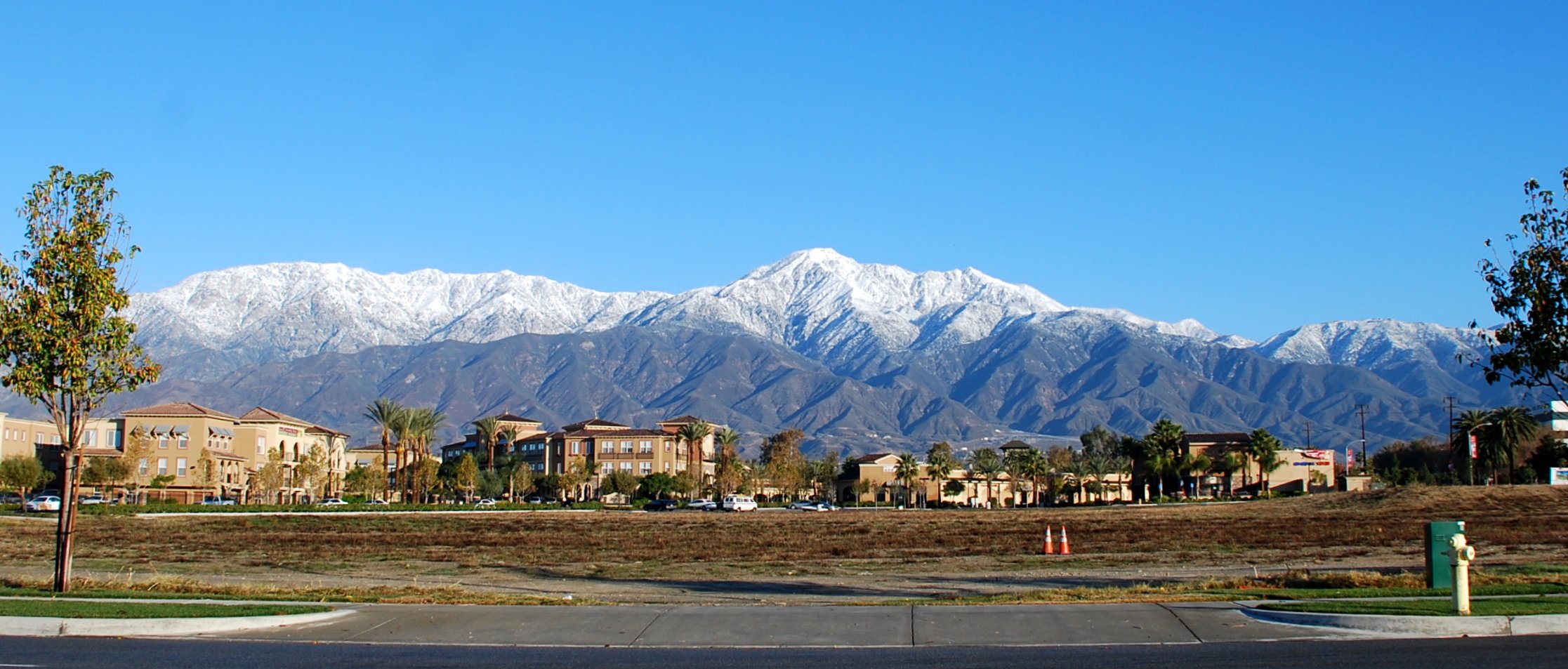
Rancho Cucamonga sits at the base of the San Gabriel Mountains along historic Route 66, about 37 miles east of downtown Los Angeles. The city blends orderly suburban living with echoes of a wine-country past that was, by the 1940s, bigger than Napa and Sonoma combined. Post-war sprawl ate almost all the vineyards, but the bones of the old Cucamonga Valley wine district still show: century-old vine stumps in backyard lots, the restored 1915 Cucamonga Service Station on Foothill Boulevard, and a handful of family wineries holding on nearby.
The name itself is a piece of American pop history. Jack Benny used "Anaheim, Azusa, and Cucamonga" as a running gag on his radio programme from the 1940s, and Bugs Bunny picked it up — making Rancho Cucamonga one of the few cities most Americans had heard of without knowing exactly where it was.
What visitors find today is mostly a well-made suburb with a few genuine historic sites. The 1860 John Rains House is one of the earliest surviving Anglo-American adobes in the Inland Empire; the Etiwanda Historic District preserves a neighbourhood of Victorian-era craftsman homes and mature eucalyptus-lined streets from the 1880s colony settlement. Victoria Gardens, an open-air lifestyle centre designed as a de facto downtown, is where most people spend an afternoon eating and shopping. The San Gabriel Mountains rise sharply to the north; Cucamonga Canyon gives access to the San Bernardino National Forest within twenty minutes of the city centre.