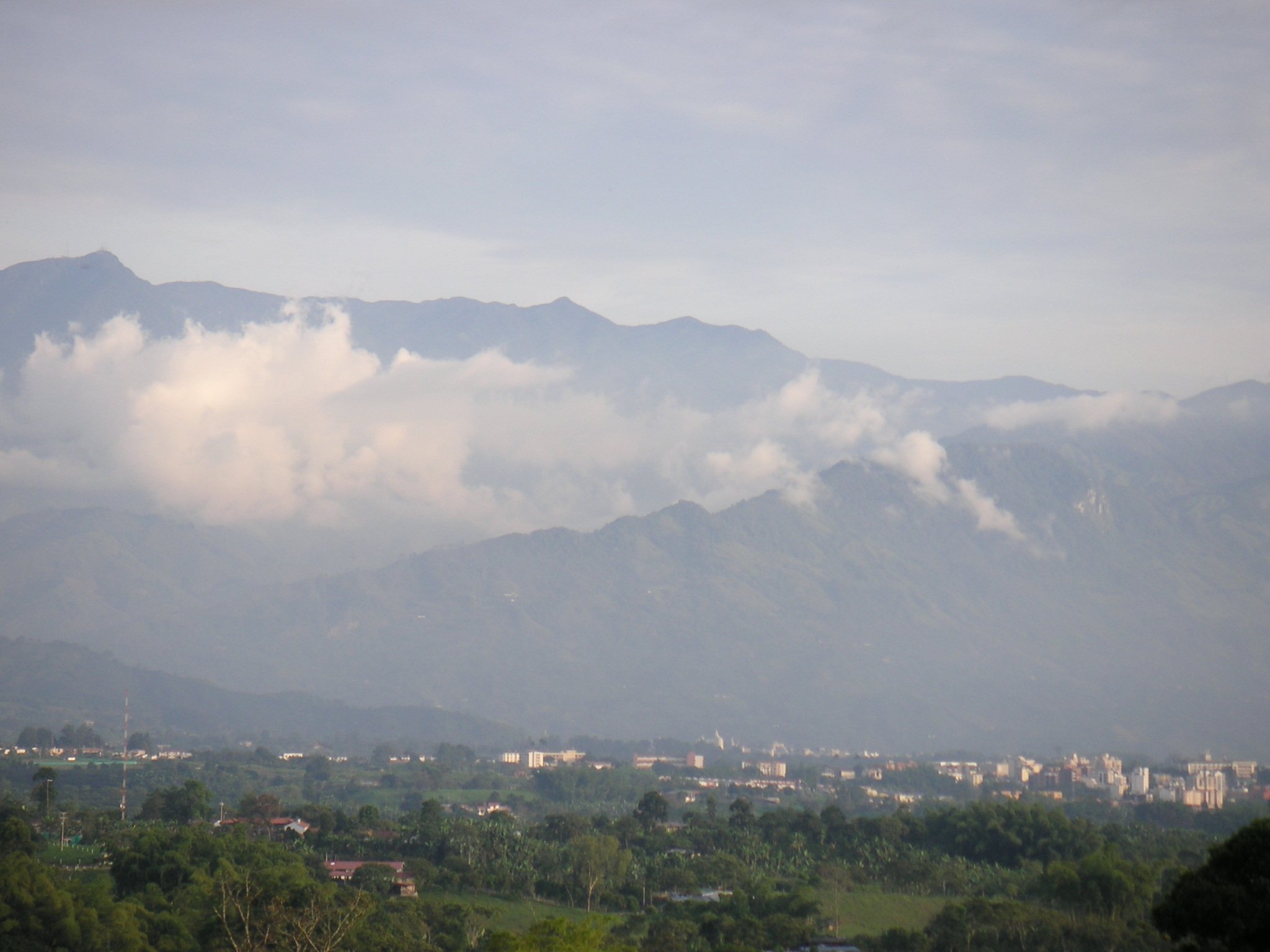
Armenia is the capital of Quindío and the southernmost of the three big cities of Colombia's Coffee Triangle, sitting at around 1,480 metres in the foothills of the Cordillera Central. It is a working city of about 300,000 people rather than a tourist showcase, and the centre — like that of Pereira and much of Manizales — was largely rebuilt after the devastating 1999 earthquake that flattened block after block of older buildings.
What pulls travellers here is what surrounds the city. Within an hour you can be in the Cocora Valley staring up at sixty-metre wax palms, sleeping at a working coffee farm on the green hillsides outside Salento, or riding the cable cars at Parque del Café above Montenegro. Armenia itself is the practical base — the airport, the bus terminal, the supermarkets and chain hotels are all here, even if the photogenic part of the trip happens elsewhere.
The city centre is compact and walkable. The Plaza de Bolívar is the main square, anchored by the modernist concrete sail of the Catedral de la Inmaculada Concepción. A few blocks away, the Museo del Oro Quimbaya, housed in a building by the Colombian architect Rogelio Salmona, is the standout cultural attraction and one of the best small archaeological museums in the country. Most travellers spend a day in town and several more touring the surrounding coffee country.
Armenia is well connected. El Edén international airport handles flights from Bogotá, Medellín, Cartagena, and a handful of international routes. The bus terminal links Armenia with Pereira (forty minutes), Manizales (under two hours), Cali (three to four hours), and onward to Bogotá and Medellín. The climate is mild — the warmest months hover in the low twenties, evenings cool — and rain can arrive any time of year, with the heaviest months in April–May and October–November.