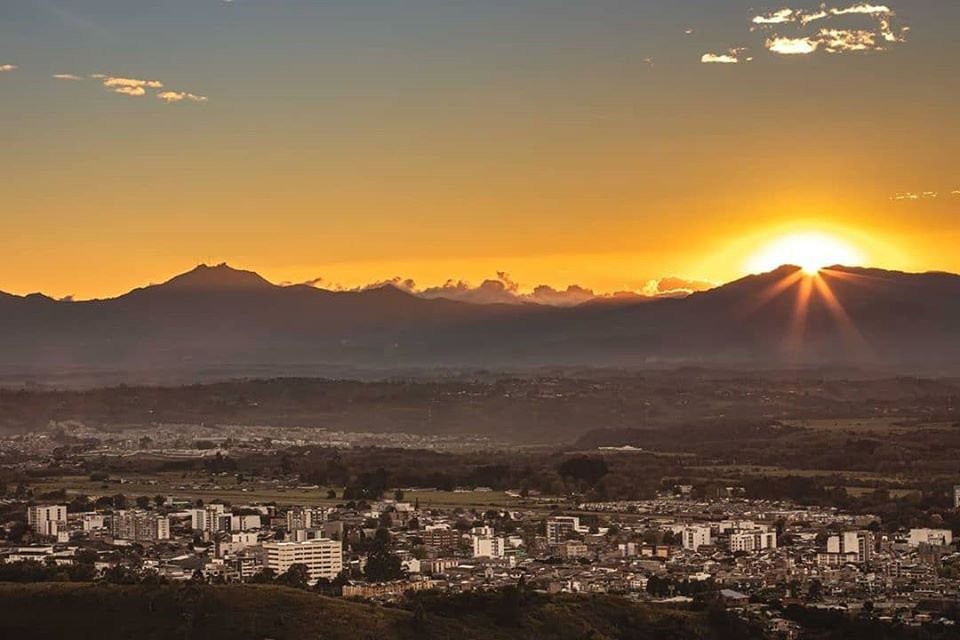
Popayan is Colombia's White City, and the name is earned. Nearly every building in the colonial centre is painted a brilliant, uniform white, giving the whole place a calm, luminous quality that is unlike anywhere else in the country. Founded in 1537 by Sebastian de Belalcazar, it served as a strategic waypoint between Lima, Quito, and Cartagena, and the wealth that passed through left behind a concentration of churches, mansions, and bridges that survives to this day.
The city sits at about 1,760 metres on a volcanic plateau in the Cauca department, surrounded by rolling green hills where some of Colombia's finest coffee is grown. The climate is mild year-round, averaging 18 degrees, though nights can be surprisingly cool. A devastating earthquake in 1983 levelled much of the historic centre, but Popayan rebuilt with care, and the restored colonial architecture is remarkably intact.
Popayan is a university town, which keeps the streets lively and the cafes full. It is also deeply traditional and Catholic. The Semana Santa processions here are among the most elaborate in all of Latin America, drawing crowds from across Colombia. Outside of Holy Week, the pace is slower and gentler than the big cities. You can walk the centre in an afternoon, climbing up to the Chapel of Belen for a view across the white rooftops, crossing the old Humilladero bridge, and ducking into one church after another — the cathedral on Parque Caldas, the elegant San Francisco, the heavily processional Santo Domingo.
The name itself comes from an indigenous dialect: "po" meaning two, "pa" meaning straw, "yan" meaning village. Two villages with straw roofs. The straw is long gone, but the indigenous heritage is still visible at Morro de Tulcan, a massive earth mound on the edge of town built by the pre-Columbian inhabitants, shaped like a grass-covered pyramid.