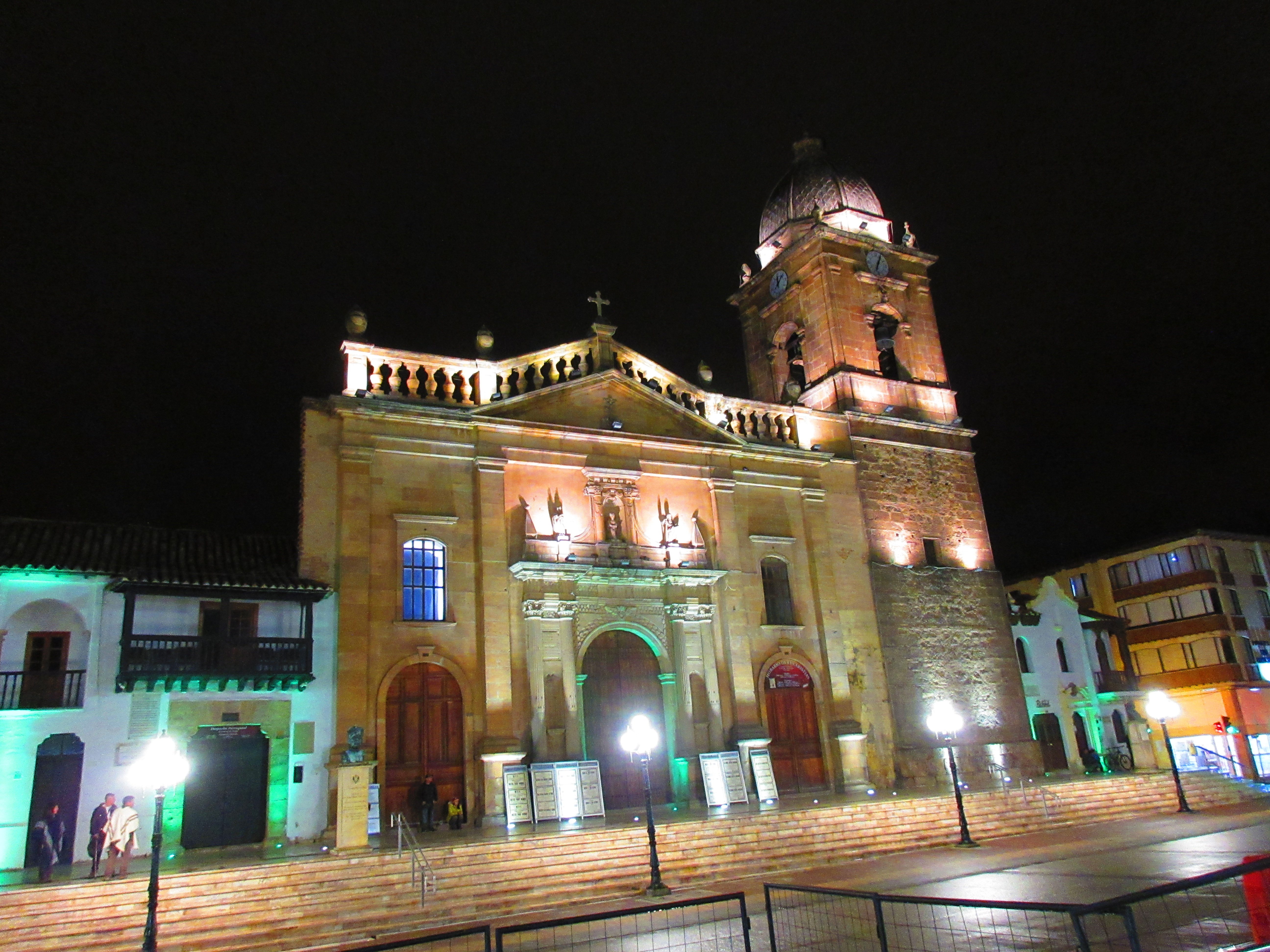
Tunja is the cold, colonial capital of Boyacá department, sitting at 2,820 metres on the eastern Andes about three hours north of Bogotá. Most travellers blow through without stopping, which is a mistake — this is one of Colombia's most historically layered cities, founded in 1539 on the site of a Muisca settlement and still wearing its colonial bones with some pride.
The centre is compact and walkable. The Plaza de Bolívar anchors everything, surrounded by the cathedral (Colombia's oldest), the city hall, and the extraordinary Casa del Fundador, whose painted ceilings — only uncovered when a false ceiling collapsed — are among the most unusual things you'll see in South America. Around the plaza, fourteen colonial churches crowd the streets, each with a different personality: some sober and fortress-like, others — like the gilded Rosary chapel of Santo Domingo — dripping with baroque excess. The Casa Juan de Vargas and the Santa Clara la Real convent round out the colonial highlights.
Tunja is a university city, which keeps prices low and gives the place a bit of life after dark. It's genuinely cold most of the year — bring layers — and the altitude catches some visitors off guard. A day or two is enough to see the highlights, and it makes a natural base for visiting Villa de Leyva and the Puente de Boyacá.