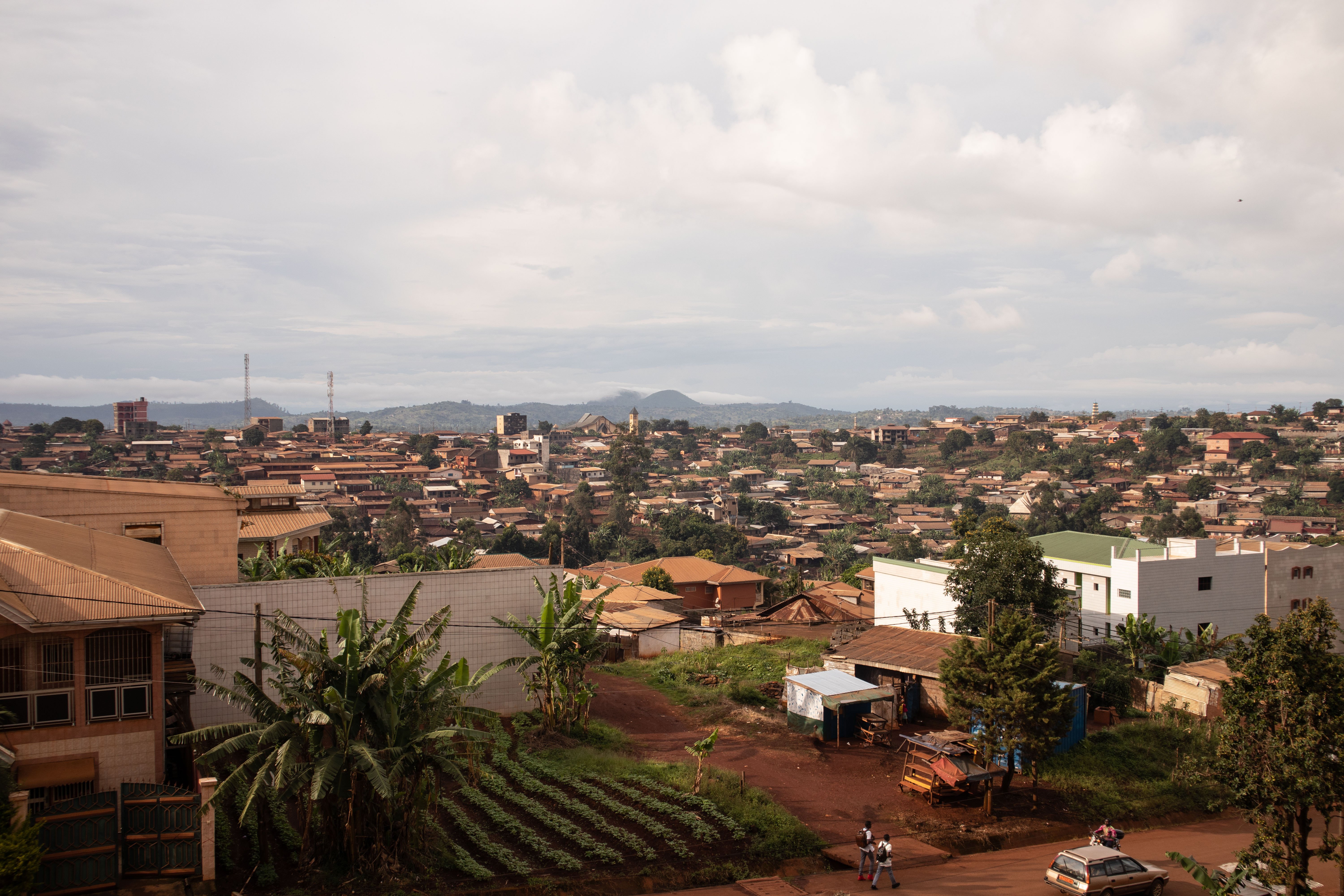
Bafoussam is the capital of the West Region of Cameroon and the cultural heart of the Bamiléké people, sitting at around 1,400 metres in the Bamboutos Mountains, about 250 kilometres northeast of Douala. With roughly a million people in its urban area, it is Cameroon's third city, but it feels nothing like the sprawling coastal metropolises further south — the highland air is cool, the pace more measured, and the cultural ties to the surrounding chiefdoms very much alive.
The name comes from "Pe Foussan" in the local dialect, and the city has been Bamiléké territory since at least the 14th century. The modern city took shape after 1945 when French colonial administrators chose it as the regional capital, and today it operates as the commercial hub for all of western Cameroon — coffee, potatoes, maize, and beans move through its markets, and the Brasseries du Cameroun plant here supplies Castel beer to much of the western highlands.
The Chefferie Supérieure de Bafoussam, the royal palace near the central bus station, is the single most important cultural site in the city — a living compound where traditional governance still operates alongside a museum of royal artefacts. The Grande Mosquée de Bafoussam is the most striking piece of architecture in the city centre. But Bafoussam's most accessible highlight is its market: Marché A is one of the liveliest in western Cameroon, stacked with Bamiléké wood carvings, beadwork, brass jewellery, and textiles alongside everyday produce.
The surrounding area rewards a few extra days. Lac Baleng, a sacred crater lake about 11 kilometres north, is an easy half-day trip by moto-taxi. Foumban, 70 kilometres east, is Cameroon's outstanding cultural destination — the sultan's palace and the artisan quarter there are in a different league from anything in Bafoussam itself. The Chefferie Bandjoun, 20 kilometres south, is considered the finest example of Bamiléké traditional architecture in the region.