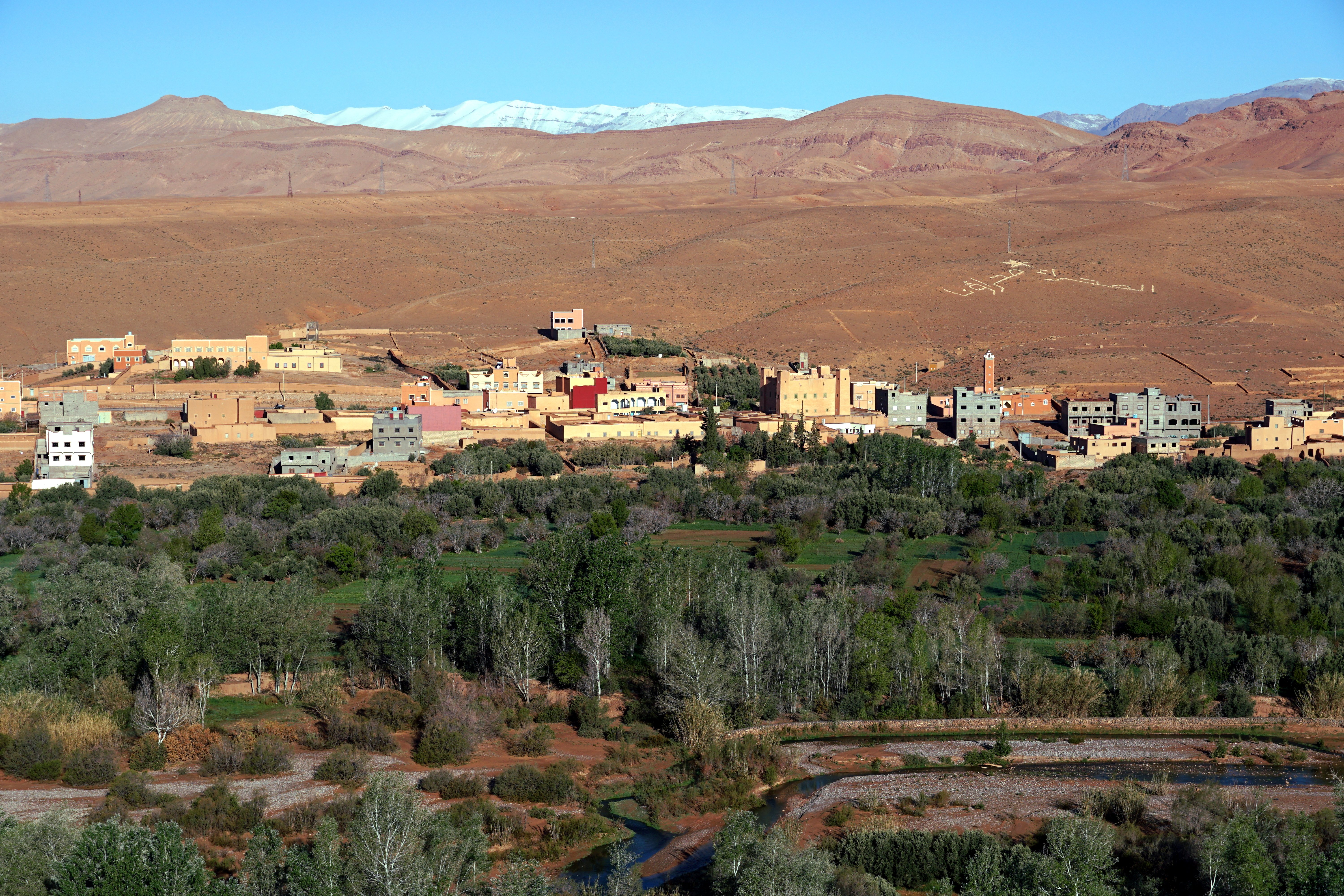
Small Dadès Valley town at the mouth of Morocco's red-rock gorge country.
Boumalne Dadès sits at the mouth of one of Morocco's most dramatic landscapes: the Dadès Gorge, a canyon of sculpted red rock that cuts north into the High Atlas. The town itself is small and unpretentious — a single main street, a few cheap hotels, and a market square — but its position makes it one of the more rewarding stops on the road between Ouarzazate and Tinghir.
The gorge is the main draw. The road climbs steeply through orange-and-red rock formations, past kasbahs clinging to cliff sides and terraced gardens fed by snowmelt streams. Even a short drive or hike into the lower gorge is worth the effort; those with more time can push further to Aït Oudinar or all the way to Msemrir. The Vallée des Oiseaux, a narrower side valley a few kilometres from town, is good for bird-watching and a quieter walk.
South of town, the Jbel Saghro massif offers several days of trekking through volcanic rock and nomad country. The mountains are less visited than the Atlas and have a raw, spacious character that rewards those who make the effort. The hotels in town can arrange guides and mule transport.
The oasis gardens surrounding Boumalne are pleasant to wander — date palms, fig trees, and irrigation channels that have supported life in this dry valley for centuries. The pace here is slow, and it is easy to stay longer than planned.
Guide
Eating Out
Boumalne is not a destination for serious eating. The town has a handful of cheap tagine-and-couscous places along the main street, mostly attached to small hotels, and a couple of cafes around the market square serving harira soup, bread, and mint tea. Lunch in the gorge — at Hôtel Chez Pierre or one of the auberges in Aït Oudinar — is generally better than anything in town.
The local Berber specialty is bread cooked in a beehive-shaped clay oven (ferran), served with olive oil, honey, and goat's cheese for breakfast. Friday tagine in any small Moroccan town is reliably worth trying — it is the most carefully prepared meal of the week.
The Tuesday souk in Boumalne (held in the marketplace on the eastern edge of town) brings vendors from the surrounding mountain villages — a good place to taste fresh dates, walnuts, and almonds in season.
Guide
When to Go
Spring (March to May) and autumn (September to early November) are by far the best months. The almond blossom peaks in February in the lower gorge; the rose harvest in the nearby Vallée des Roses runs through May; the dates ripen in September and October. Temperatures are mild — daytime highs in the mid-20s, cool nights — and the river runs full enough to be photogenic.
Summer (June to August) is hot, with daytime temperatures over 35°C and very little shade in the upper gorge. Winter brings sharp nighttime cold (down to freezing), short days, and possible snow on the passes north of Msemrir, though the lower valley itself remains driveable.
The annual Festival of Roses in Kelaa M'gouna, 30 km west, runs over one weekend in early May with parades, music, and rose-water tastings — worth timing a visit around.