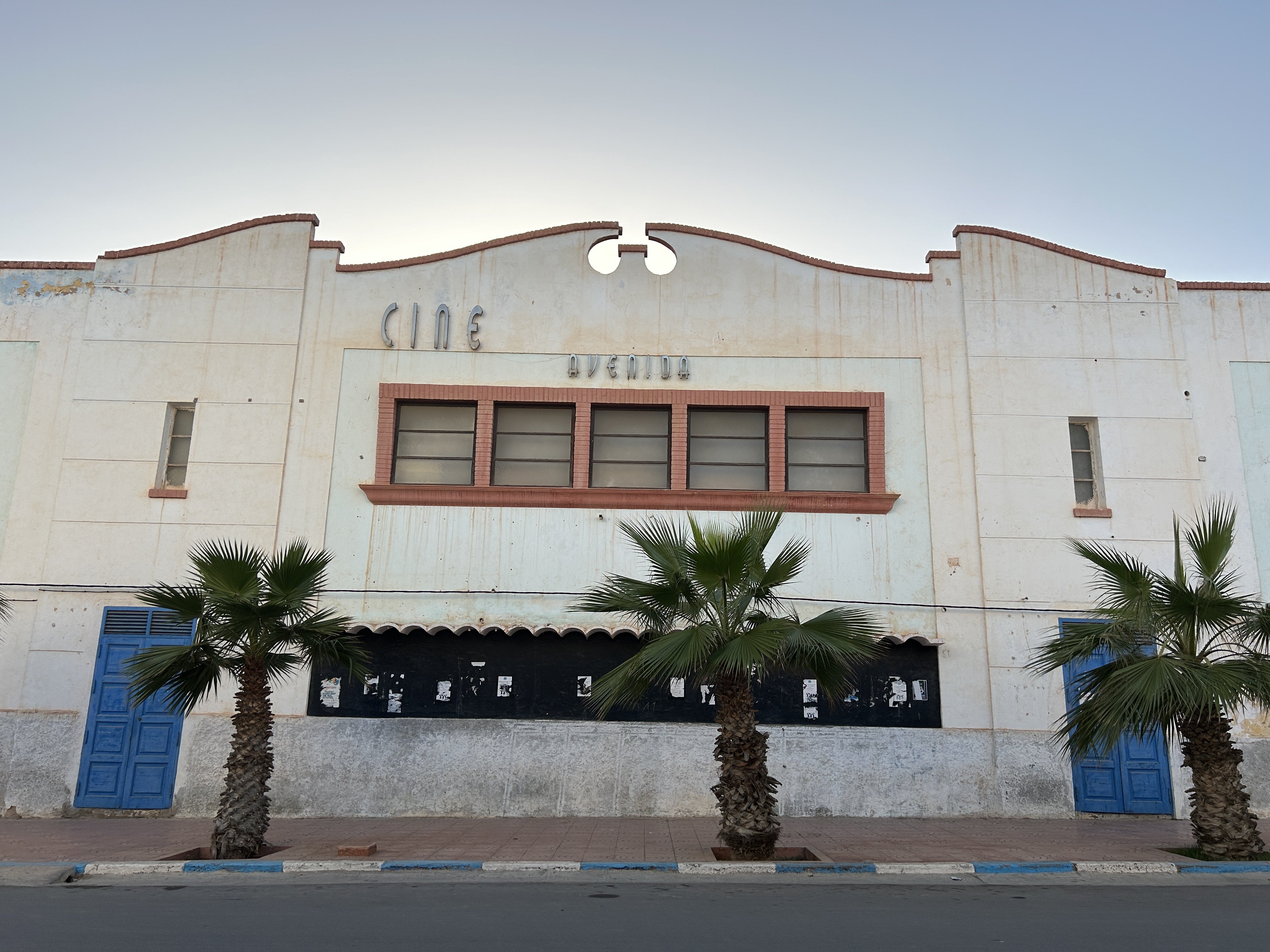
Sidi Ifni feels like a piece of Spain that washed up on the Atlantic coast of Morocco — which is essentially what it is. Spain held this enclave until 1969, and the town has never quite shaken its Iberian identity. Art Deco buildings in pastel shades line the streets, wrought-iron railings curl along balconies, and the main square, Place Hassan II, centres on an Andalusian garden with a tiled fountain. It is an oddity and a delight.
The architecture is the reason to come. The former Spanish consulate, now closed, gives the town the air of a forgotten colonial capital. The lighthouse, the old PTT building, and the church-turned-mosque all carry the same confident 1930s modernist stamp. Wander slowly and look up — facades here reward attention.
Beyond the buildings, the pace of life is the attraction. The town sits on a clifftop above a long Atlantic beach; the surf is decent and the beaches are fine, though not exceptional. On Sundays a souk takes over a stretch of abandoned airstrip on the edge of town, drawing storytellers, musicians, and traders from the surrounding countryside. It is worth timing your visit around it.
Sidi Ifni is a small place and does not need more than a day or two. But the combination of faded Art Deco elegance, Atlantic breezes, and genuine Moroccan daily life makes it one of the more memorable stops in the south.