Southern Moroccan desert town at the edge of the Draa Valley and Sahara routes.
At first sight Zagora is a dusty, single-street town. What saves it from being just another sun-bleached crossroads is its position: this is where the road from Ouarzazate finally runs out of valley, and the Sahara begins. The famous painted sign — "Tombouctou, 52 jours" — once pointed from somewhere near here across an open desert that you could in fact cross by camel, and which still gives Zagora its identity as the threshold of the south.
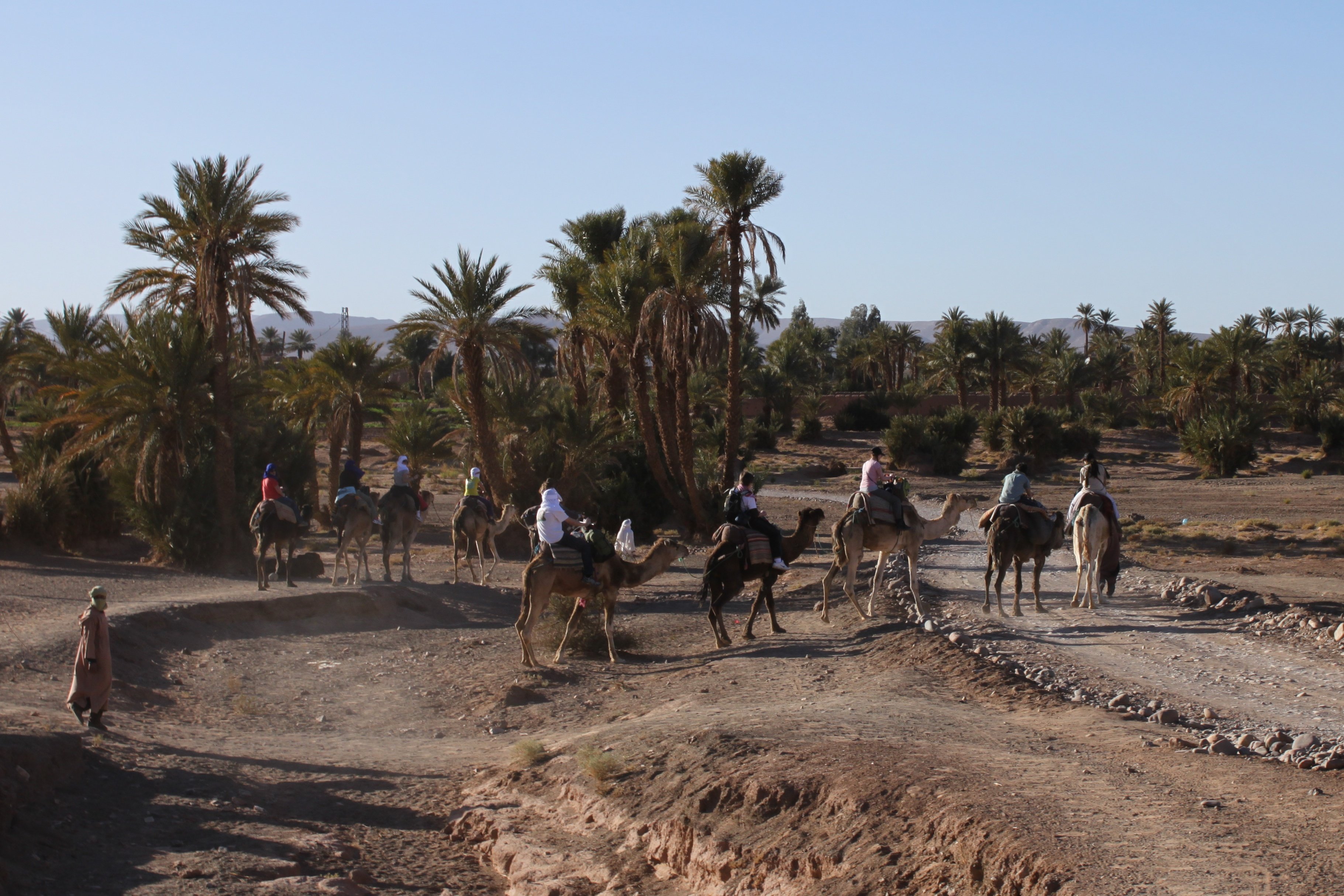
The town itself is a strip of low pink concrete along Boulevard Mohammed V. The reason to come is everything around it: the palm groves of Amezrou across the river, where silversmiths still work in what used to be the Jewish Mellah; the Almoravid ruins on Jebel Zagora, the flat-topped hill behind the town; the green-glazed pottery and Sufi library at Tamegroute, twenty kilometres south; and the dunes — small and accessible at Tinfou, vast and remote at Erg Chigaga beyond M'Hamid.
Zagora is also a working agricultural place. Wednesday is market day, and Berbers and the few remaining nomads come in to trade dates, livestock and rugs. The dates are exceptional — the chewy black Mejhoul, the honey-coloured Boufeggous — and a vacuum-packed box is a fine thing to take home.
It can be hard work for the unprepared. Persistent children will want to guide you, sell you something, or both; in summer the heat is genuinely dangerous. Take it slowly, drink, and try not to lose your temper. The big yearly event is the Moussem of Moulay Abdelkader Jilali, a religious festival drawing pilgrims from across the Draa.
Guide
Getting There
Almost everyone arrives from Ouarzazate, 165km north over the Tizi n'Tinifift pass and down through the Draa valley. The drive takes around four hours by bus or grand taxi, longer if you stop along the way — and you should, because the valley is the point of the journey. Four CTM and Supratours buses run daily; grand taxis leave when full from the Ouarzazate gare routière.
There is a small airport (OZG) about 7km southeast of town, with sporadic seasonal flights from Casablanca and Paris on Royal Air Maroc and Transavia. Schedules change often; check before relying on it.
To go further south, one daily bus continues from Zagora to M'Hamid, the literal end of the road. With your own vehicle the trip is far more rewarding — you can stop at Tamegroute and the Tinfou dunes on the way.
Guide
When to Go
The desert decides. From October through April the climate is comfortable, with daytime temperatures in the 20s Celsius and cold clear nights — this is when to come for the camel treks and the dunes. November and February are the sweet spot.
May to September is brutal. Daytime highs sit above 40°C, can push past 45°C in July and August, and walking outside between noon and four in the afternoon is genuinely unpleasant. If you are passing through in summer, plan to do everything in the early morning and late evening, and find a pool.
The biggest event of the year is the Moussem of Moulay Abdelkader Jilali, a religious festival drawing pilgrims from across the Draa, traditionally held in the Islamic month of Sha'ban — the date shifts each year, so check locally.