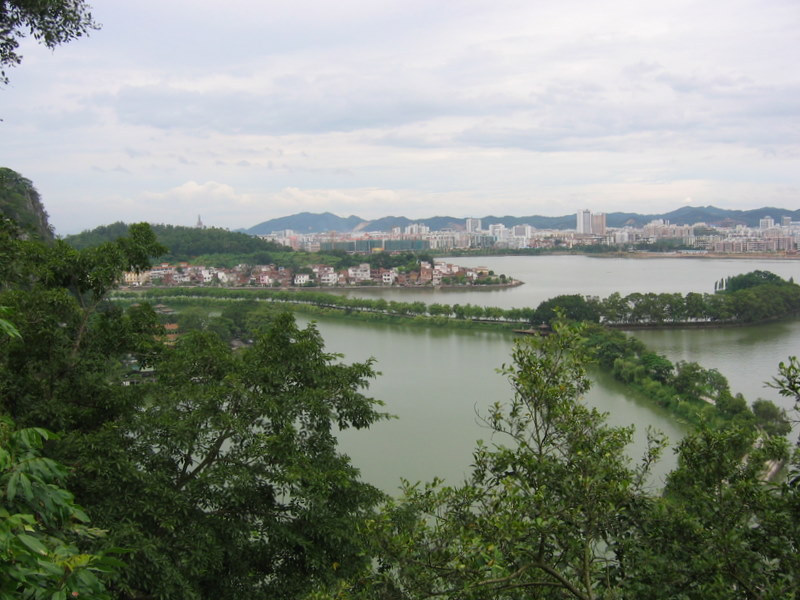
Zhaoqing is often compared to Guilin, and the comparison is fair: both cities are built around a landscape of karst peaks rising from water, and both offer a version of the southern Chinese scenic ideal that inspired landscape painters for centuries. But Zhaoqing is less famous, less crowded, and two hours from Guangzhou by bullet train, which means it functions as a genuine weekend escape for Pearl River Delta residents rather than a tick-the-box destination for international tour groups. The seven rocky crags of Star Lake, arranged in a pattern that mirrors the Big Dipper constellation, sit in the middle of a lake surrounded by temples and pavilions; walking the causeways between the peaks at dawn, with the mist not yet burned off the water, is as good as the brochure photographs suggest.
The Dinghu Mountain nature reserve, about twenty kilometres northeast of the city, is the more serious natural attraction: an actual protected forest rather than a landscaped park, with old-growth trees, walking trails, waterfalls, and cold pools that have been attracting Taoist hermits and Buddhist monks since the seventeenth century. The temple complexes built into the hillside are active rather than museumified, which gives the place a different atmosphere from the hyper-managed scenic areas that dominate tourism in the region. Bring decent shoes and allocate a full morning.
The city's history is longer and stranger than its current modest profile suggests. Matteo Ricci, the Jesuit missionary who became the first Westerner to be granted permanent residence in China, lived here from 1583 to 1589 while serving at the court of the provincial governor, laying the groundwork for his eventual move to Beijing. The spot where his house stood is marked but not elaborately commemorated; the city seems quietly proud of the connection without making too much of it. The ancient city walls, partially intact, date to the Song dynasty, and the Yuejianglou mansion houses a local history museum that rewards an hour's attention.
Zhaoqing's food culture tilts toward freshwater fish and river shrimp caught from the Pearl River tributaries nearby, prepared in the braised and steamed styles of classic Cantonese cooking. The city is small enough that the local markets and restaurants feel genuinely local rather than tourist-oriented, and the Friday-to-Sunday traffic from Guangzhou keeps things lively without overwhelming them.