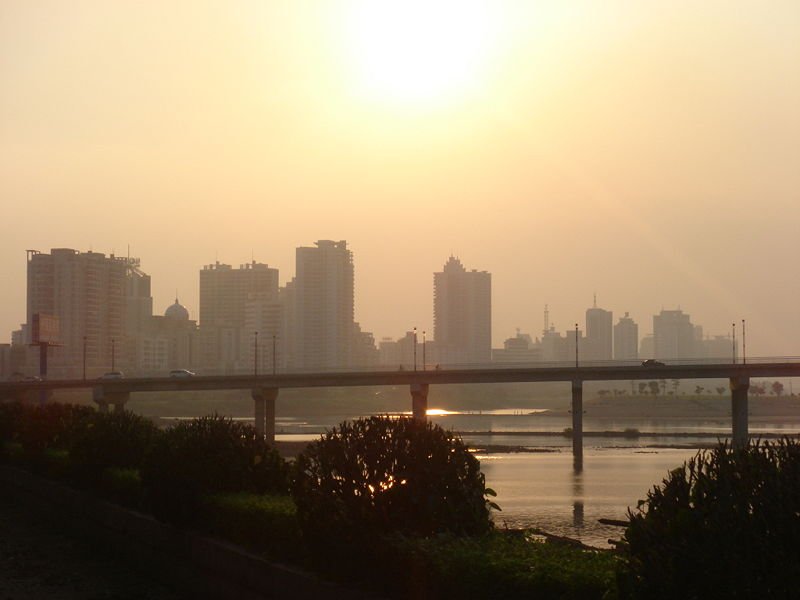
Qingyuan occupies a north Guangdong valley where the Bei River cuts through hills close enough to the Pearl River Delta to be reached in under an hour from Guangzhou, but far enough away to feel substantially less developed. It is primarily known throughout Guangdong for two things: its chickens and its white-water slides. The Qingyuan chicken — raised slowly on free range in the local hills — is considered the premium free-range variety in a province that takes chicken quality with unusual seriousness, and every restaurant in the city serves it in multiple preparations. Coming here specifically to eat chicken is not as absurd as it sounds.
The "white-water rafting" that fills Qingyuan's tourist literature is not quite what the name implies: at venues like Gulongxia and Huangtengxia, visitors sit in rubber dinghies and are sent down concrete channels cut into the mountain at considerable speed, screaming through tunnels and around bends with no particular skill required. It is a theme park ride more than an outdoor sport, and it is enormously popular with families from the Pearl River Delta, particularly in summer. Gulongxia, the more dramatic of the two, also has a glass-bottomed platform extending over a canyon drop that has become a popular social media destination.
The Feilai Temple, built on a riverside cliff about fifteen kilometres from the city centre, has been here since the sixth century, making it one of the older continuously occupied religious sites in Guangdong. The legend attached to it — that the temple hall flew here from elsewhere and settled on the cliff — is exactly the kind of story that gets attached to dramatically sited buildings, and the cliff-face setting, with the river below and forested hills behind, justifies the attribution of miraculous origin. The hot spring resorts scattered through the surrounding hills are firmly in the luxury weekend-break category, marketed to Guangzhou residents who want a comfortable spa stay within easy driving distance.
The Underground River of Lianzhou, in the county to the north, is a more unusual attraction: a navigable cave system with a river running through it, the kind of geological accident that only a province as geologically complicated as Guangdong could produce this far from the usual karst belt. Qingyuan as a whole is a city that works better as an excursion from Guangzhou than as a destination in itself, but the chickens are worth the train ride.