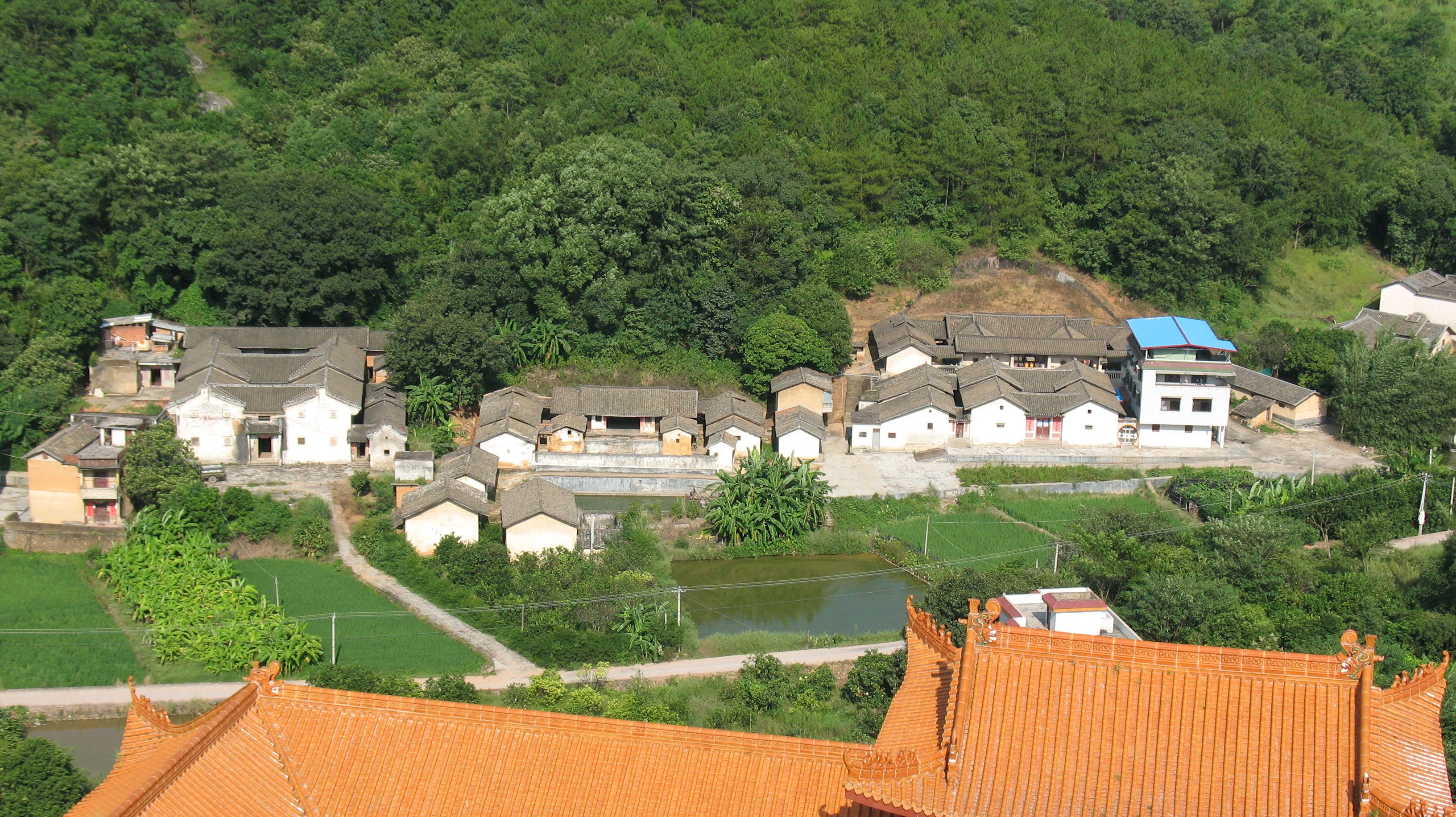
Meizhou is the ancestral capital of the Hakka people — the group whose name means "guest families," a reference to their historical migrations southward from the Central Plains over a thousand years ago. The city sits in a river valley in northeastern Guangdong, surrounded by forested hills, and its overseas diaspora is immense: an estimated 1.3 million Meizhou-origin people live abroad, scattered across Southeast Asia, the Americas, and beyond. The Hakka Museum of China, free to enter, gives this history a serious institutional form and is one of the better ethnographic museums in the province.
The Hakka language spoken here — the Meixian dialect — is treated as the prestige standard of the whole Hakka branch, which makes Meizhou something like the Paris of a linguistic world most outsiders have never heard of. The cuisine reflects the cultural history of people who moved often and stored food carefully: salt-baked chicken is the signature dish, cooked in a sealed clay pot over salt; yong tau foo, tofu stuffed with minced meat, appears in dozens of variations; and pickled mustard greens show up in almost everything, adding a funk that is addictive once acquired.
The landscape around the city is genuinely attractive and largely unvisited by non-Chinese tourists. The Yannanfei Tea Garden in the surrounding hills is a working mountain farm as much as a scenic area, and the local pomelos — harvested in late summer and early autumn — are among the best in China, heavy and sweet and nothing like the slightly bitter variety sold in supermarkets. Lingguang Temple, built into the hillside above the valley, is worth the climb for the views as much as the architecture.
Meizhou is not an easy trip from the Pearl River Delta — it is several hours by bullet train from Guangzhou, and the high-speed line only reached the city relatively recently. But for anyone curious about Hakka culture beyond the folklorically packaged versions available closer to the coast, this is the place to go.