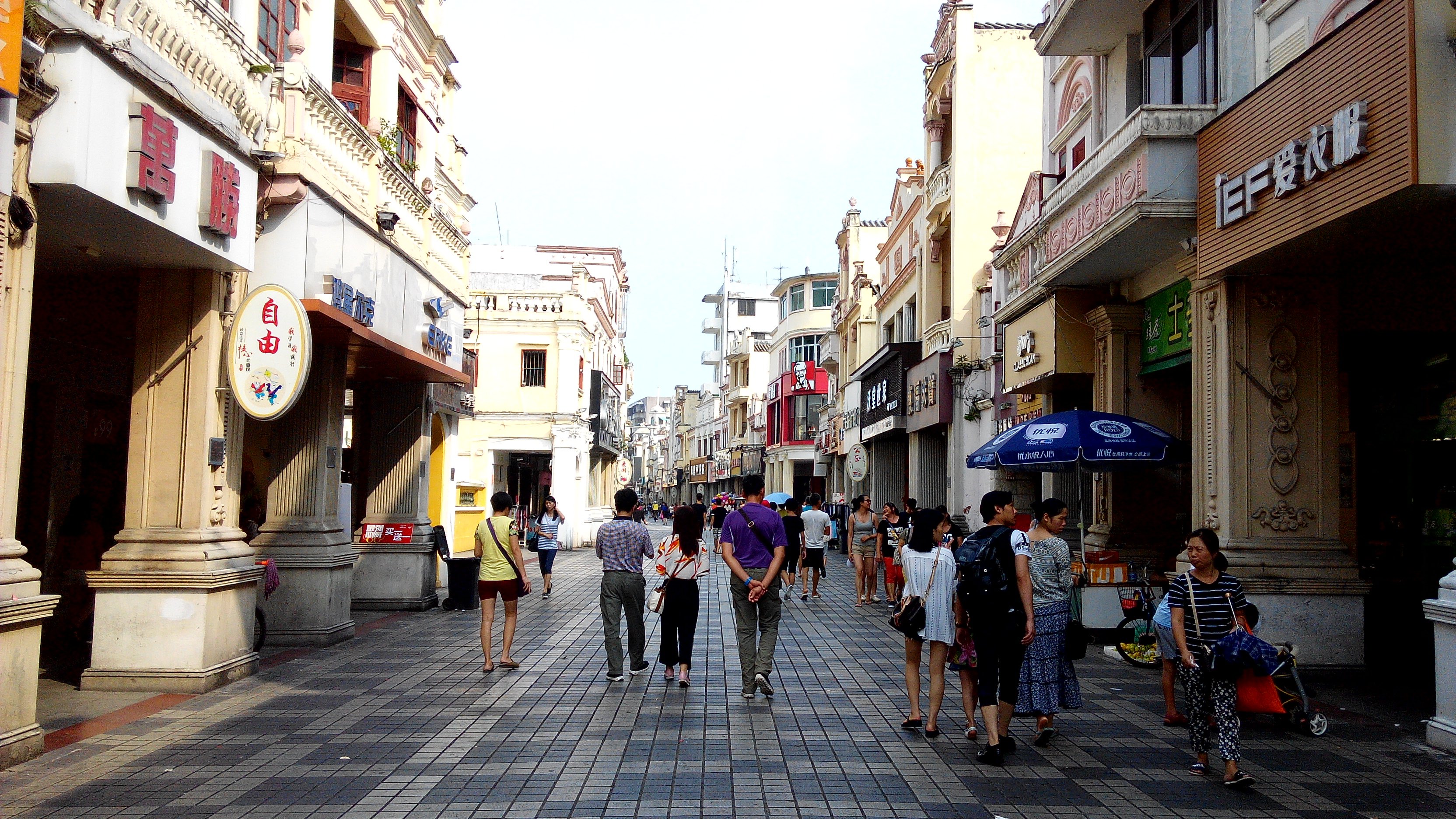
Taishan has a stronger claim than any other city in China to be considered the ancestral home of Chinese America. For most of the nineteenth and early twentieth centuries, the majority of Chinese immigrants to the United States and Canada came from this one county-level city in southwestern Guangdong — at the peak, estimates suggest that over seventy percent of all overseas Chinese in North America were Taishanese. The laundries, restaurants, and railroad gangs of nineteenth-century America were largely run by people from these villages. Before the 1980s, Taishanese was the predominant Chinese language in North American Chinatowns — not Cantonese, not Mandarin, but the specific dialect of this one place.
The city itself, called Taicheng, is a modest market town surrounded by flat agricultural land and backed by the low hills that eventually rise to the coast. The overseas connection is visible in the architecture: like Kaiping to the north, Taishan has its share of diaolou towers and Western-influenced buildings erected by returned emigrants, though they are less concentrated and less photogenic than the UNESCO-protected clusters of Kaiping. The streets of Taicheng have the comfortable slowness of a Cantonese delta town that has been sending its young people abroad for five generations and is used to the rhythm of departure and return.
The Sun Ning Railway, which ran through the area from 1908 to 1949, was one of only three pre-1949 Chinese railways built and operated entirely with Chinese capital — much of it from overseas remittances. The railway is gone but the story it tells about the relationship between emigration, money, and local development is the central narrative of this part of Guangdong. The local museum covers this history in more depth than is usual for a county-level city, reflecting an awareness that the diaspora connection is the thing that makes Taishan distinctive.
Shangchuan Island, accessible by ferry from the mainland, is Guangdong's largest island and offers a quiet beach alternative to the more developed coastal resorts elsewhere in the province. The island was also the site of Francis Xavier's death in 1552, making it a minor pilgrimage destination for Catholic visitors — he got as far as the island while trying to enter China and died waiting for permission that never came. The combination of diaspora history, modest colonial architecture, and accessible coastline makes Taishan a worthwhile stop for anyone with a particular interest in the Chinese-American story.