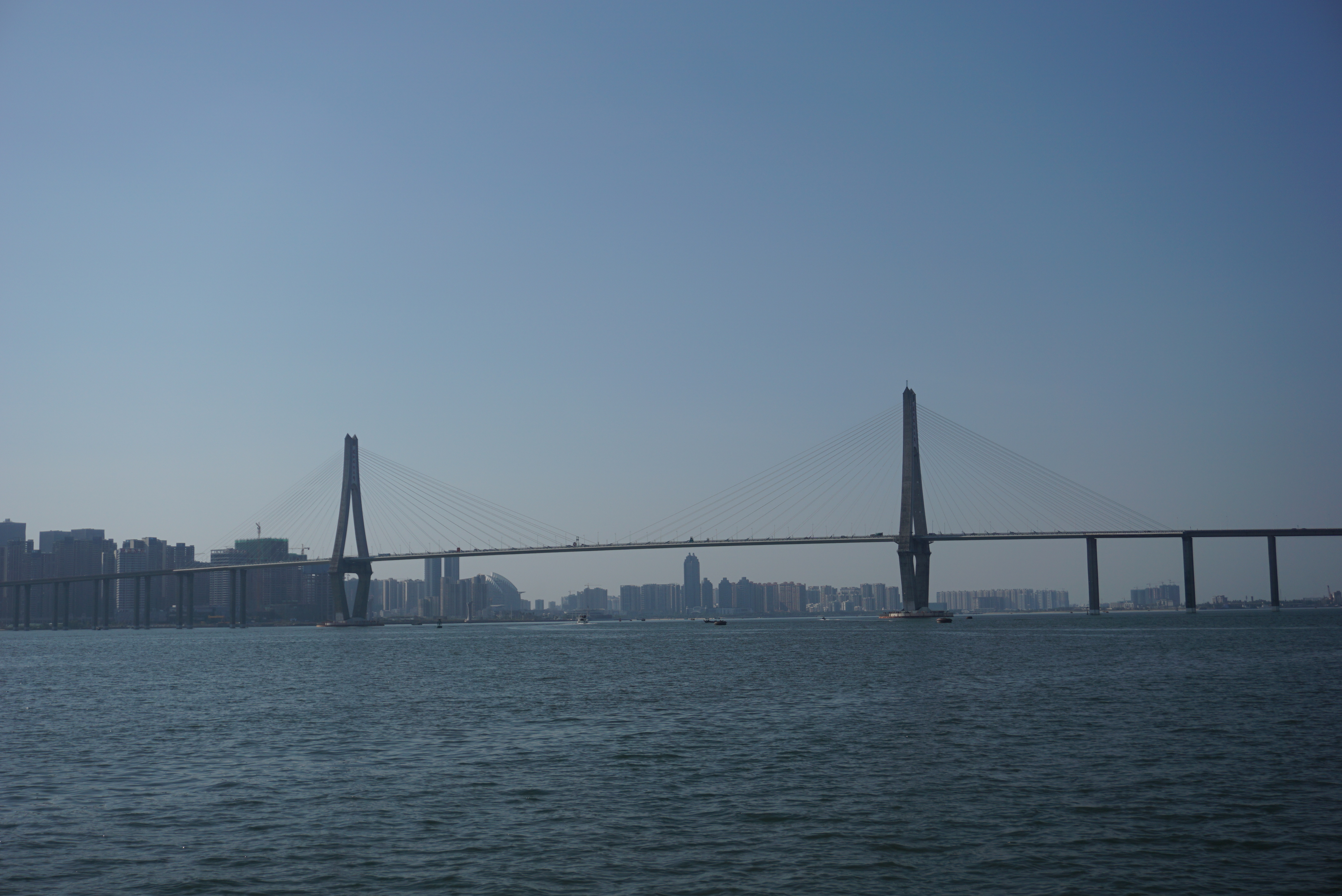
Zhanjiang sits at the southern tip of the Leizhou Peninsula, a long finger of land pointing toward Hainan Island across the strait. It is primarily a transit city — the main land gateway to Hainan by road, rail, and ferry — but one with an unusual colonial history and a seafood culture that local residents defend with the same seriousness that people elsewhere in Guangdong reserve for dim sum. The French occupied the port from 1899 to 1946, renaming it Fort Bayard, and a scatter of colonial-era buildings survives in the older parts of the city: the Cathedral of Saint Victor (1903), the former legation building, and the old police station, now a museum, give the waterfront a faintly Indochinese atmosphere that distinguishes it from every other port city in the province.
The local speciality is charcoal-grilled oysters, harvested from the shallow bays of the peninsula and cooked in their shells over open fire at roadside stalls. This is not a refined preparation — the shells come off the grill black and slightly gritty, and the condiments are industrial soy sauce and chilli paste — but the oysters themselves are large and very good, and eating them in the open air is one of those experiences that tastes specifically like this place. Zhanjiang chicken, another local obsession, is raised more slowly than the industrial varieties and served with a simple marinade that respects the flavour of the bird rather than competing with it.
The Leiqiong Global Geopark, which spans parts of both Guangdong and Hainan, is centred on Huguangyan Lake — a circular volcanic crater lake about 20 kilometres from the city, calm and very blue, surrounded by basalt formations that record eruptions dating back 140,000 years. It is the kind of geological attraction that rewards a certain level of interest in how landscapes are made, and the UNESCO designation means it is reasonably well signed and maintained.
Zhanjiang's position at the far southwestern corner of Guangdong means it is genuinely remote from the Pearl River Delta: several hours by high-speed rail from Guangzhou, and culturally distinct from the Cantonese heartland. The local dialect and food culture have as much in common with Hainan as with northern Guangdong. For anyone travelling overland to Hainan, or exploring the less-visited western coast of the province, it makes a worthwhile stop rather than a mere transit point.