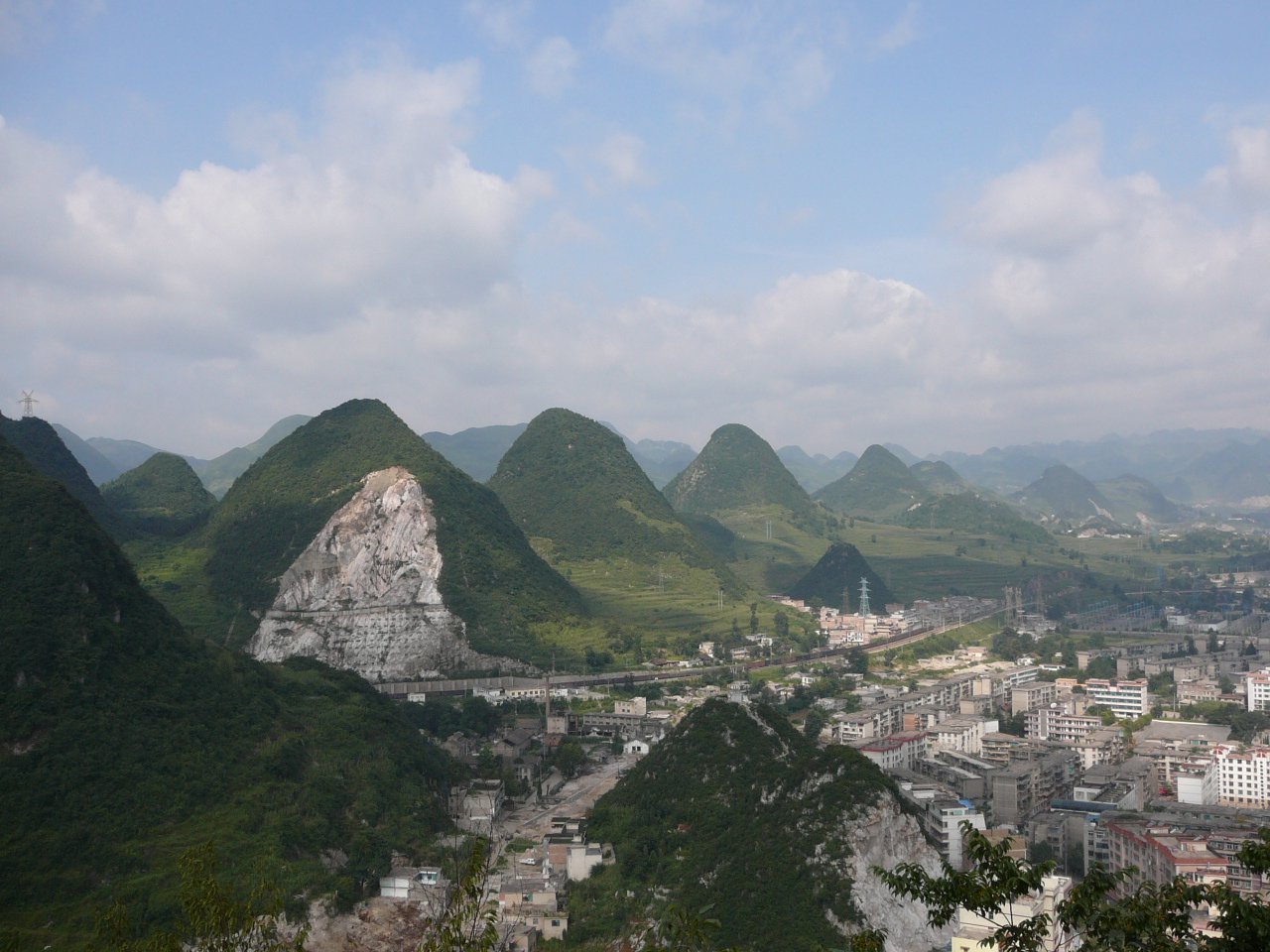
Liupanshui occupies a plateau in western Guizhou at around 1,700 metres elevation, which earns it the local marketing designation "Cool City" — average summer temperatures run about 19°C, making it a genuine refuge when the lowlands are suffocating. It's a coal and steel city, built up in the 1960s as part of Mao's "Third Front" industrial dispersal programme, and it carries that industrial heritage honestly: this is not a place prettied up for visitors, and the character it has comes from being a functioning mid-sized Chinese city at altitude.
The main reason to come to Liupanshui from outside the province is the Duge Bridge, 60 kilometres to the southeast on the Hangzhou-Ruili Expressway. Until 2025, this was the highest bridge in the world: a cable-stayed span rising 565 metres above the Beipan River, with towers that reach 269 metres. The drop to the river below is not abstract — you can see the water clearly, a thread of blue between walls of canyon that seem to continue downward longer than should be possible. The bridge is on an active expressway but there are viewpoints accessible without paying a toll. The engineering is remarkable, but what stays with you is the landscape the bridge reveals: an utterly inaccessible gorge that the road slides across as if the drop beneath it were inconsequential.
Danxia Mountain, in the city's southern district, is the kind of scenic area that would headline in any province that didn't have better competition. Red sandstone formations, carved river valleys, and hiking routes through a landscape that the Ming Dynasty geographer Xu Xiake visited and wrote about in the 17th century — his journal entries from Guizhou are among the best early descriptions of the province's extraordinary terrain.
Liupanshui is connected to Guiyang by high-speed rail (about an hour and a half) and sits on the Kunming-Shanghai line. It's an honest stop on a longer journey through western Guizhou, not a destination in itself.