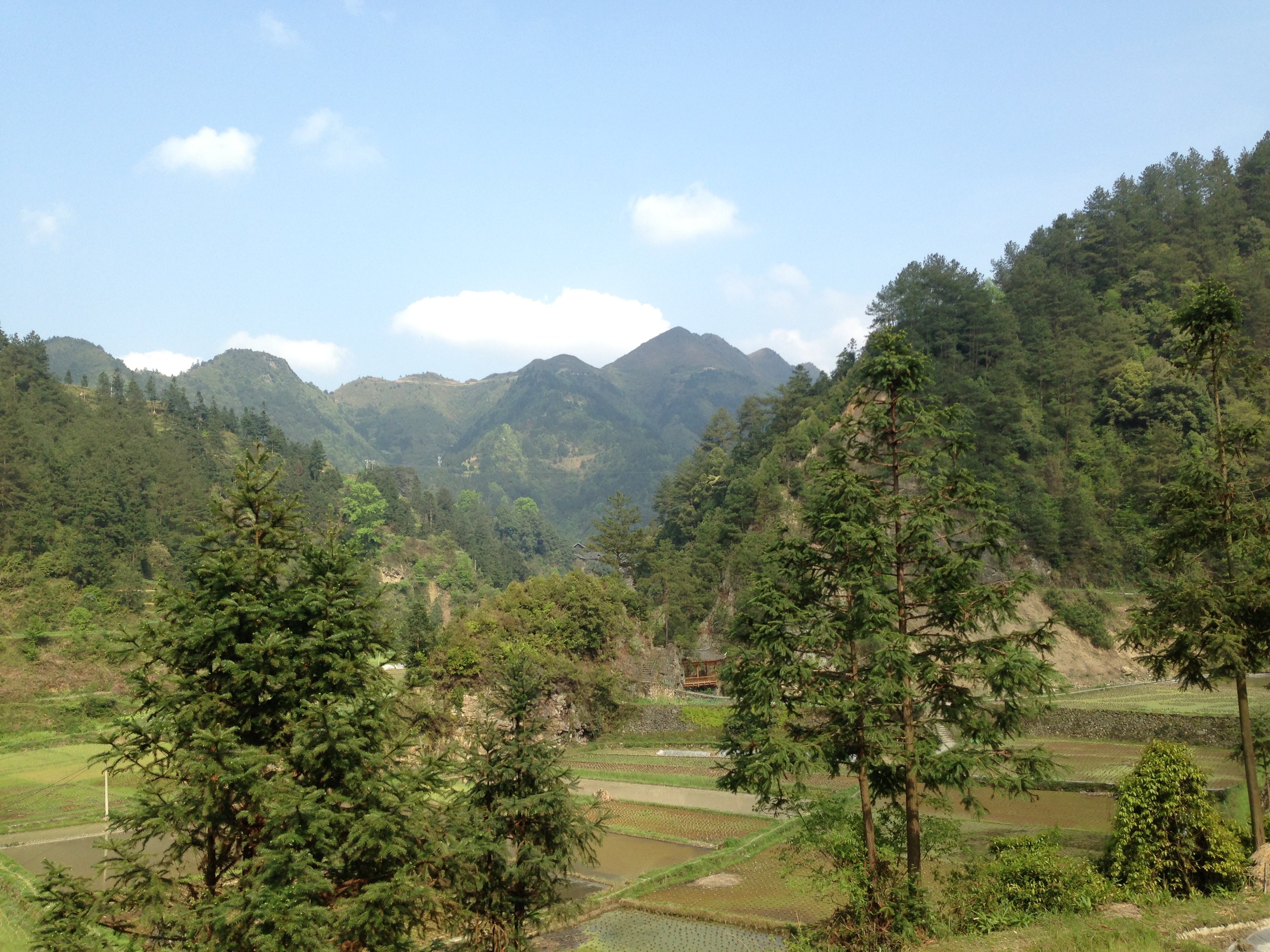
Lang De is a Miao village 20 kilometres south of Kaili, set on a hillside above the Bala River valley — stilt houses in dark timber climbing the slope in tiers, rice terraces below, and the river a thread of silver at the valley floor. It occupies the zone between Kaili's accessible day-trip radius and Xijiang's commercial development, which means it has received tourism but has not yet reorganised itself around it. The village has a welcoming committee that performs traditional music and offering-of-wine ceremonies for visitor groups, but the performance is peripheral to the actual settlement, which continues to function on its own terms.
The architecture follows the standard Miao pattern of wooden pen-and-ganlan houses built on the hillside contour, with carved wooden balconies and tiled roofs. What distinguishes Lang De is the completeness of the ensemble: almost every house is traditional construction, and the overall hillside view shows no incongruous modern intrusions. The terraced rice paddies between the village and the river are maintained by the families who live here, not preserved for display.
The village is reachable by public bus from Kaili's main bus station, or by the tourist bus circuits that run a loop through several villages in the Kaili area. Most visitors combine it with other stops. Staying overnight, if the guesthouses have space, gives access to the village early in the morning before any tour groups arrive — the light on the terraces at 6am, before the mist has fully lifted, is the version of Lang De worth seeing.
For context, the larger Miao villages in the region — Xijiang (see /asia/china/guizhou/xijiang) to the south and Taijiang (see /asia/china/guizhou/taijiang) to the east — show the range from heavily visited to genuinely remote. Lang De sits comfortably in between: accessible enough to visit without difficulty, uncommercialized enough to feel real.