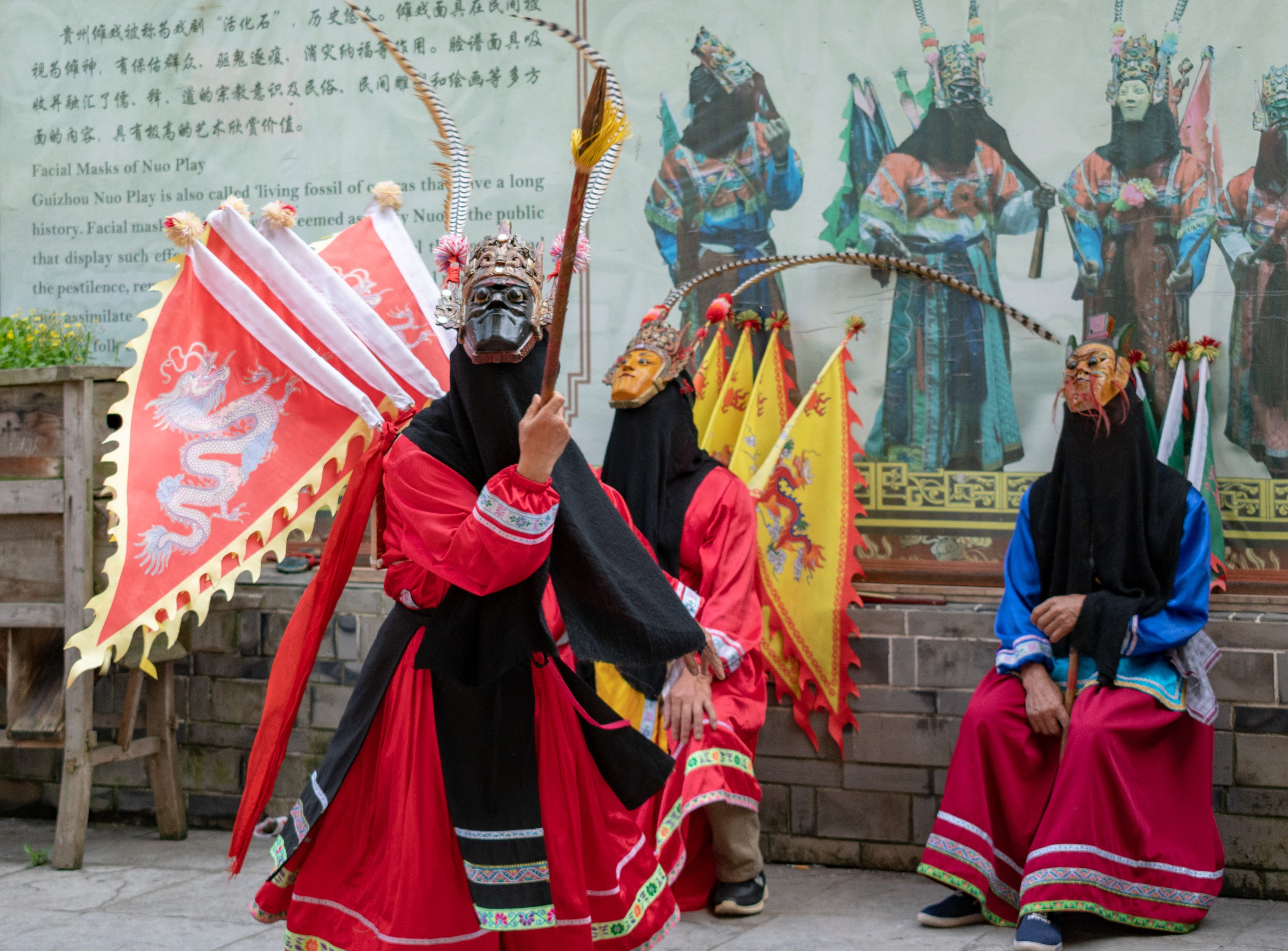
Qingyan Ancient Town lies 29 kilometres south of Guiyang, and the ease of access from the capital has made it one of the most visited heritage sites in the province. What survives is a walled settlement from the Ming Dynasty — stone walls and four gate towers enclosing a grid of flagstone streets lined with temples, guild halls, residences, and shops that retain their wooden facades. The town was established as a military garrison in 1378 to guard the approaches to Guiyang, and the grid street plan and defensive wall reflect that origin.
The four main temples tell a story of syncretic coexistence. There are two Buddhist temples — including Ciyun Temple — one Taoist temple, and one Confucian academy within the walls, all dating to the Ming or Qing periods and all maintained as functioning institutions rather than museum exhibits. The Catholic church is a 19th-century addition, the legacy of Guizhou's early missionary presence, and it looks precisely as out of place as you'd expect a stone Gothic church to look in the middle of a Ming-era fortified settlement — which is to say completely out of place and somehow right.
The food at Qingyan has become its own draw. The town is known for braised pork knuckle (zhuati), slow-cooked to falling tenderness in soy and spice, sold from storefronts throughout the main street. Sticky rice cakes, douhua (soft tofu in chilli oil), and a local rose-scented sugar confection round out the specialities. The eating is best done by wandering rather than sitting in any particular restaurant.
Qingyan is a 40-minute bus ride from Guiyang's Huaxi district, or reachable by metro to Huaxi and then bus. The crowds peak on weekends and public holidays; a weekday morning visit is considerably more pleasant. The town retains a resident population rather than being purely commercial, and the residential lanes off the main tourist street are where the actual texture of the place is.