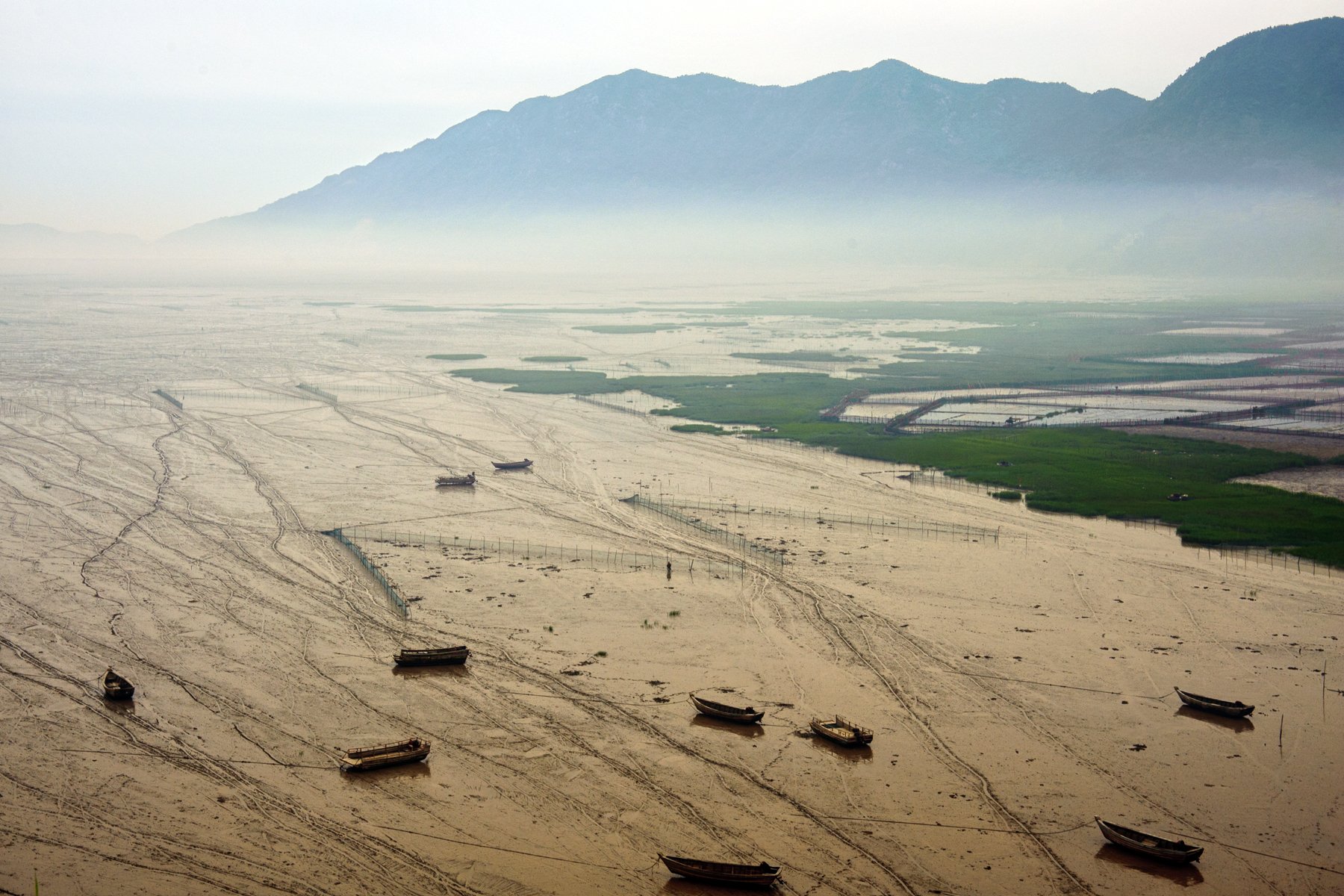
Ningde is the northernmost coastal city of Fujian, a sprawling prefecture of islands, estuaries, and mountainous interior that most visitors to the province pass through without stopping. That is a mistake. The landscape here is more varied and less developed than anywhere else on the Fujian coast, and the three scenic areas that together form the Ningde UNESCO Global Geopark are among the most visually spectacular in the province.
Taimu Mountain in the northeast is the standout: a cluster of granite spires rising from the coast, cloaked in subtropical vegetation and webbed with hiking trails that pass ancient shrines and precariously balanced boulders. The scenery is genuinely strange and dramatic in a way that busier Chinese scenic spots can feel too managed to deliver. Baishuiyang, inland near Pingnan, is entirely different: a two-kilometre stretch of smooth, polished riverbed barely submerged under fast, shallow water, forming a natural waterpark popular with locals who slide and wade across the rock. In winter the same river shelters thousands of mandarin ducks. Baiyunshan, deeper in the interior, offers granite gorges and waterfalls alongside villages of the She ethnic minority, one of the groups indigenous to this part of Fujian. Sanduao Bay to the south is the best place in the prefecture for oysters and abalone fresh from the water.
Ningde city itself is growing rapidly as a centre of lithium battery manufacturing — it is home to the world's largest battery company — and the city infrastructure has improved accordingly. High-speed rail connects it to Fuzhou in under an hour. The practical approach is to use the city as a base for day-trips to the scenic areas rather than as a destination in itself, but those scenic areas deserve at least two days.