Putian sits on the coast midway between Fuzhou and Xiamen, and it occupies an unusual place in world religion: this mid-sized Fujianese city is the birthplace of Mazu, the goddess of the sea, whose cult spread wherever Fujianese and Cantonese sailors went. There are now over three thousand Mazu temples worldwide, from Taiwan and Vietnam to San Francisco and Rotterdam, but the source of the tradition is the small island of Meizhou off Putian's coast. The annual Mazu birthday festival in the third lunar month draws over a hundred thousand pilgrims and is listed as UNESCO intangible cultural heritage.
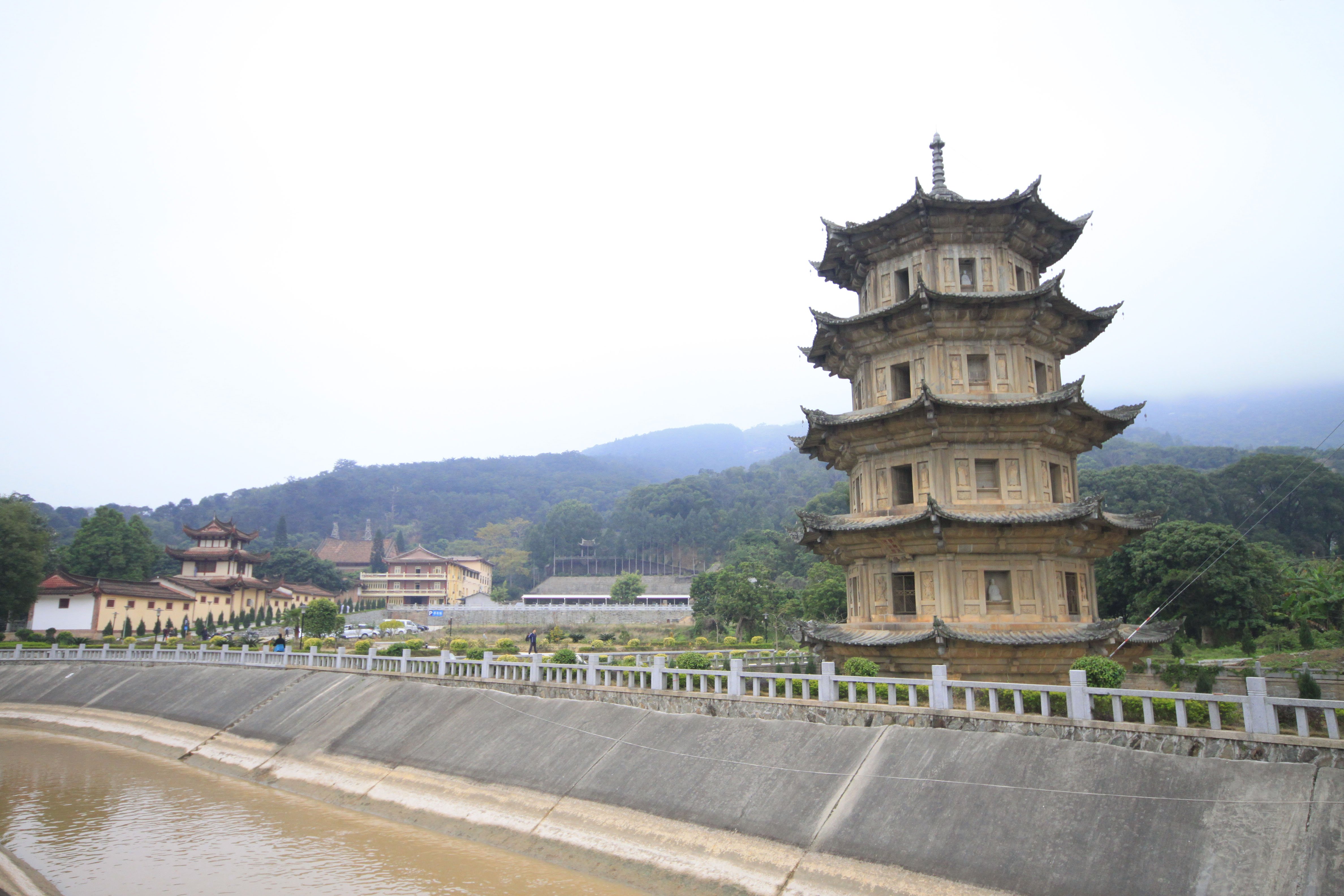
Meizhou Island is the principal reason to visit. The main temple complex on the island's ridge has been rebuilt and expanded many times but retains a ceremonial weight that more tourist-oriented shrines lack — the incense smoke is thick, the worshippers are genuine pilgrims, and the sea views from the upper terraces are dramatic. Back on the mainland, the Southern Shaolin Monastery claims descent from the original Tang Dynasty temple and offers martial arts demonstrations that, while touristy, connect to a real regional tradition of Fujian kung fu styles. The old city contains two other major religious sites worth visiting: Yuanmiao Temple, one of the oldest Taoist institutions in Fujian, and Guanghua Temple at the foot of Phoenix Mountain.
Putian is also, pragmatically, one of the largest footwear manufacturing cities in China, which means the city itself is unremarkable beyond its sacred geography. The food, however, is distinctive: Xinghua rice noodles, hand-pressed into fine strands and served in broth, are a local staple different from anything you will eat elsewhere in Fujian, and the coastal proximity means excellent oysters and clams at low prices. The city is served by high-speed rail and makes a reasonable half-day stop between Fuzhou and Xiamen.