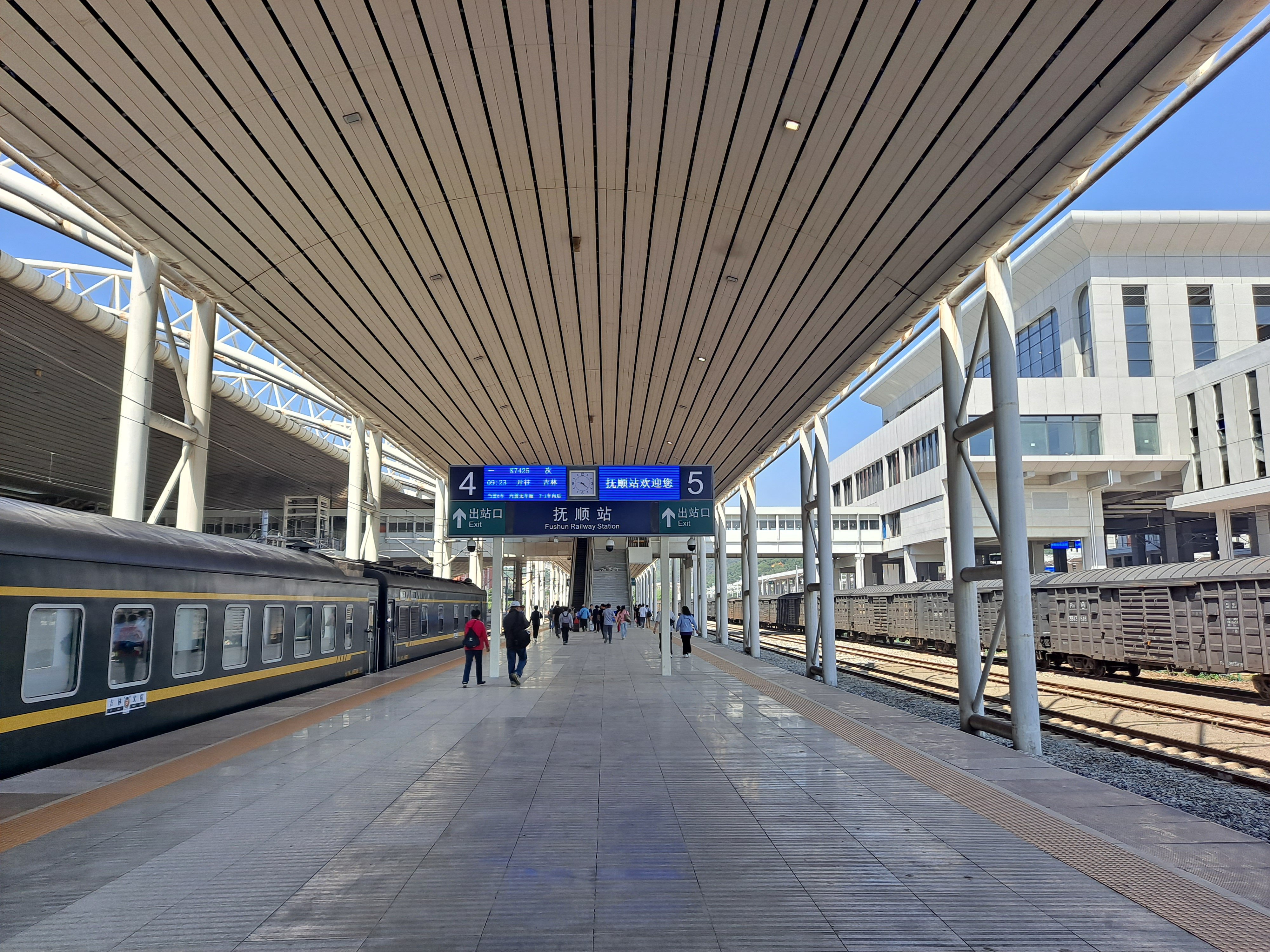
Fushun sits forty kilometres east of Shenyang and carries more history per square kilometre than most Chinese cities appreciate. It was the coal capital of China for much of the twentieth century — the open-pit mine here was once the largest in Asia — and it was also, for a brief and formative period in the seventeenth century, the heartland from which the Qing Dynasty launched its conquest of China.
Hetuala Old City, also known as Xingjing or Old Hetu Ala, is where Nurhachi proclaimed the Later Jin Dynasty in 1616 and began organising the Jurchen confederation that would eventually take Beijing. The reconstructed palace complex in Xinbin County gives a sense of the modest origins of what became China's last imperial dynasty, and the attached Yongling Tomb — burial site of Nurhachi's ancestors — carries UNESCO World Heritage status as part of the Imperial Tombs of the Ming and Qing Dynasties. Both sites reward a morning visit.
The darker history is equally well preserved. The Fushun War Criminals Management Centre is where Emperor Puyi, the last Qing emperor, was detained and "re-educated" after the Communist victory; the facility is now a museum that traces his trajectory from Manchu throne to ordinary citizen with unusual candour. The Pingdingshan Massacre Memorial Hall documents a 1932 Japanese atrocity in which over three thousand civilians were killed, handled with the directness that Chinese memorial sites reserve for Japanese war crimes.
Dahuofang Reservoir — the largest reservoir in northeast China, covering over a hundred square kilometres — provides the counterbalance: boat trips, hiking in the Saerhu Scenic Area on its shores, and a landscape completely at odds with the industrial city to the west. Fushun is easily reached from Shenyang by suburban rail.