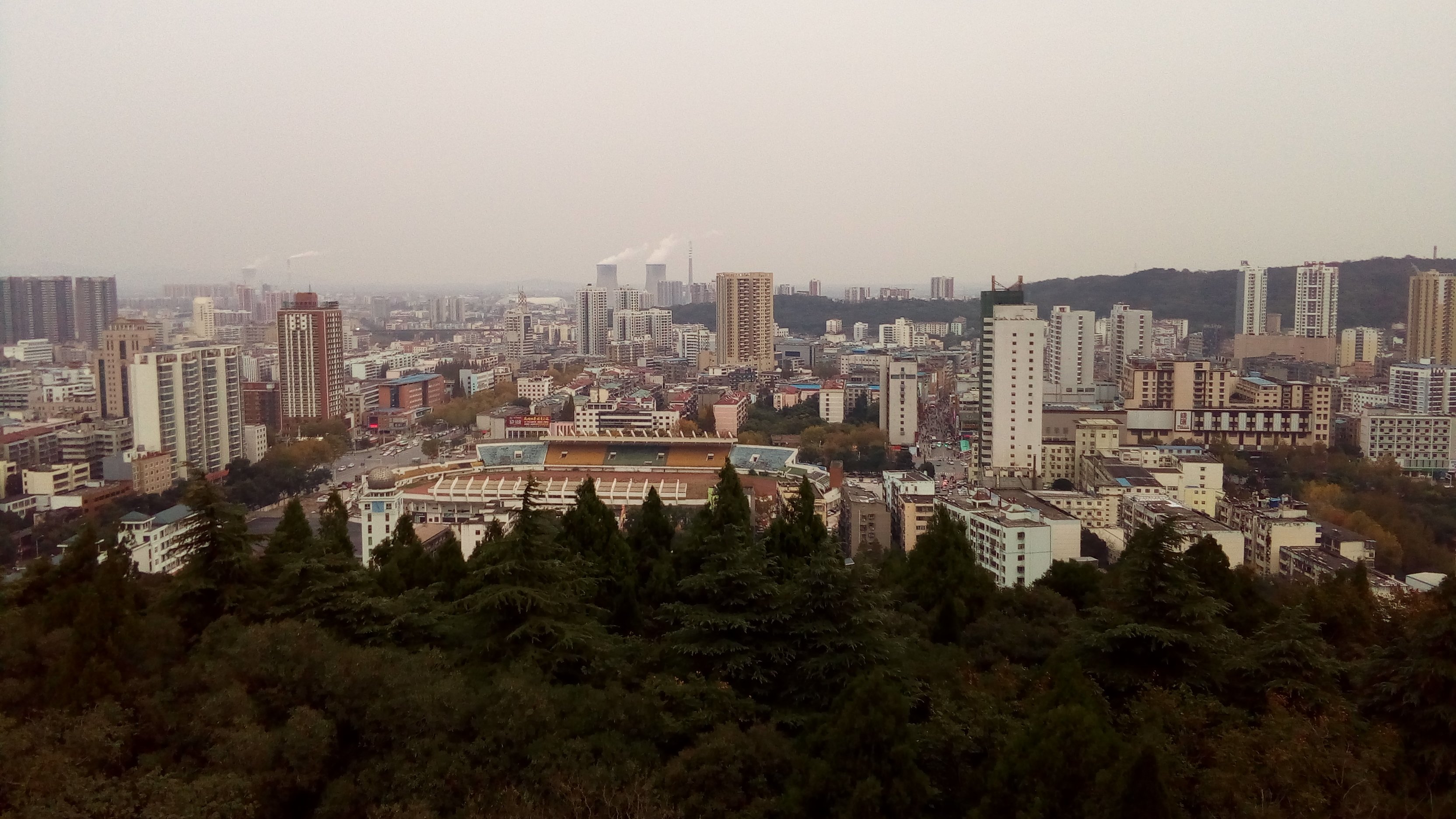
Jingmen sits in the middle of Hubei, where the Jianghan Plain begins to crinkle into the foothills west of Wuhan. It calls itself the "Gateway to Jingchu" — a reference to the ancient Chu state that once dominated this part of central China — and the designation is less boastful than most Chinese city slogans. The Qujialing cultural site, within the prefecture, dates to the Neolithic period and represents one of the important early agricultural settlements of the Yangtze valley. During the Spring and Autumn and Warring States periods, Jingmen was a significant Chu territory, and the traces of that era are still being excavated.
The standout attraction lies in Zhongxiang, a county-level city within the Jingmen prefecture about forty kilometres to the east. The Xianling Tomb is a UNESCO World Heritage Site — the mausoleum of the Jiajing Emperor's father, who was posthumously elevated to imperial status in a bitter succession dispute that occupied the early years of Jiajing's reign. The tomb complex is large, formal, and surrounded by a forest of ancient cypresses; admission is reasonable and the crowds thin compared to the imperial tombs near Beijing. The adjacent Yuanyou Palace, built between 1540 and 1553, is one of the best-preserved Ming ancestral temple complexes outside the capital.
The Zhanghe Scenic Area, to the west of the city, is a reservoir landscape of forested hills and clear water that functions mainly as a weekend destination for people from Wuhan and Jingzhou. It is pleasant rather than spectacular. The city itself has little to detain the visitor beyond the Jingmen Museum, which is free and covers the Chu and Han periods adequately. The Qujialing Archaeological Site, about 50 kilometres north, preserves the type-site for one of China's important Neolithic agricultural cultures. The food in Jingmen leans on the agricultural produce of the plain: rice, freshwater fish, and lotus root prepared with the confidence of a region that has been growing it for a very long time.
Jingmen is accessible by high-speed rail from Wuhan and sits between Wuhan and Yichang on the main east-west corridor. The Xianling Tomb makes it worth a stop on a circuit of central Hubei; the rest of the city is best treated as a half-day proposition.