Gyantse
©
Gyantse

Gyantse

Southern Tibetan town on the Friendship Highway, known for Pelkor Chöde Monastery and its Kumbum.

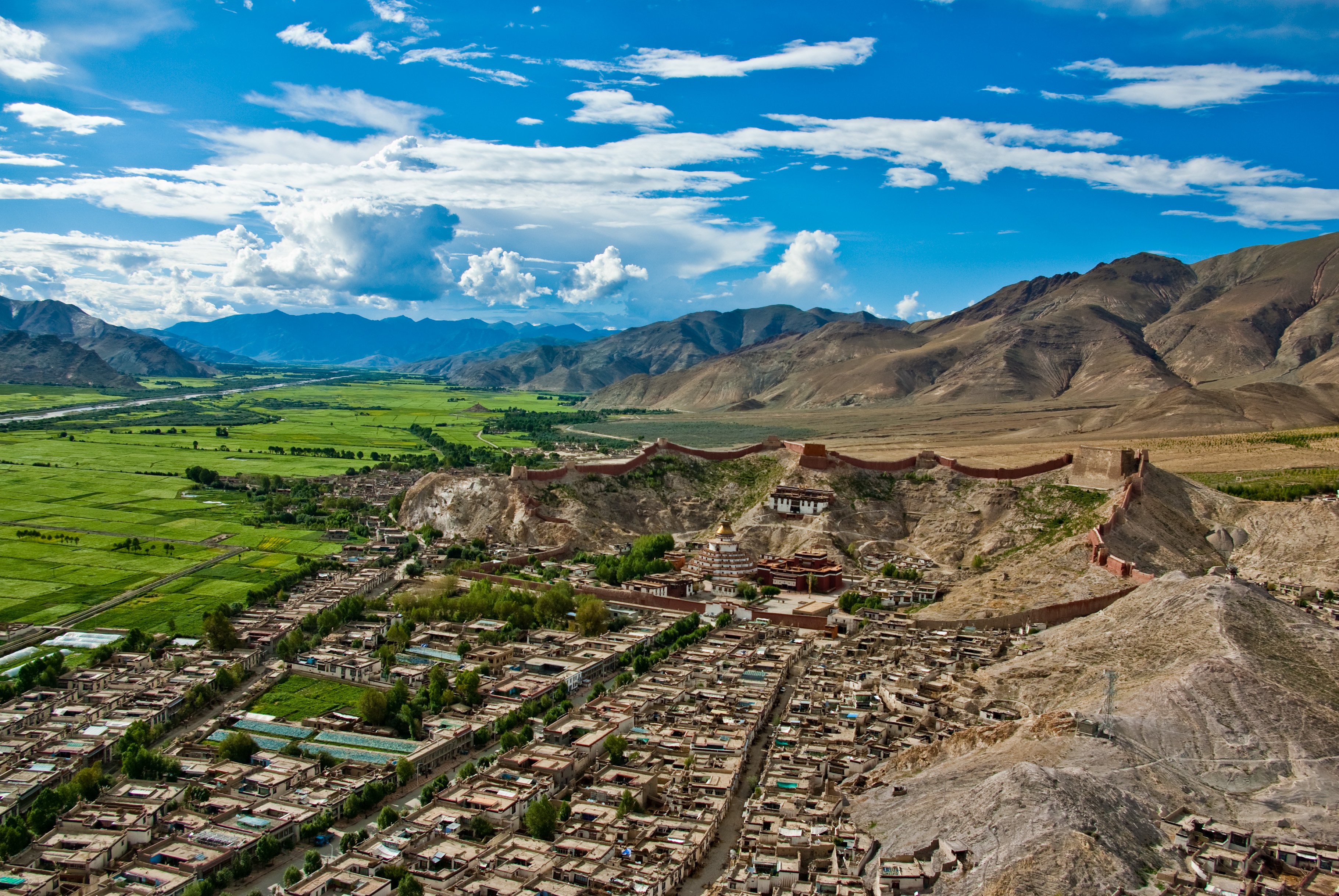
Gyantse is a small agricultural town at nearly 4,000 metres in southern Tibet, one of the least changed towns on the Friendship Highway between Lhasa and the Nepali border. It was once the third-largest town in Tibet, a major wool-trading centre on the route to India, and it still has a languid, end-of-the-road feel.

The highlight is the Pelkor Chöde Monastery, built in 1427, and its extraordinary Kumbum — a nine-tiered stupa containing 108 chapels arranged in a three-dimensional mandala. The murals inside span Tibetan, Nepalese, and Chinese artistic traditions and are among the finest in Tibet. Above the monastery, the ruins of the Gyantse Dzong (fortress) command views over the valley and the barley fields below. Gyantse is typically visited as a stop on the overland journey between Lhasa and Shigatse.

Guide

Getting There

Gyantse is typically reached by road from Lhasa (around 270 km to the northeast) or from Shigatse (90 km to the northwest). The journey from Lhasa takes roughly six to eight hours by vehicle and passes through spectacular high-altitude scenery, including the turquoise Yamdrok Lake at around 4,400 metres.

All foreign visitors to Tibet require a Tibet Travel Permit in addition to a Chinese visa, and must travel with a licensed guide and registered vehicle. Independent travel in Tibet is not permitted — all transport arrangements go through a licensed Tibetan travel agency.

Most visitors pass through Gyantse as part of an organised overland tour of Tibet, stopping for a half-day or overnight before continuing to Shigatse or toward the Nepali border.

Guide

When to Go

Gyantse sits at nearly 4,000 metres and has a cold, dry climate. The best time to visit is May to October, when temperatures are manageable and road conditions on the Friendship Highway are reliable. Summer (June to August) brings occasional afternoon thunderstorms but otherwise good visibility.

Winter visits are possible but challenging. Temperatures drop well below freezing at night, and wind blows constantly across the valley. The monastery remains open, but the experience of standing in unheated chapels in January is a specific kind of suffering. If you have a choice, come in May or September when the light on the barley fields and the monastery walls is at its best.

The road from Shigatse is open year-round but can be slowed by landslides in August. From Lhasa, the route via Shigatse takes around six to eight hours by vehicle.