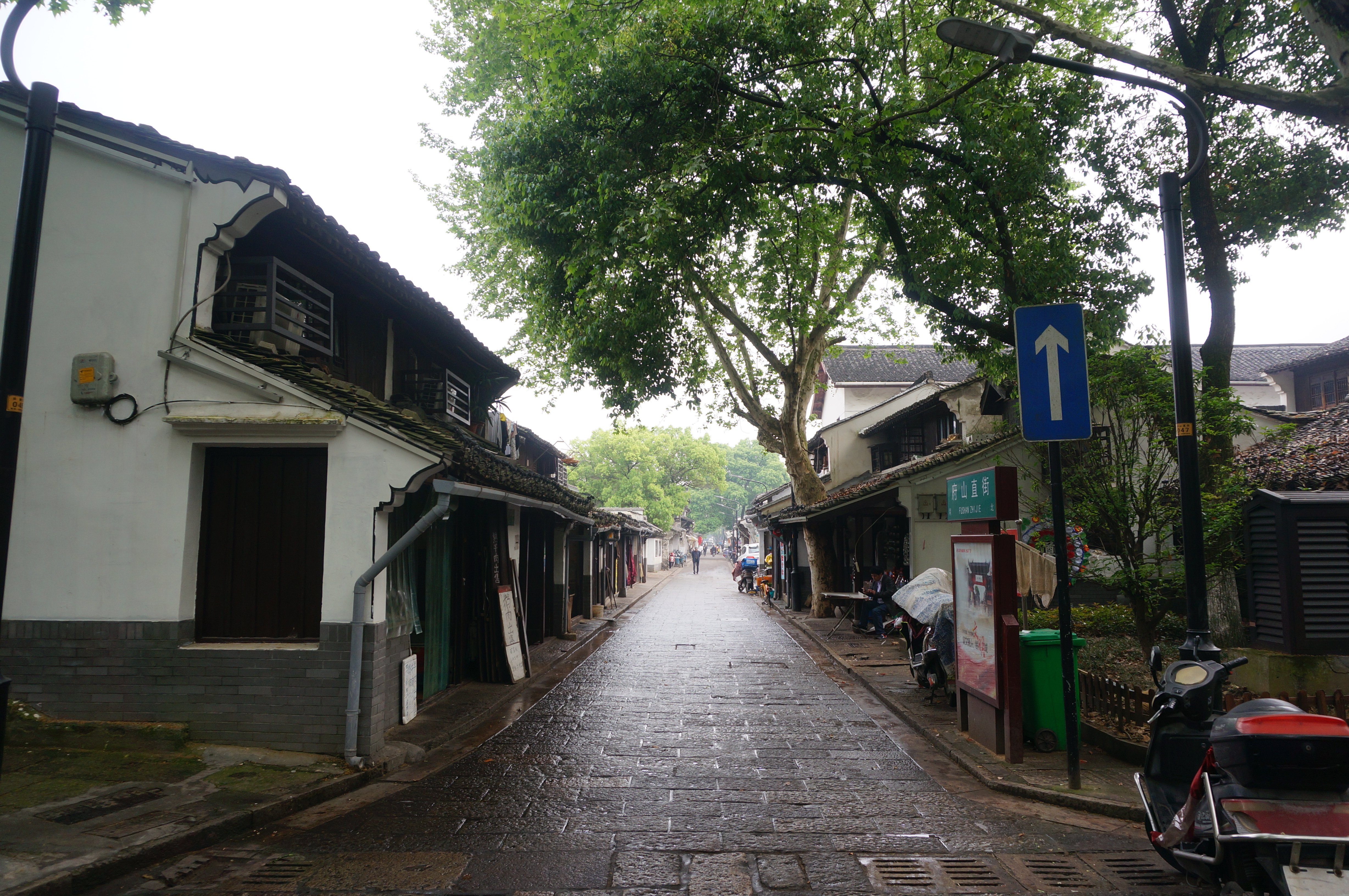
Shaoxing is the most literary city in Zhejiang, a place that has produced writers, reformers, and philosophers for two millennia and wears its cultural heritage with quiet confidence. The city sits on a web of canals southeast of Hangzhou, and its traditional black-awning wooden boats — punted rather than rowed — are a sight still worth seeking out in the older quarters. The streets of the preserved historic district are lined with whitewashed walls and dark roof tiles in the Jiangnan style that inspired every generic "water town" in the province, and its ancient canal bridges — over a thousand of them — give the city more stone arches than Venice.
The city's most famous son is Lu Xun, the sharp-tongued essayist and fiction writer who defined modern Chinese literature in the early twentieth century. His former residence and the surrounding block of preserved buildings give a genuine sense of late-Qing provincial life. Shen Garden, a compact Song-dynasty garden, carries its own legend: the poet Lu You met his first wife here after she was forced to remarry, and wrote one of classical Chinese literature's great elegies on the garden wall. Further out of town, the Orchid Pavilion marks where Wang Xizhi wrote the most celebrated piece of Chinese calligraphy.
Shaoxing is also the origin of the yellow rice wine that bears its name — Shaoxing jiu — which has been produced here for at least two thousand years. The fermentation process uses locally drawn water and the city's distinctive wheat-based jiuqu starter, and the best aged versions are as complex as a good sherry. A visit to one of the old distilleries south of the old town, where earthenware vats line the canal banks, is as much a history lesson as a tasting. The Keyan scenic area to the east preserves the ancient stone quarries that supplied the grey-green bluestone used in every bridge and canal wall in the city.